





May 04, 2026

 Zach Boyden-Holmes/Imagn Images
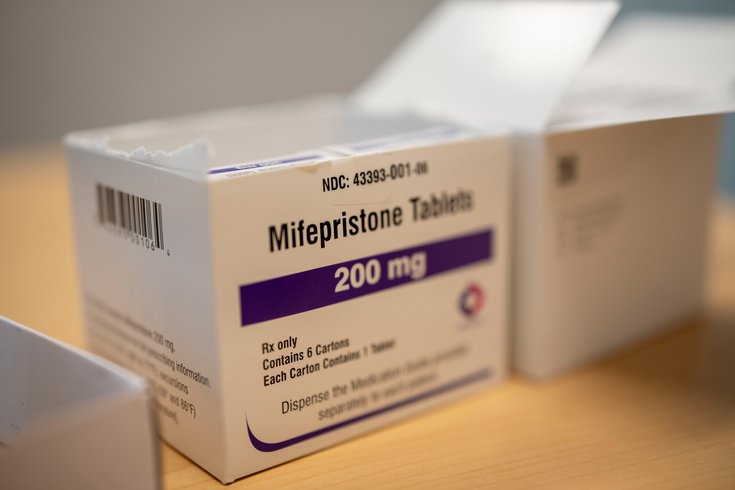
An order signed Monday by Supreme Court Justice Samuel Alito temporarily pauses a lower court ruling that banned telehealth and mail access to the abortion drug mifepristone. Medication abortion accounts for more than half of abortions in the United States.
The U.S. Supreme Court has restored temporary mail and telehealth access to the abortion drug mifepristone for one week, responding to an emergency challenge of a lower court ruling on Friday.
Justice Samuel Alito signed the order Monday, issuing a stay that restores previous rules permitting access to mifepristone without an in-person visit to a doctor. The medicine is used in more than half of abortions nationwide.
MORE: Stacy Garrity says she would veto recreational marijuana bill as Pa. governor
The emergency appeal was filed by drugmaker Danco Laboratories and GenBioPro, which makes the generic version of mifepristone, in response to Friday's ruling from the U.S. Court of Appeals for the Fifth Circuit in New Orleans. The ruling would have restricted access to mifepristone.
The state of Louisiana had filed a lawsuit last year to end Biden-era regulations that broadened access to the drug. Its availability by mail and at pharmacies has allowed women to get abortion care in states where bans and other restrictions have been passed since the Supreme Court overturned Roe v. Wade four years ago.
The Fifth Circuit court found that the Food and Drug Administration's rules for mail and telehealth access to mifepristone undermined Louisiana's ability to enforce state-level bans on abortion.
Mifepristone is prescribed to women seeking to terminate pregnancies through the first 10 weeks, although the drug can be taken beyond that point with the possibility of reduced efficacy. The pill is part of a two-drug regimen. Mifepristone blocks a hormone needed for pregnancy development. Misopristol, taken 24-48 hours later, causes contractions that rid the body of pregnancy tissue.
In years past, the drug only could be obtained in person from a doctor or a certified clinic. The requirements for in-person visits to obtain mifepristone were lifted during the COVID-19 pandemic and made permanent in 2023.
Telehealth appointments increased the use of mail-order pharmacies, particularly in states where access became more tightly restricted. A number of Democratic states have laws that protect prescribers who offer mifepristone to women in states that have abortion bans.
The order signed Monday will allow both sides of the case in Louisiana to respond and give the court more time to review the case. The Supreme Court last reviewed the issue in 2024, rejecting a challenge to FDA regulations that made mifepristone more widely available. Alito wrote the majority opinion in the 2022 case that overturned Roe v. Wade.
Had the drug become restricted via telehealth and the mail, some providers planned to switch to a misopristol-only regimen that requires a higher dosage of the drug, has a higher failure rate and often results in more side effects.
Part of the emergency appeal to Friday's ruling centered on the impact of abrupt enforcement of the decision.
Planned Parenthood Action, which had called the decision "a nationwide attack on abortion," said the order signed Monday only pauses its effects.
"While mifepristone access returns to where it was on Friday morning, the whiplash and chaos that patients and providers are navigating have already had real consequences for real peoples' lives and futures," the organization said.
Louisiana Attorney General Liz Murrill had celebrated Friday's lower court ruling, blaming "the Biden abortion cartel" for allowing mail access to mifepristone. Murrill claimed the challenge to the ruling was financially motivated.
"Big abortion pharma claims they need an emergency stay because they will lose massive amounts of money if they can't kill more babies quickly and efficiently by mail without medical oversight," Murill said in a statement Monday. "The administrative stay is temporary, and I am confident life and the law will win in the end."
Mifepristone was first approved in France and China in 1988 and is now approved for use in about 100 countries.
The Guttmacher Institute, a research and policy organization focused on sexual and reproductive health rights, says medication abortion is a safe and effective method that makes care accessible regardless of location, race or socioeconomic status. The group called last week's ruling the most significant threat to reproductive rights in the U.S. since Roe v. Wade was overturned.
"The court must now respect the evidence and ensure that this vital medication remains available to all," the institute said in a statement.