



August 25, 2026

 Matthew Toth/USA TODAY Network via Reuters Connect
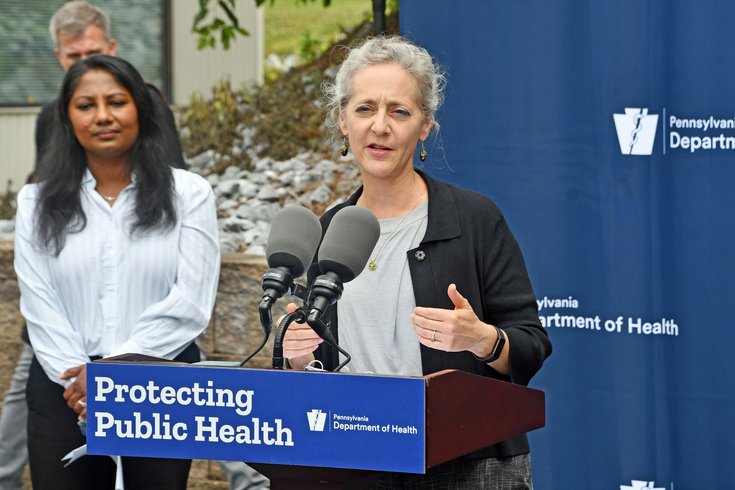
Two Lancaster County residents have died from measles, the Pennsylvania Department of Health says. Above, state health secretary Dr. Debra Bogen addresses the state's measles outbreak earlier this year.
Two Lancaster County residents have died from measles, marking Pennsylvania's first measles deaths in 35 years, state officials said Tuesday.
Both people who died were unvaccinated, but health officials declined to release additional details about them in order to protect the privacy of their families.
MORE: More protein in your breakfast or snacks won't give you more muscle without more work
"I want to be clear: this illness and death from measles is completely preventable," Gov. Josh Shapiro said during a press conference Tuesday at Lancaster General Hospital.
The deaths are the first measles deaths in the United States this year.
"My deepest sympathies are with the loved ones who are facing this unimaginable loss," Dr. Debra Bogen, state secretary of health, said in a statement. "Because measles was largely eliminated in the Commonwealth for more than three decades, people are not familiar with this disease and don't fully understand the potential severity of the illness. We want to ensure every Pennsylvanian has the information they need to protect themselves, their loved ones and their communities. As a physician, I want to make sure that people understand that the (measles, mumps and rubella) vaccine is safe and provides the best protection we have against measles."
There have been 393 confirmed measles cases in 29 counties in Pennsylvania so far this year, the health department said. Lancaster County has been the site of multiple outbreaks in recent months.
"This disease does not respect county lines or religious lines," Shapiro added. "It goes after all who are unprotected."
The best protection against measles, a highly contagious, viral disease that has no cure, is to get the MMR vaccine, Shapiro and Bogen emphasized.
The state health department has been working closely with school districts and school nurses to ensure they are prepared to handle possible measles cases, Bogen said. The department also has been holding more vaccine clinics in various communities and offering more educational materials to health care providers.
Health care providers in Pennsylvania typically administer 25,000 doses of the MMR vaccine each month. Over the past month, that has increased to 35,000 doses, Shapiro said, citing that as evidence of the impact of public health efforts.
Measles cases have been on the rise nationwide; childhood vaccination exemption requests are increasing and vaccination rates are declining. Measles cases are at their highest in 35 years, even as the Trump administration calls into question the standard childhood vaccination schedule. President Donald Trump signed an executive order last month saying that the MMR vaccine should be given as three separate shots.
"Let's speak truth for a moment: Folks are spreading skepticism about things like the MMR vaccine without any evidence to back up their claims," Shapiro said. "That scares a parent who's just trying to do the right thing by their kids, and it plays a role in why so many people right now are getting measles for the first time in decades."
People should discuss their questions about the MMR vaccine with trusted health care providers in order to make well-informed decisions, Shapiro said.
The American Academy of Pediatrics recommends children get the MMR vaccine in two doses. The first should be given between 12 and 15 months of age and the second dose between ages 4 to 6.
Measles can cause brain swelling and pneumonia and can be life-threatening. Nearly 20% of people who get measles are hospitalized, according to the Pennsylvania Department of Health.
For every 1,000 people that get measles, about 1 to 3 die of the illness. Vaccination against the disease helps protect the recipient and others from getting measles, the Mayo Clinic says.
Measles symptoms emerge approximately seven to 21 days after exposure. Symptoms include a blotchy rash in shades of red, purple or brown. Other symptoms include fever, dry cough, runny nose and red, itchy eyes.
Pennsylvania residents who think they may have been exposed to measles or who are symptomatic should contact the state health department's hotline at (877) 724-3258.