





July 03, 2026

 Trevor Hughes/Imagn Images via Reuters Connect
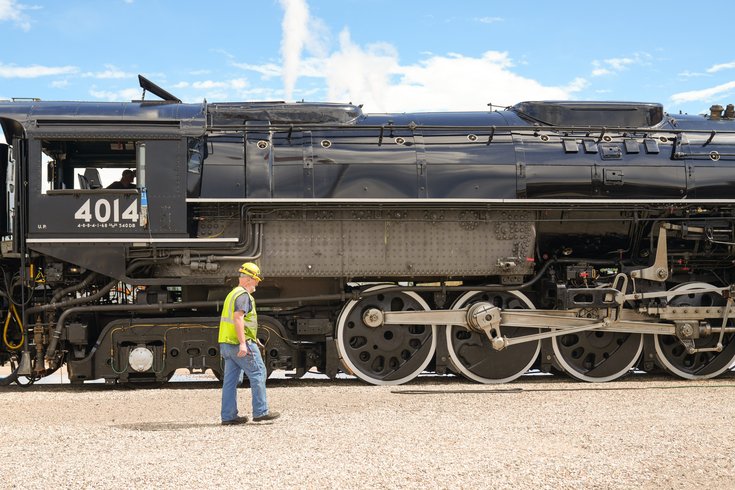
Union Pacific Railroad's 'Big Boy' steam locomotive arrived in Philadelphia on Friday in the midst of a heatwave that has disrupted Fourth of July plans. In the Reading area on Thursday, more than 100 people who went to see the train were treated for heat sickness. Above, the locomotive is shown in Wyoming in May.
Emergency responders treated more than 100 people for heat-related illnesses on Thursday at the Reading Railroad Outer Station in Muhlenberg during an event for the tour of Union Pacific Railroad's Big Boy steam locomotive, authorities said.
Thousands of people gathered at the station, about five miles north of Reading, to witness the arrival of Big Boy No. 4014, the world's largest operating steam locomotive, as it makes its first trip to the East Coast. Many stood for hours on blacktop at the station to see the train, which arrived at 1:30 p.m. and is decorated for the nation's 250th anniversary. Temperatures topped 100 degrees.
Emergency services were called in from agencies in Berks, Montgomery, Chester, Lancaster and Schuylkill counties to assist people impacted by the weather.
The 133-foot-long locomotive traveled into the Philadelphia region later Thursday afternoon on the Norfolk Southern rail network along the Schuylkill River. It stayed overnight at Abrams Yard in King of Prussia before departing Friday morning en route to the Navy Yard in South Philadelphia.
Big boy has arrived in Philly! Here is it crossing the wye to turn around near East Falls pic.twitter.com/9rFnteKoIx
— Alan Fisher (@alanthefisher) July 3, 2026
Big Boy coming to Philly today!
— Jeremiah Kane (@WhosJFK) July 3, 2026
The world's largest operating steam locomotive!
Friday July 3rd it departs 9:00 am from King of Prussia, PA to make its way to Philadelphia for the #america250 Block Party and will be parking off League Island Blvd in South Philly by the sports… pic.twitter.com/werjbdvmpp
Big Boy will be displayed for crowds from 8 a.m. to 2 p.m. Saturday and from 9 a.m. to 3 p.m. Sunday at Intrepid Avenue and League Island Boulevard in the Navy Yard. Admission is free both days. The area does not offer much protection from the sun.
Independence Day is expected to see a high of 99 degrees in Philadelphia, according to the National Weather Service. Sunday's high is expected to be around 90 degrees, with showers and thunderstorms likely after 2 p.m.
A massive heat dome stretching from the Midwest to the East Coast has disrupted holiday events and led to warnings from public health officials to take precautions over the holiday weekend. Philadelphia has been under a heat health emergency that took effect Wednesday morning and continues through 8 p.m. Sunday.
The city's Salute to Independence Parade in Center City was canceled Friday due to the heat, but the One Philly Unity Concert on Saturday will continue as planned starting at 3 p.m. on the Benjamin Franklin Parkway. The fireworks display is expected to start between 11:30 p.m. and midnight.
Friday's forecasted high of 103 degrees will bring heat index values as high as 110 degrees, the NWS said. The city's record temperature for July 3 is 104 degrees, set in 1966. The record for July 4 is 103 degrees, set the same year.
Saturday's World Cup knockout match between France and Paraguay, scheduled to start at 5 p.m. in South Philly, could end up being the hottest during the entire soccer tournament and has prompted concerns about the health of players and fans.
The city has extended hours for the Philadelphia Corporation for Aging's Heatline (215-765-9040) and for cooling centers and is alerting people to available spray parks and pools.
The heat also has disrupted travel in the region, including more than two dozen canceled Amtrak trains in the Northeast. NJ Transit riders also have seen significant delays and cancelations during the heat wave.
Health officials advise people attending outdoor events and holiday gatherings to stay hydrated, dress appropriately in light-colored clothing and take breaks from the sun. Morning activities are recommended over spending time outdoors in the afternoon, when temperatures are highest. Avoid drinking alcohol, because it affects the body's ability to regulate temperature.
Heatstroke results from being in a hot environment — particularly hot, humid weather, the Mayo Clinic says. It also can result from doing strenuous activities in hot weather, most commonly among people who are not used to high temperatures.
Common symptoms of heatstroke include dizziness, headache, vomiting, unusual behavior and disorientation. Other signs of heat-related illness include heavy sweating, intense thirst and painful muscle cramps. Serious complications include vital organ damage and death. Children and older adults face the highest risks.
People who believe someone is suffering from heatstroke are advised to seek medical attention immediately. While waiting for treatment, the person should be moved inside or to the shade, and excess clothing should be removed. Cool them with whatever is available — wet towels, ice packs, cool water from a hose or a cool shower.