





May 13, 2026

 Provided Image/Temple Health
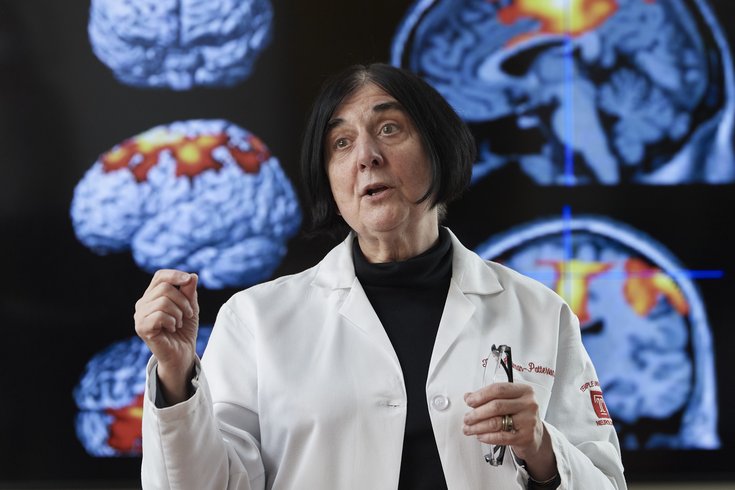
Dr. Terry Heiman-Patterson, who leads Temple Health's MDA/ALS Center of Hope, is helping develop digital twin technology to help predict critical milestones for people with ALS.
Dr. Terry Heiman-Patterson has spent her career treating patients diagnosed with ALS, a rapidly progressing disease that eventually robs people of their abilities to walk, speak and breathe.
On average, people live about three years after being diagnosed with ALS, also known as Lou Gehrig's disease. There is no cure.
MORE: Medical experts rename polycystic ovarian syndrome, saying its effects are not just gynecological
But new research at Temple University involving the use of so-called "digital twins" has the potential to revolutionize treatment for people with the neurological disorder.
"ALS has been my passion since 1982, and I've been trying to make a difference every way I can," said Heiman-Patterson, who leads Temple Health's MDA/ALS Center of Hope. With digital twins, she said, "I see that we can really, really make major strides."
A digital twin is a virtual replica of a person that utilizes all their clinical information, genetic testing, lab work, scans and metrics from wearable devices. That data is synthesized with available information about ALS cases from open-network databases across the globe.
As ALS progresses, the digital twin evolves alongside its human counterpart. Using artificial intelligence trained on data from ALS cases that have developed in a similar fashion, the twin can help forecast the length of time before the patient needs a wheelchair or ventilator, for instance.
A digital twin is not a "clone" of a patient, said Dr. Huanmei Wu, Heiman-Patterson's research partner. Rather, it is a digital model that receives and updates itself on real-time data from the patient.
"It's a continuous communication between the physical patient and their digital twin," said Wu, professor and chair of the Department of Health Services Administration and Policy at Temple University's Barnett College of Public Health.
The goal is to make a very unpredictable disease more predictable, Wu said.
ALS affects the nerve system in the brain and spinal cord. Its cause is still unknown, although a small percentage of cases are inherited. The disease often begins in subtle ways, with clumsiness, muscle twitching, cramps and changes in thinking. The majority of cases are in men over 55, but the disease can affect anyone.
An estimated 35,000 people in the United States have ALS, and there are about 5,000 new diagnoses each year. The only treatments are symptom management and medications that may slow the advance of the disease. But it is very hard to know how ALS will progress from person to person, Heiman-Patterson said.
Digital twins would help doctors forecast how the disease might advance in different patients, guide the course of treatment, round out placebo groups to advance clinical trials and assist people in making important end-of-life decisions.
"As a clinician, if I have a digital twin and I'm sitting with someone, I can predict when they're going to need something," Heiman-Patterson said. "I can talk to them about when they should think about their bucket list. ... I can give them information that's actionable, that they can make decisions on."
Digital twin technology is not new. Its use is evolving in various industries, including manufacturing, aerospace, urban planning and health care. Using virtual models of real-world objects enables researchers to test out ways to make advancements before applying them in real time.
Digital twins "can act as virtual crystal balls, allowing people to peer into the future, spot problems before they materialise and test wild ideas without real-world consequences," the Economist reported in 2024. "For businesses, this should mean better designs, more streamlined operations and fewer costly blunders. For society, the promise is equally tantalising: personalised health care, cities that flow and breathe more easily and, thanks to the threats exposed by climate modelling, clues as to how the planet might avoid environmental catastrophe."
In medicine, digital twins offer models that synthesize enormous amounts of available data and change alongside the patient. Digital twins are being used in oncology, for instance, to predict how different kinds of cancers may advance and how fast tumors grow.
"You have all of these data sources, and the whole goal is to harmonize it and to make it useful," Heiman-Patterson said.
At Temple, the first step is to build a digital twin model for ALS that can be used in a simulation study. Once the technology is more refined, digital twins can be incorporated into studies with patients with ALS – which could be revolutionary because patients only have one shot at participating in clinical trials.
"If I'm joining a trial, and 50% of people get sugar pills, and I only have that one chance, you know what that does?" Heiman-Patterson said. "It drives me to charlatans that are selling crap online and telling me that this is going to make me better, and I'm spending my life savings, including my kid's college fund, to get unvalidated treatments that don't work."
Using digital twins in studies would supplement placebo groups, requiring fewer actual human participants. Digital twins may also help predict what medications might work best for each person with the disease, said Heiman-Patterson, who has been waiting for an advancement like this for her entire career.
"We couldn't do this five years ago," Heiman-Patterson said. "The stars are lining up now."