





April 18, 2026

 Harrison Jones/Imagn Images
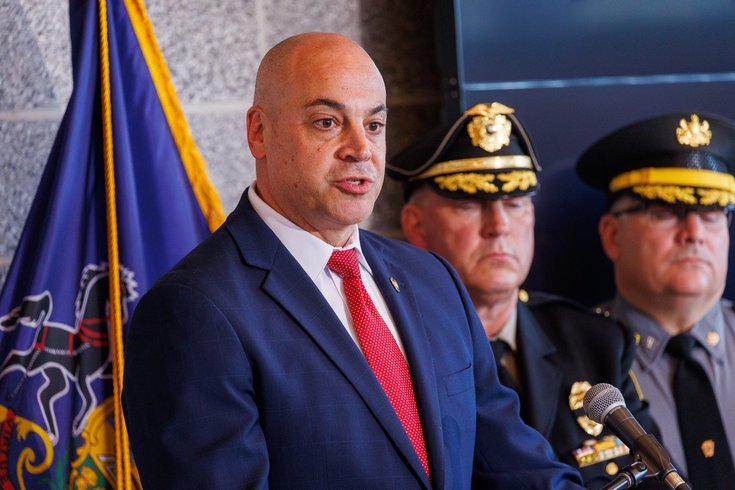
Pennsylvania Attorney General Dave Sunday, left, is among dozens of attorneys general to sign a letter supporting a proposed federal rule to require more transparency from PBMs managing health care plans provided by employers
Pennsylvania Attorney General Dave Sunday joined 44 other attorneys general around the country to advocate for a proposed federal rule that would require transparency from Pharmacy Benefit Managers around where they receive revenue.
PBMs are middlemen in the pharmaceutical industry that have faced scrutiny from lawmakers, regulators and critics for their alleged role in driving up drug costs.
Initially, they were created to help insurance providers process prescription drug claims, and still fill that role. But they've also grown in the last several decades. They create what are known as formularies — the list of drugs that are covered by a plan — and negotiate rebates and reimbursements with drug manufacturers.
They've been accused of receiving kickbacks for recommending specific products and lacking transparency around their business practices which could drive up insurance costs for employers.
PBMs are also responsible for reimbursing pharmacies when patients pick up covered prescriptions, and their contracts with them determine how much they will pay for a given drug.
The largest PBMs in the country have grown in size and stature in the health care industry, over the last several decades. The three biggest manage roughly 80% of all prescription drug claims. And each of those are operated by parent companies that also own major insurance and pharmacy companies.
A proposed rule from the U.S. Department of Labor would require more transparency from PBMs managing health care plans provided by employers. Around 136 million Americans receive health coverage through an employer or family member's employer.
It would mandate PBMs to disclose where their revenue comes from twice a year, and allow employers who provide health insurance plans that use their services to audit them.
The rule was written following an executive order signed by President Donald Trump called "Lowering Drug Prices by Once Again Putting Americans First."
A letter signed by 45 attorneys general, including Jennifer Davenport of New Jersey, is broadly supportive of the proposed rule, and also asks the Department of Labor to clarify states' roles in regulating PBMs.
As it stands, PBMs and trade groups representing them have held that federal law governing employer-sponsored health insurance plans preempts many state attempts to rein in or require transparency from PBMs operating in their state.
This is, for example, why a major piece of Pennsylvania legislation passed in 2024 to rein in PBMs broadly did not apply to many employer-sponsored plans.
The attorneys general's letter asks the U.S. Department of Labor to clarify that federal preemptions are not grounds to block states' PBM transparency laws, and to state expressly that the department "welcomes cooperative enforcement with state attorneys general where appropriate."
The rule has some critics, however.
The Pharmaceutical Care Management Association, a trade group representing the country's largest PBMs, submitted a letter calling it "duplicative" of a law recently signed by Trump, and warning the new requirements could ultimately end up raising the cost of their services.
"This rule would add significant costs without providing any additional meaningful transparency, and that's why we're calling on the Department of Labor to withdraw it," President and CEO of the Pharmaceutical Care Management Association David Marin said in a statement. "We share the Trump administration's goal of PBM transparency and are acting to make it reality. The DOL rule is simply costly government overreach without benefit for employers or American families. It should be rescinded immediately."
Some organizations and advocacy groups, including the Texas Hospital Association, submitted letters saying the rule did not go far enough. They requested it be expanded to cover what are called third-party administrators. Third party administrators are separate companies from PBMs, though they can be financially related.
The letter warns that, under a strict reading of the rule, PBMs could direct their revenue to legally separate, but financially connected, companies, which would be exempt from the same disclosure requirements.
"We encourage the DOL to ensure that all appropriate parties are included in the requirements to provide the necessary disclosures," it said. "For example, if a third-party administrator subcontracts PBM services to a third-party entity (which we have been informed does occur), those subcontractors must also be required to provide the information required to be disclosed."
Pennsylvania Capital-Star is part of States Newsroom, a nonprofit news network supported by grants and a coalition of donors as a 501c(3) public charity. Pennsylvania Capital-Star maintains editorial independence. Contact Editor Tim Lambert for questions: info@penncapital-star.com.