






April 20, 2026
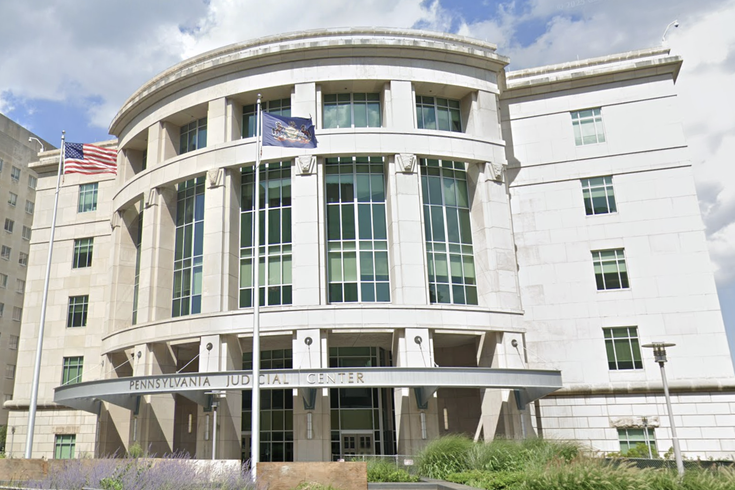 StreetView/Google Maps
In a 4-3 ruling on Monday, the Commonwealth Court of Pennsylvania struck down the state's ban of public funding for abortion care. Above, the Pennsylvania Judicial Center in Harrisburg.
Pennsylvania's ban on the use of Medicaid to cover abortion care was struck down Monday in a Commonwealth Court ruling that deemed the longstanding policy unconstitutional.
The 4-3 decision stems from a review of a lawsuit that was filed by a group of abortion care providers in 2019. They argued the section of state law preventing public insurance from covering abortion care violates equal rights provisions in the Pennsylvania Constitution by restricting women's access to care without comparable exclusions for men.
The suit also contended the state treats pregnant women differently depending on whether they plan to carry a pregnancy to term or terminate it.
"We conclude that the Coverage Exclusion does not operate neutrally with respect to a person’s exercise of the fundamental right to reproductive autonomy," Judge Matthew Wolf (D) wrote for the majority. Wolf was joined by Republican President Judge Renee Cohn Jubelirer and Democrats Michael Wojcik and Lori Dumas.
Monday's ruling marks the second time the Commonwealth Court has taken up the matter. In 2021, the court found the abortion providers lacked the standing to challenge the coverage exclusion. The Pennsylvania Supreme Court picked up the case in 2024, remanding it back to the Commonwealth Court to evaluate the constitutional challenge that had been made by the providers.
Pennsylvania Gov. Josh Shapiro (D) praised the court's decision in a statement on X.
"I've long opposed this unconstitutional ban, and as Governor, I did not defend it — because a woman's ability to access reproductive care should never be determined by her income," Shapiro said.
The state's restrictions on public funding for abortions were defended by Pennsylvania Attorney General Dave Sunday (R), who argued the state has an obligation and interest in protecting fetal life and the health of women.
The Medicaid exclusion did not apply to pregnancies in which abortion was necessary to avoid the death of the mother, and there were already exceptions for pregnancies resulting from rape and incest.
Sunday also contended the state has an interest in "not violating the conscience of those who object to abortion," a view the attorney general said is captured in the policy established by the legislature. The Commonwealth Court determined the abstract merit of such interests do not override the constitutional challenge to the law.
"Just because the legislature has in fact expressed a policy preference for favoring one group’s conscience rights over another’s, that does not mean it has a compelling interest in doing so," Wolf wrote in the majority opinion.
Leaders of Planned Parenthood's affiliates in Pennsylvania applauded the ruling.
“For decades, Pennsylvania has had a two-tier system for reproductive health care: abortion access for those who can pay, and a ban for those who can’t," the affiliates said in a joint statement. "Today’s ruling is a win for equality, throwing out that system and affirming the constitutional right to care. You do not have fewer state protections because you are pregnant, nor because you live in poverty."
The dissenting opinion in the case was authored by Republican Judge Patricia McCullough, who was joined by Republicans Anne Covey and Stacy Wallace. They argued the decision lacks sufficient factual review of the lawsuit's claims and imposes a funding burden on taxpayers for a "nebulous constitutional right."
"I simply cannot recall another case in which this Court has decided issues of such profound public importance in this kind of summary, we-believe-you-if-you-say-so fashion ..." McCullough wrote.
The Commonwealth Court's ruling marks a significant constitutional interpretation in the context of the U.S. Supreme Court's decision overturning Roe v. Wade in 2022. Many states immediately enacted restrictions on abortions after that ruling, prompting legal challenges from advocates that continue to unfold in state courts.
The Pennsylvania Attorney General's Office is reviewing Monday's decision, which could find its way back to the Supreme Court as part of a broader constitutional review of abortion access.