





April 21, 2026
For the last 18 years, I have been learning how to listen to a room where no one is speaking.
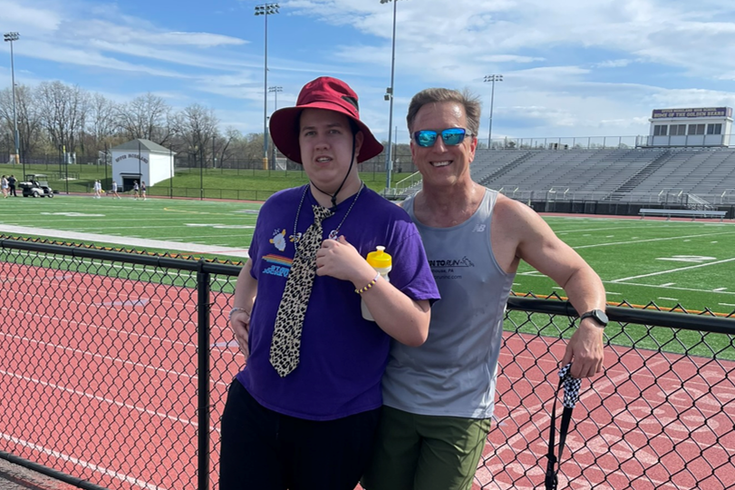
My son is 18 and severely autistic. At his level of disability, communication is not something that happens naturally; it is something we have had to architect from the ground up. There were no toddler milestones of asking "why" or sharing stories about his day. In fact, for a long time, he didn't recognize people as entities to interact with at all.
Helping him learn to pick up a single card to ask for a snack took months of focused, daily labor. Even today, nearly every interaction requires an intentional prompt. When you live in that reality, you stop believing that "better communication" is a matter of speaking more clearly or simply. You realize that the problem isn't the delivery of the message; it’s the underlying system of interpretation.
To support him, I had to stop looking for words and start looking for signals. I had to become a student of context, observing tiny, nearly invisible shifts in behavior to understand his intent. I had to learn how to guide growth while maintaining total acceptance, navigating a paradox that doesn't come with a manual.
Perhaps most importantly, I had to learn to ignore the "confident conclusions" of the outside world. People see a child struggling in a public space and assume they are seeing a lack of discipline. They have the data (the noise, the movement) but because they lack the context, their interpretation is entirely wrong.
That experience changed me. It forced me to slow down, observe more deeply, and question every assumption. And as I spent my days building these systems of understanding at home, I began to see the exact same "Silent Gaps" in the loudest corporate environments.
I’ve spent 30 years inside the machinery of growth, but the lessons from the last 18 years have fundamentally changed how I identify friction. What most organizations view as a people or strategy problem is usually something much harder to see: a silent, systemic failure of understanding that lives beneath the conversation layer.
We see this most clearly when we mistake agreement for alignment. When a leadership team nods at a new strategy, we document the plan and assume the work is done. On paper, it looks like a win for clear communication, but because the underlying assumptions weren't interrogated, the team leaves the room already heading in different directions.
That divergence eventually manifests as fragmented execution. Months later, one leader is leaning into aggressive market share while another is optimizing for a high-margin niche play. Both believe they are following the plan, but in reality, they are pulling the organization in opposite directions because they heard the same words but applied entirely different frames of reference to them.
This is what I call Systemic Drift. It happens when the organizational "Operating System" is broken—when the team is operating in the same room, but in two different realities. When things feel harder than they should, it is usually because the system people are operating inside of is misaligned.
This realization fundamentally changed how I think about competitive advantage. In my recent MBA coursework on Intangible Resources, I explored why some companies can protect their success while others lose it to commodities.
Real advantage is rarely about a better factory or a faster algorithm. It’s about Social Complexity, the unique, often ambiguous way a team interprets value.
When I led pricing for the personalized D2C business at Mars (MYM&M’s), our competitors couldn’t understand why people would pay $20 for $2 worth of candy. They tried to replicate our tactics and our marketing, but they failed because they missed the "Why." They were looking at the tangible product, while we were looking at the intangible emotional context of a child’s birthday or a couple's wedding.
We discovered a demand shelf where revenue tripled not by lowering prices, but by increasing them while removing barriers to the total event cost. We didn't have a better answer than our rivals; we were simply asking better questions about the systems of value our customers were using.
Today, I see a world obsessed with AI-driven efficiency and "proven" frameworks. But a framework is only as good as the system receiving it. As marketing becomes the "operating system for growth," the real differentiator isn't how fast you can generate content, it’s the Discernment to know which signals actually matter.
Infrastructure now matters more than campaigns. If you don't have a Decision Architecture that ensures every automated action is breathing the same brand soul, you aren't scaling, you are just accelerating your drift.
Most organizations don't need another expert with a stack of answers. They need the curiosity to slow down and observe how decisions are actually being made. They need to find the gap between what the data says and what the team believes it means.
It took 18 years at home to learn that true understanding is a choice, not an accident. In business, that choice, the willingness to architect clarity instead of just demanding it, is the only sustainable competitive advantage left.
These misalignments aren't random; they follow predictable patterns. Whether a team leans too heavily into rigid structure or drifts into the "Chaos Cycle," these behaviors are symptoms of an underlying system that has lost its clarity. If your team is working hard but things still feel slow, reactive, or simply harder than they should, you aren't imagining it. You are witnessing the impact of these invisible systemic frictions.
The next step isn't to work harder; it's to gain the discernment to see the system you’re actually operating in.
• Diagnose the Silence Gap: Deep dive into the patterns of organizational misalignment and learn how to recognize if your team is experiencing "Systemic Drift."
• The Architecture of Scale: Explore the Decision System Architecture we build at Growth Spectrum to realign fragmented organizations and restore predictable growth.
• Life Lessons & Leadership: Read more personal reflections on how parenting Ronan has fundamentally changed how I work, how I lead, and what we deliver for our clients.