






August 04, 2026

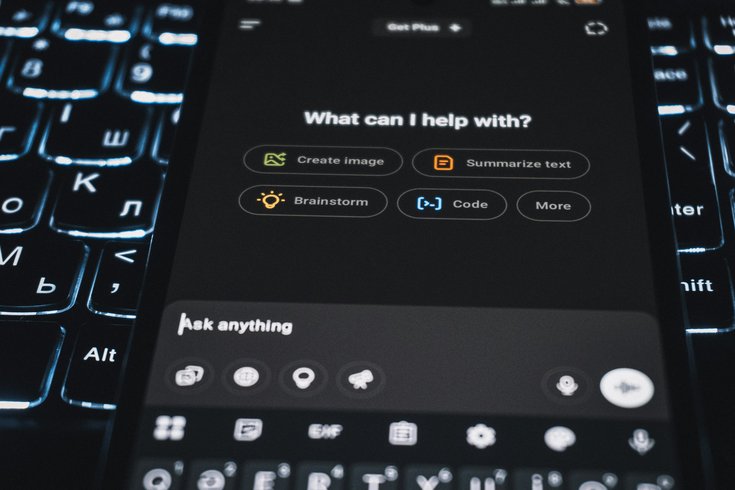 Zulfugar Karimov/Unsplash
When struggling with loneliness, some people are turning to AI companions for socialization. But researchers at Stanford found that it's not an effective long-term solution.
Although many people turn to them in hopes of fulfilling a social void, AI companions might be furthering the loneliness epidemic, a new study found.
Researchers at Stanford University analyzed conversations from over 1,000 users of Character.AI, an online tool that lets users design and interact with a number of chatbots. These AI companions are meant to simulate human relationships including asking and answering questions and providing advice and emotional support.
But the findings showed that it doesn't exactly work as intended.
"While some people turn to chatbots to fulfill social needs, we find that using chatbots in this way doesn't substitute for human connection — in many cases, people actually feel more lonely engaging with AI," Diyi Yang, one of the study's researchers, said in a statement.
Subjects were asked to share why they were using the chatbots, such as for productivity, curiosity or entertainment, and describe their relationship with their companions. Researchers then used AI tools to analyze the transcripts of chatbot conversations and determine how that compared to users' sense of well-being. Researchers also assessed the offline social networks of users, such as the number of friends and family members, that they felt like they could confide in.
According to the researchers, just under 12% of users said companionship was their primary motive for speaking with the chatbots and 50% used terms like friend, companion or romantic partner to describe the bots. Of the transcripts that the team reviewed, more than 80% were based around users seeking both emotional and social support from the online tools.
Despite this, findings showed that intense chatbot use from users with smaller in-person social networks correlated to a poor sense of well-being. People who were willing to share sensitive personal information with the companions were also more likely to have a lower sense of well-being.
Online AI companions are growing in popularity. The Ada Lovelace Institute in 2025 found that My AI from Snapchat has over 150 million users, Replika has an estimated 25 million users and 660 million people worldwide use Xiaoice.
Researchers said AI companions likely use sycophancy to communicate with users, meaning they affirm and mirror a user's thoughts and opinions to build trust. The bots are also designed to keep users online and continue the interaction as long as possible. Unlike a conversation with a human, virtual friends can't reciprocate a message with their own personal experience and might not be able to recognize or develop an appropriate response to emotionally fraught interactions.
"These AI companions are designed to promote engagement," researcher Dora Zhao said.
Because of that, researchers characterized the AI engagement as social snacks or junk food because they're a short-term fix for loneliness but lack some of the tools needed for long-term emotional and mental well-being. They can also further fuel the cycle of loneliness because when someone is drawn to AI companions to help with their feelings of isolation, it can reduce some of their social contacts in the real world, leading to more loneliness and disconnect.
Last year, the American Psychological Association issued a warning calling on federal regulators to establish more safeguards and regulations on AI chatbots to protect users from harm. The move followed multiple lawsuits against Character.AI, including one where a young boy attacked his parents after using the tool, and another where a young boy died by suicide. In May, Pennsylvania filed a lawsuit against Character.AI that alleges bots claimed to be licensed medical professionals when communicating with users.
Going forward, researchers stressed the need for the public to be informed of the risks of AI companions.
"We need to make people understand their potential downside, so they’ll be more careful about using them," Zhang said.