




November 11, 2026

Content sponsored by
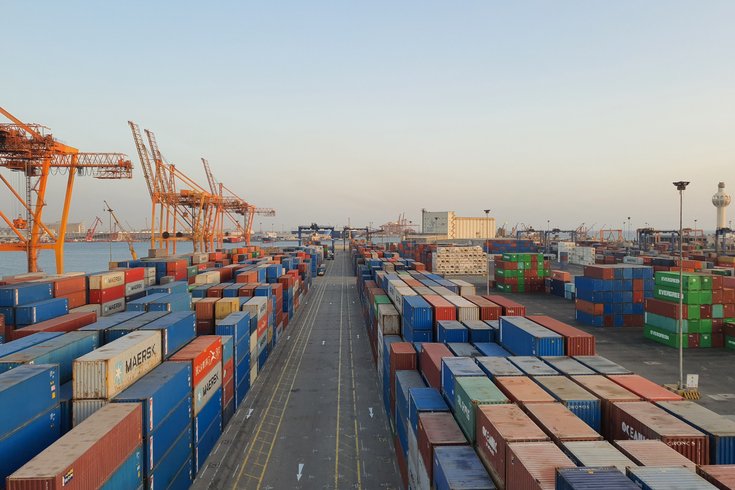 Bilal Ahmed/Pexels.com
International businesses are increasingly considering foreign currency pricing and payment options as global trade practices evolve.
For commercial business leaders across the Mid-Atlantic, cross-border commerce has long operated on a straightforward assumption: the U.S. dollar is the default currency of global trade. Whether purchasing specialized manufacturing components from overseas suppliers or exporting finished goods to international markets, regional companies have relied on U.S. dollar-denominated contracts to simplify transactions and limit foreign exchange exposure.
That familiar baseline, while still fundamentally intact, is undergoing a transformation. Across global supply chains, international trade partners are increasingly asking to price contracts, issue invoices, and settle transactions in their own local currencies. This operational shift represents a practical challenge that requires a fresh look at international payment strategies.
To understand why international trading partners are shifting their pricing preferences, business leaders need to look at the broader mechanics of foreign exchange reserves. A reserve currency is one held in significant quantities by central banks and monetary authorities to facilitate international trade, stabilize domestic exchange rates, and support national economic stability.
For decades, the U.S. dollar has held the primary position among global central bank reserves. Data from the International Monetary Fund shows that while the dollar remains the world's leading reserve currency, its share of global foreign exchange reserves has gradually drifted downward from around 71% two decades ago to approximately 57% in 2026. This shift does not signal a sudden collapse or a rapid flight from American financial markets. Rather, it reflects a long-term diversification strategy by central banks worldwide.
With a wider range of liquid, open, and market-based economies now available as reserve investment destinations, monetary authorities are allocating a larger portion of their reserves beyond the U.S. dollar. Currencies such as the euro, the Japanese yen, the British pound, and the Canadian and Australian dollars have gained broader acceptance in official reserves. Non-traditional reserve currencies from transparent, market-driven economies such as the Singapore dollar or the South Korean won are also absorbing share. While this trend does not imply a terminal decline in the dollar’s dominant role, it does reflect the prudent efforts of many reserve managers to diversify their portfolios amid a changing economic and geopolitical environment.
This movement toward local currency settlement introduces a number of practical considerations for business executives managing international operations.
Managing cross-border financial transactions requires proactive planning rather than passive reliance on historical standards. Companies can protect margins and capture foreign trade opportunities by implementing structured foreign exchange management practices that adapt to current global conditions.
Natural hedging strategies, such as matching foreign currency revenues against foreign currency expenses in the same monetary unit, can significantly reduce direct exposure to exchange rate swings. When that is not possible, forward contracts and other customizable currency hedging tools allow commercial finance leaders to lock in exchange rates for future transactions, providing essential budget predictability for upcoming international deliveries.
As global currency dynamics shift, the WSFS Bank FX team helps clients look ahead, understand how macroeconomic trends impact daily operations, and build resilient foreign exchange strategies. By combining regional market knowledge with comprehensive international banking capabilities, WSFS assists business leaders in evaluating cross-border payment structures, managing foreign currency volatility, and optimizing global cash management. Embracing currency flexibility empowers businesses to convert international trade shifts into a meaningful competitive advantage.
JC Fernandez-Seoane is Director of Foreign Exchange at WSFS. In his role, he specializes in helping clients navigate the complexities of cross-border transactions, as well as designing and implementing tailored foreign exchange risk management strategies for businesses and individuals with international exposures.
JC has worked with international banks across the foreign exchange and financial derivatives markets, initially in Europe (London, Paris, Madrid) and later in New York City. In addition to his corporate work, JC shares his knowledge as an adjunct professor, teaching risk management and international finance at several U.S. universities.
JC holds a master’s degree in international economics from Sciences-Po in Paris, an Executive MBA from London Business School in the UK, and a Master of Liberal Arts from Harvard University. JC has published an article in the Journal of Derivatives based on his master’s thesis.