






July 13, 2026

 Source/Image licensed from Ingram Image
Cases of cyclosporiasis, a disease that causes extreme digestive issues, have been skyrocketing in multiple states. The illness is caused by a parasite and often linked to fresh produce. Health experts advise thoroughly washing produce.
Home cooks are advised to take extra care when washing the fruits and vegetables due to a multi-state outbreak of cyclosporiasis, a parasitic disease that causes diarrhea.
Multiple states are reporting a spike in cyclosporiasis cases compared to the same two-week period last year, but health experts are unsure exactly what's causing the increase. On Friday, the Center for Disease Control and Prevention reported at least 843 confirmed cases since May 1, and up to 1,500 cases that require additional analysis. The true number of illnesses is likely higher, because the CDC does not report probable cases. Officials in Michigan, a hotspot for the illness, reported a jump to 2,600 cases in that state alone on Monday morning.
New Jersey has at least 31 cases and Pennsylvania has recorded 28 cases this year, according to the state's Department of Health. Nationwide, 86 people have been hospitalized. Cases impacted children as young as 5 and adults as old as 88, CDC data shows. No deaths have been reported.
Cyclosporiasis is often contracted after eating or drinking contaminated produce or water, but officials have yet to determine a single source for this outbreak. Cases have come from within the United States; people who have contracted the illness have not reported any travel in the two weeks prior to getting sick.
Cyclosporiasis is an intestinal illness that leads to watery diarrhea and sometimes "explosive bowel movements," the CDC said. It's caused by a parasite, and is most often contracted by consuming food or water contaminated with feces containing the parasite's eggs. It's treatable with antibiotics and not usually deadly, but it can last over a month if left untreated.
Once the parasite has been ingested, it can take anywhere from two days to two weeks for someone to experience symptoms. It doesn't usually spread from person to person. Though the eggs will appear in the feces of an infected person, the parasite is not usually infectious for another week or two, the New York Times reported.
Cyclosporiasis is not uncommon. A few cases are reported in every state each year during the spring and summer months. Case totals started going up in 2018 and 2019, NPR reported. This was attributed to climate change and improved detection methods. But the current outbreak is unusual due to its size. Michigan's cases, which are concentrated around the southeast part of the state, are a huge jump, as the state typically reports about 50 cases annually. New York, which also has seen a sizable increase, had reported 470 cases as of Friday.
At present, its unclear what is causing the latest outbreak. Previous outbreaks have been linked to raspberries, basil, lettuce, cilantro and snow peas.
The full extent of the latest outbreak likely won't be known for some time. Melanie Firestone, a foodborne illness researcher at the University of Minnesota, told CNBC that certain tests to detect food poisoning aren't typically searching for cyclospora, which leads to underreporting. Technicians also can't grow the parasite in a lab, so it can be difficult to generate contamination evidence from produce.
Another difficulty is that it can take up to two weeks for symptoms to emerge. People who have been infected may not remember everything they have eaten, and it the illness can stem from a single ingredient like herbs or lettuce distributed to multiple grocery stores. That means food distributors could be delivering the contaminated ingredient to stores and restaurants, making it more difficult to pin down exactly what's causing the outbreak.
Food safety experts say the best way to prevent the spread is to avoid consuming food or drinks that might have been contaminated. In some of the hotspot areas, that might mean swapping to bottled water until the source has been identified. Cooking produce at a temperature of 158 degrees or higher will kill cyclospora.
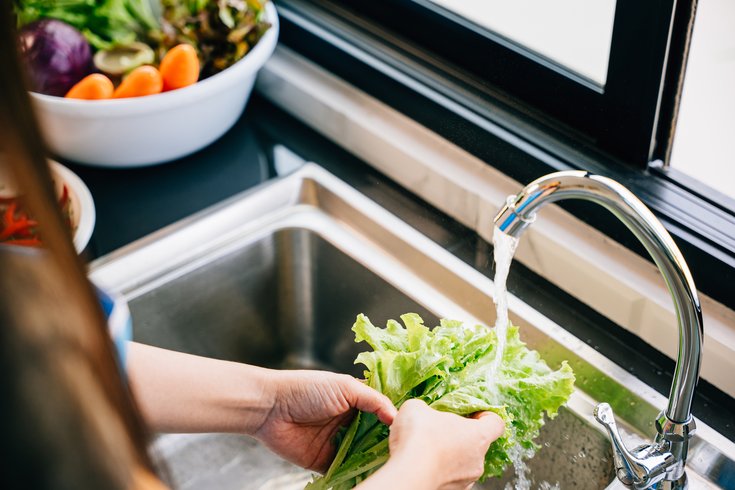
Fresh produce should be washed thoroughly, although it can be difficult to remove cyclospora completely. Adding vinegar or other produce cleaning solutions likely won't be any more effective than running water, the New York Times reported. Instead of bagged salad or lettuce, experts recommend getting a head of lettuce and throwing out the outside layer of leaves.
Hands should also be washed thoroughly with soap and water after using the bathroom and before preparing food, because that will kill cyclospora. Alcohol-based hand sanitizers will not.