



June 15, 2026
 Molly McVety/PhillyVoice
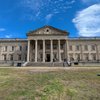
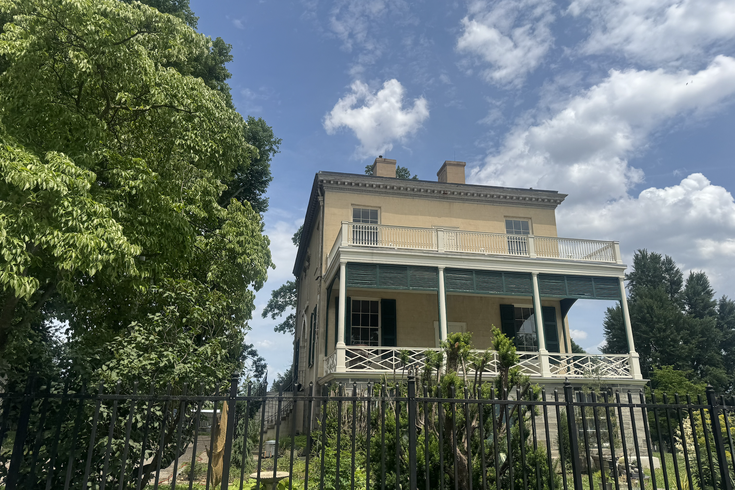
The history of Lemon Hill in East Fairmount Park stretches back centuries. The mansion overlooking the Schuylkill River was built in 1800 by merchant Henry Pratt. The surrounding land later became the city's first public park. Soccer fans who attend the FIFA Fan Festival at Lemon Hill during the World Cup will be able to see Pratt's mansion from the park grounds.
As thousands of soccer fans pack Lemon Hill for the FIFA Fan Festival over the coming weeks, the celebration of the World Cup continues a tradition that stretches back centuries on the scenic grounds of the Federal-style mansion in East Fairmount Park.
"Lemon Hill has always been a place for parties, starting with William Penn wanting to have his vineyards there," said John Sigmund, a resident caretaker of the Lemon Hill Mansion. "Penn actually did hire a vintner from the Bordeaux region (of France), who he had brought to Philadelphia with a whole selection of wine and grapes, but it did not do very well."
Lemon Hill, perched about 85 feet above the east banks of the Schuylkill River, was the first property the city purchased in 1844 to create the sprawling, modern-day Fairmount Park that now covers about 2,050 acres. The full Fairmount Park system today spans more than 10,200 acres of public land and waterways across a larger swath of the city.
Much of Fairmount Park was once dotted with country estates owned by wealthy settlers and later developed further by the leisure class in the first half of the 19th century. The Lemon Hill grounds along Sedgley Drive were transformed into the city's first public park in 1855, mainly to protect the purity of the Schuylkill River water supply during the Industrial Revolution.
William Penn purchased the woods and farmland, originally owned by the indigenous Lenape tribe, in the middle of the 18th century to create Springettsbury Manor. When the colonial tract was broken into smaller estates, the land at Lemon Hill was bought by wealthy Founding Father Robert Morris, who's known as the financier of the American Revolution.
"He didn't actually intend it as his principal house, but it was sort of his country retreat," Sigmund said.
Morris kept a large greenhouse filled with lemon, lime, orange and exotic citrus trees. He planted gardens and built vaults and root cellars at the property, turning it into a working farm on the hill. But Morris' land speculation drove him to bankruptcy and debtors' prison by the end of the century, forcing a sheriff's sale that gave his Lemon Hill property to ship merchant and real estate speculator Henry Pratt in 1799.
Pratt built the property's three-story mansion in 1800, highlighted by a series of oval rooms that overlook the river. He called the estate Lemon Hill, honoring Morris' contribution to the land, and expanded the greenhouse complex with new gardens. He also created an arboretum and fish ponds that were open to the public.
People who attend the fan fest will be able to see the north-facing facade of Pratt's mansion behind a gated area.
"When you're on the porches of the mansion, you can see one of the best views of Philadelphia looking directly over the art museum," Sigmund said. "It's an incredibly well-preserved example of Federal architecture. Just in the background, you'll see the city skyline from there."
Henry Pratt sold the Lemon Hill estate in 1836, two years before his death and at a time of upheaval in the U.S. economy. The Panic of 1837, a financial crisis sparked by western land speculation and a collapsing cotton market, dramatically decreased the value of Lemon Hill.
The owner at the time of the crisis had proposed turning the property into an industrial wharf that would have surrounded the mansion and greenhouse with docks and warehouses.
Several decades earlier, in 1815, Philadelphia had relocated its main water-pumping station from Centre Square — a steam-powered operation — to a dammed section of the Schuylkill River. The Fairmount Water Works, first known as the Schuylkill Water Works, was an engineering marvel that became the nation's second most visited tourist destination after Niagara Falls, Sigmund said.
Fearing environmental degradation, the city intervened to purchase 114 acres surrounding Lemon Hill at a bargain of $75,000.
"It was sort of divine intervention or serendipity that there was a stock market crash," Sigmund said.
Before establishing Fairmount Park, the city leased Lemon Hill to local brewer P. Zaiss, who turned the grounds into a beer garden used by lager-drinking German immigrants. Blue laws at the time prevented drinking on Sundays, but the German community would gather at Lemon Hill for choral singing.
"They would do these singing festivals that they said was part of their culture, but of course they insisted that the beer drinking was also part of their culture," Sigmund said. "And I don't think anybody would argue that. It's like the original Parks on Tap."
The beer garden did a number on the grounds, leaving Pratt's greenhouse and gardens in disrepair. The greenhouse was ultimately torn down, and while there are no more citrus trees, the site is still home to a fish pond.
The city created Fairmount Park at Lemon Hill in 1855, becoming an environmental steward and early manager of public programs for green space.
Fairmount Park is still home to about a dozen preserved mansions, many of which are open for public tours and history education. Sigmund, who serves as director of partnerships and sponsorships at the nonprofit Fairmount Park Conservancy, said the park and its mansions have a symbiotic relationship.
"If it wasn't for these houses there would be no park, but conversely, if it wasn't for the protection afforded by the park, Lemon Hill Mansion would have been long gone," Sigmund said. "It would have been Lemon Hill condominiums."
In the second half of the 19th century, Lemon Hill became one of Philly's premiere gathering places.
German American singing societies from across the country held the 10th national Sängerfest at Lemon Hill in 1867, bringing thousands of people to the grounds to drink and sing together.
"They started the event at the Academy of Music and did a procession all the way up to Lemon Hill," Sigmund said. "It was very traditional classical music, but at the time, Richard Wagner was the pop icon."
At the 1876 Centennial Exposition, Lemon Hill Mansion hosted an ice cream stand and restaurant surrounded by an amphitheater for live music.
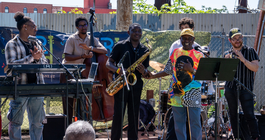
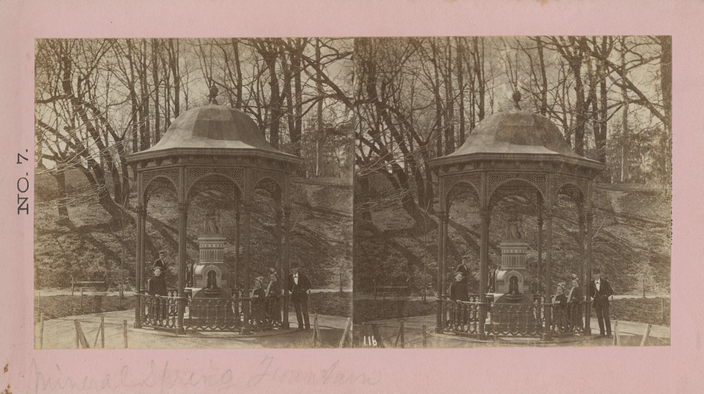
A pair of historical photographs show men and women standing together at a gazebo that housed an iron fountain that was installed at Lemon Hill in 1871. The photo was taken in 1876.
The city's Fairmount Park Commission constructed a larger music pavilion in 1888, hosting large orchestral performances that drew massive crowds into the 20th century. A series of free concerts in the early 1920s brought about 20,000 people to Lemon Hill.
As music grew more popular at Fairmount Park, the city built the original Robin Hood Dell about 1 1/2 miles from Lemon Hill. The music venue later became the site of today's Dell Music Center, and in the late 1950s the Robin Hood Dell relocated to the grounds of the present-day Mann Center for the Performing Arts.
Lemon Hill Mansion underwent a major architectural restoration in 1926 and spent three decades as the private home of Fiske Kimball, the first director of the Philadelphia Museum of Art, and his wife Marie. The mansion was transitioned into a museum in 1955.
Lemon Hill has endured as a gathering place for summer barbecues and a stop along the circuit of the Philadelphia International Bike Championship, now known as the Philadelphia Cycling Classic, which will return at the end of August after a 10-year hiatus.
Fairmount Park Conservancy now serves as a steward of Lemon Hill and the rest of the park system. Lemon Hill Mansion has undergone architectural preservation, including recent conservation work on its windows, and continues to host tours managed by Philadelphia Parks & Recreation. Tours are closed during the FIFA Fan Festival, but will return Thursdays through Sundays in August after the World Cup. The grounds received signifiant infrastructure and accessibility upgrades ahead of the soccer watch parties.
Crowds, detours, traffic and noise in and around Lemon Hill will be a hassle this summer for some neighborhood residents not used to the historical bustle the grounds once attracted, but Sigmund said the fan fest is helping to restore one of the city's communal treasures.
"I think this hopefully will expose it to a larger audience, especially people from out of town that typically wouldn't seek out this section of Fairmount Park," Sigmund said. "In the long term, it's always a good thing when the magnifying glass is on your park and dollars are being invested in your park."