

April 15, 2026
 Michael Tanenbaum/PhillyVoice
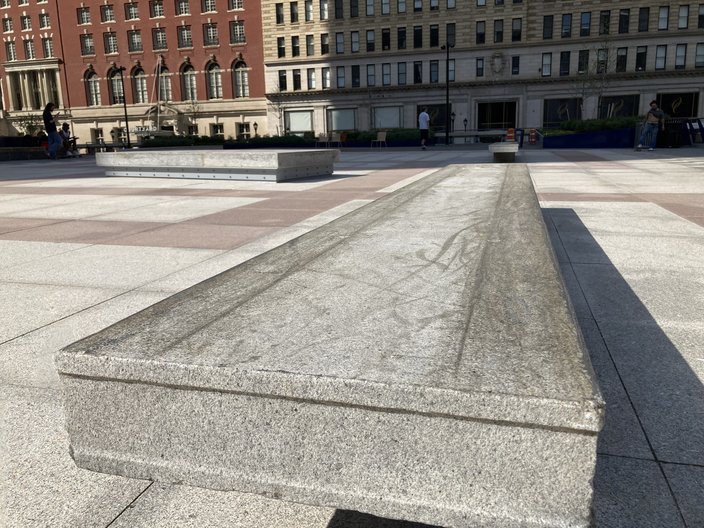
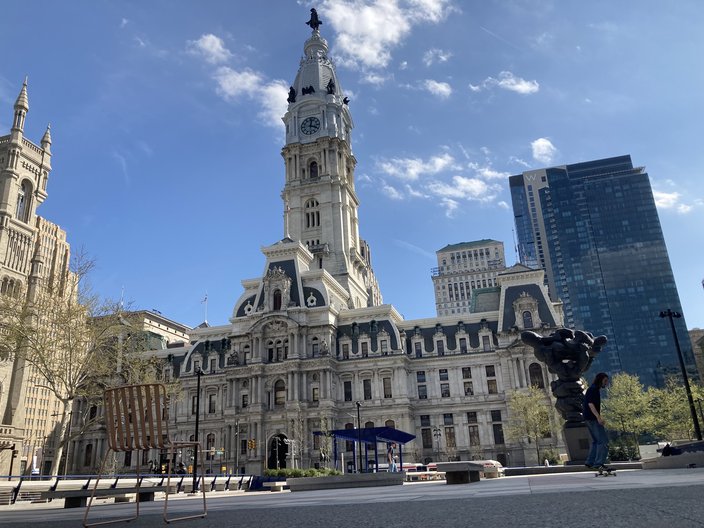
Thomas Paine Plaza, known to skateboarders as 'Muni,' officially reopens Friday after a three-year renovation. A section of the plaza was created for skateboarders using materials salvaged from the original Muni, LOVE Park and Dilworth Plaza outside City Hall. All three plazas were iconic in global skateboarding culture for decades before they were redesigned.
For the first time in three years, Thomas Paine Plaza will reopen to the public Friday after an $18 million renovation of the space outside the Municipal Services Building.
Against all odds, the new plaza along John F. Kennedy Boulevard features a sanctioned skateboarding area built with materials salvaged from some of Center City's lost havens for skaters.
"It's been a battle," said Pat Heid, a leader at the nonprofit SkatePhilly, which put pressure on the city to support skaters in the redesign. "Our community just kept persevering."
It's no exaggeration to call Philadelphia one of the world's most influential skateboarding cities.
When the sport's popularity boomed in the 1990s, fanning around the globe from its roots in Southern California, Center City became a hot spot for street skating at LOVE Park, City Hall and Thomas Paine Plaza. All three downtown spaces were designed in the 1960s by architect Vincent Kling, who envisioned modern outdoor areas that would serve pedestrians and office workers.
The granite surfaces, benches and stairs at the plazas also furnished the perfect public infrastructure for young people to skate and destroy. The city observed the property damage — and paid for it in maintenance costs — but largely overlooked the impact the plazas had on the growing sport.
Countless professional and amateur videos feature Philly's plazas as aesthetic hallmarks and places of tradition in skateboarding culture, which now supports a multibillion dollar industry and holds a seat at the Olympics.
In 2004, two years after Philly formally banned skateboarding at LOVE Park, DC Shoes offered the city $1 million to help pay for the park's upkeep for a decade. The city rejected the offer. Instead of leaning into skate culture, as cities like San Francisco and Barcelona have done for decades, Philly chose to keep squabbling with skaters for years until briefly welcoming them back to LOVE Park ahead of its demolition in 2016.
Despite the hostility from the city and police, skateboarders viewed Philly's three plazas as sacred grounds well worth the trouble to ride and defend.
"I've seen 13-year-old kids get tackled by cops at LOVE Park. I've been chased for 10 blocks by bike cops. I've had friends arrested," Heid said, reflecting on the struggles of skating in Center City. "They were trying to keep us out of there, and it was a hard activity to pursue."
All three of the Kling-designed plazas in Center City have been gutted and redesigned from their original layouts over the past 15 years, leaving skateboarders with a shrinking downtown footprint.
City Hall's Dilworth Plaza, which once hosted an X Games street competition in 2001, got flattened and skate-proofed as part of a redesign that was finished in 2014. LOVE Park, the premier Philly skate spot that was re-created in the video game series "Tony Hawk's Pro Skater," was redone without any of the features that once made it appealing to skaters.
Thomas Paine Plaza, known among skaters as "Muni," remained the final bastion until 2023. Then the city whisked away its oversized replica board game pieces — relics from the '90s-era public art commission "Your Move" — and went about plans for a renovation that initially had no accommodations for skaters.
"This was basically the last shot our community had of getting a space downtown, and we all kind of knew that," Heid said.
Heid, 38, works as a sales rep for Vans and has spent years advocating with others for the preservation and creation of skate spots in Philly. He got support from Vans for the renovation of Northeast Philly's Whitehall Skatepark and more recently spearheaded bringing skateboarding amenities to South Philly's Rizzo Rink under Interstate 95.
When city contractors started dismantling Thomas Paine Plaza, SkatePhilly intervened to salvage the granite benches skaters had long used there for grinds and slides. Heid and other veteran skaters joined a Philadelphia Art Commission meeting about initial concepts for the redesign and urged officials to give them a seat at the table during the public comment period.
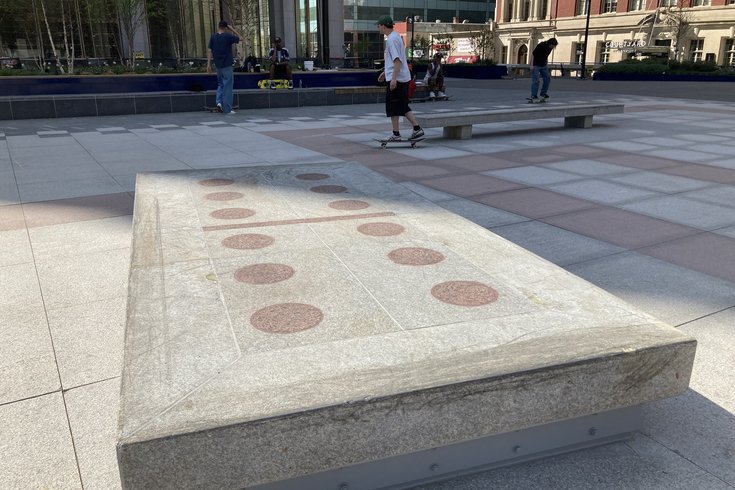
Four benches skaters used at the original Thomas Paine Plaza were salvaged and reinstalled at the renovated space. A fifth bench at the skate area was salvaged from former layout of Dilworth Plaza outside City Hall.
"They told me to prepare an argument," Heid said, recalling the lengthy process he recounted last month in an interview with the New York City-based skate blog Quartersnacks.
In the summer of 2023, with the attention of city planners, SkatePhilly advocates were invited to join a private meeting at City Hall to present their case to the Department of Public Property and the Office of Arts, Culture, and the Creative Economy. Heid gave city officials a 24-page document detailing the history of Philly's plazas in the skateboarding world as part of his pitch for collaboration on the redesign.
Given the space and public amenities already available at LOVE Park and Dilworth Plaza, part of SkatePhilly's rationale was that skaters would be the most likely group to seek use of Thomas Paine Plaza. Employees at the Municipal Services Building also supported a new skate area, telling city officials it kept the plaza populated and safe, Heid said.
"It was enlightening for the city to kind of hear it the way it was framed up to them because ultimately, they were like, 'OK, I think we understand this a little bit more,'" Heid said. "To me, it was like it was never understood. There's always this negative connotation about skateboarding. It's just damaging. But after that was all laid out to them, everything kind of got easier. It was like they were excited to work with us."
The new skate area is only about one-fifth the size of the former Muni plaza, but it will serve as an homage to the legacy of skateboarding in Philly and a possible glimpse of its future.
The space features four benches from the original plaza, one from the original City Hall layout and material salvaged from LOVE Park in 2016. At the center of the new skate plaza is a granite slab designed as a domino piece and made with material from LOVE Park. The dominos were among the most popular game pieces to skate at Muni over the past few decades.
"We thought it'd be really cool to incorporate a little bit of each of the three iconic plazas into the space," Heid said.
Vans contributed $300,000 to the project to ensure the surface would be granite, which is harder and more durable than concrete.
SkatePhilly tried to convince the city to bring back some of the game piece sculptures. Heid even contacted the California-based artists behind the commission, who were surprised and honored to hear their work connected with skaters, but the effort ultimately fell flat with city officials due to painting and other maintenance costs.
Some skaters secretly put Apple AirTags on a few of the game pieces to keep tabs on their fate. They were last tracked at a storage site in South Philly and will eventually be destroyed by the city, most likely.
"They just didn't ever want to have to deal with those again," Heid said.
Ahead of Friday's ribbon-cutting ceremony, which will be attended by Mayor Cherelle Parker, city officials described the new Thomas Paine Plaza as a public space with "a series of outdoor 'rooms'" designed to support various uses and activities.
A view of the skate area at Thomas Paine Plaza shows City Hall in the distance and artist Jacques Lipchitz’s bronze sculpture 'Government of the People,' originally installed in 1976.
"As part of honoring the site's history, we were intentional about preserving space for large-scale civic gatherings and creating, in partnership with SkatePhilly and Vans, a dedicated skateboarding area that recognizes the community's long-standing connection to the plaza," Lloyd Salasin-Deane, spokesperson for the city's Capital Program Office, said in a statement.
The renovation included building a new roof system below the paving, adding shaded areas with seating and doing landscaping around the plaza. There are also new ramps for accessibility, improved lighting and space for bike storage.
The renowned Jacques Lipchitz sculpture "Government of the People," which was cleaned earlier this year, is now back on full display at the plaza, too. The 30-foot-tall piece, installed in 1976, was hated by then-Mayor Frank Rizzo, who had fought to prevent its placement at the plaza. Rizzo's supporters later had a bronze statue of the former mayor put up next to the Lipschitz sculpture in 1998. The city removed the Rizzo statue in 2020 during protests over the police killing of George Floyd, acknowledging complaints from those who viewed it as a symbol of police brutality and discrimination under Rizzo's administrations and in his earlier service as police commissioner.
The city reached a settlement last year with the Frank L. Rizzo Monument Committee, which had sued to have the likeness of Rizzo returned to them from storage with $80,000 worth of repairs completed to fix damage caused by vandals over the years. Any future placement of the Rizzo statue on public property would need to be approved by the Philadelphia Art Commission.
SkatePhilly still has access to granite and other materials salvaged from the old LOVE Park. Some of the granite was used for the creation of LOVE Malmö, a partial replica of the original park that was built two years ago in Sweden, and some has made its way into use at other skate spots in the city.
Skateboarders have already started using the new Muni space. Heid said he expects a crowd of skaters to show up Friday for the official reopening. He called the project a "big test" for partnering with the city.
"The goal is that it goes well, and we can hopefully build on this, potentially expand it or work on future projects together," Heid said.