


April 15, 2026
 Provided Image/Marc Glucksman
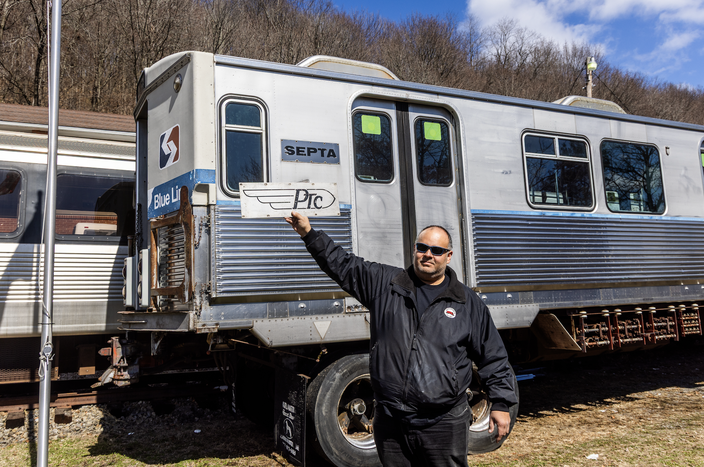
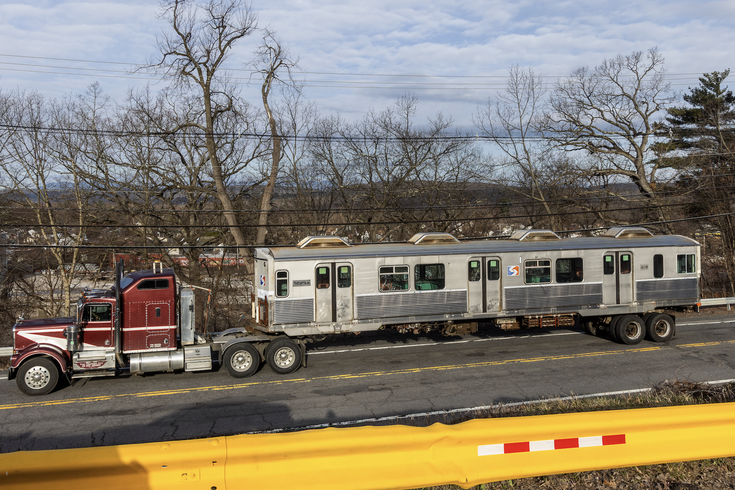
The Trolley Museum of New York acquired one of two existing railcars from SEPTA's 1960s 'Almond Joys' fleet. Above, the train is pictured in transit to the Kingston, New York, site.
A group of transit enthusiasts in upstate New York acquired a 66-year-old Market-Frankford Line car, which they say stands as a "time capsule" to Philadelphia in the 1990s and represents a significant piece of technological innovation.
The Trolley Museum of New York became the new owners of SEPTA Car #618, one of two vehicles of its kind that's still in existence since the discontinuation of its fleet in 1999. Now, the organization is striving to raise enough money to restore the train to operating condition so it can welcome riders again.
MORE: Speed cameras activated on stretch of Route 13 in Northeast Philly
In 1960, the Budd Company built 270 M-3 cars for the Philadelphia Transportation Company, which was acquired by SEPTA in 1968. The fleet represented some of the first fully stainless steel metros in the country.
In lieu of air conditioning, the cars were equipped with ventilation fans. Featuring distinctive humps on the roof for the blowers, the models were nicknamed “Almond Joys” for their resemblance to the popular candy bar.
The lightweight, corrosion-resistant construction allowed the fleet to remain operational for nearly 40 years, which at the time was a major achievement for transit longevity. Its design was emulated by the New York City Subway and other neighboring transit systems, said Marc Glucksman, a member of the museum.
“What it really represents is Philly’s investment in modern, stainless steel cars,” he said. “If you compare this to what you have today, the current cars don’t last nearly as long as this.”
A majority of the M-3 fleet was scrapped by the transit authority after their discontinuation, but two cars were donated to the Pennsylvania Trolley Museum in Washington County and the Seashore Trolley Museum in Kennebunkport, Maine.
Mark Wolodarsky, president of the New York museum, was involved in the 1999 donation to the Maine museum, where it sat in storage for nearly 27 years.
Recognizing its historical significance and potential for public use, he began working with officials in Maine to re-locate the railcar to Kingston, New York, in June 2023.
Mark Wolodarsky, president of the Trolley Museum of New York, spent nearly three years finalizing the transfer of a rare SEPTA subway car from the 1960s.
Securing the proper permits, purchasing the correct equipment and finding the space to house the 55-foot long, 26-ton vehicle took nearly three years. For a year, it sat in a storage facility in Vermont. Then on March 28, the trolley museum welcomed the railcar — its first artifact from the Philadelphia area.
For its age, Car #618 remains in good condition, Glucksman said, and its wall advertisements and cushioned seating is a moment in time from the mid-1990s.
A GoFundMe site has been set up raise funding to mount the car onto the museum’s tracks, replace damaged glass, restore interior and exterior lighting and update electrical components so that it can eventually be returned to operational condition and used for educational and display purposes. Wolodarsky said the museum is setting a $15,000 goal for the project.
“These historic transit cars represent the daily lives and memories of millions of riders,” the museum said in a statement. “Preserving Car 618 ensures that an important chapter of American rapid transit history remains accessible to the public.”
Car #618 will be on display for the museum's opening day on May 9.