





November 04, 2026

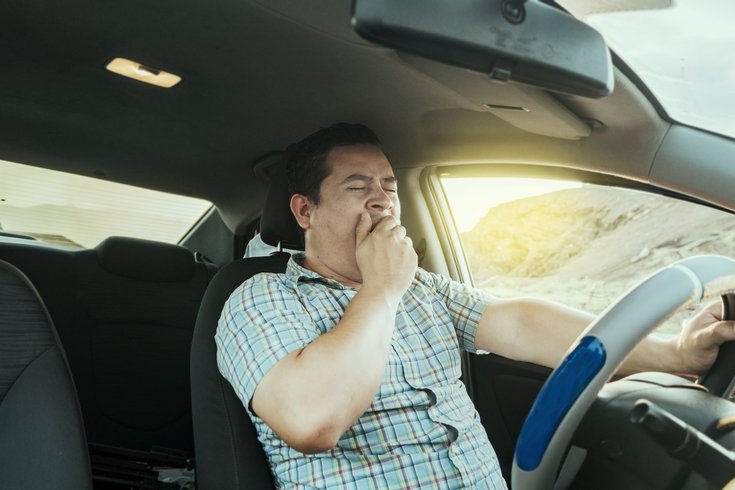 Source/Image licensed from Ingram Image
As many as 145 million Americans have 'driven while so tired they have trouble keeping their eyes open,' a new report says.
Driving while tired can be as dangerous as driving under the influence of drugs or alcohol – and a new report suggests that more than 60% of Americans do it.
The report, published by the National Sleep Foundation, found that 145 million people "have driven while so tired they have trouble keeping their eyes open."
This statistic has remained fairly stable since the National Sleep Foundation — a research, educational and advocacy nonprofit — began conducting the survey in 2022.
It is especially alarming in light of previous research that estimates drowsy driving is involved in 16% to 21% of all fatal crashes. In 2017, 91,000 crashes reported to police involved sleepy drivers, according to the National Highway Transportation Safety Administration.These crashes injured an estimated 50,000 people and killed 800 others.
Those figures may be underestimates, because people are "reluctant to admit they were driving while sleepy," the Sleep Foundation says.
Its new report found that nearly 35 million people drive while drowsy on a monthly basis and that about 40% of adult drivers are unaware of signs that they are too tired to be on the road, such as repeatedly blinking their eyes, nodding off and drifting between lanes.
Similar to the effects of using drugs or alcohol, not getting enough sleep can affect reaction time and judgement. Some drowsy drivers fall into "microsleeps," periods of 15 seconds or less in which a driver loses conscious control over their actions.
"Coffee, fresh air, or a loud radio may make you feel more alert temporarily, but they cannot replace sleep," Dr. Fariha Abbasi-Feinberg, president of the American Academy of Sleep Medicine, said in a post last month. Abbasi-Feinberg was not involved in compiling the new report.
The solution?
"Understanding the potentially catastrophic consequences of drowsy driving and taking proactive measures, both individually and as a society, can help reduce the number of drowsy driving-related crashes," the Sleep Foundation wrote in a position paper published last February.
The organization advocates for the further development and use of driver-monitoring, collision-prevention and pedestrian-awareness technology. It also offers these recommendations for all drivers:
• Prioritize sufficient, quality sleep.
• Recognize signs of drowsiness and stop driving if you feel drowsy.
• Avoid driving with less than 5 hours of sleep the previous night.
• Reschedule plans, pull over, assign a designated driver or use a rideshare or taxi to avoid driving while drowsy.
• Schedule regular stops on long trips about every 100 miles or two hours.
• Plan long trips with a companion who can watch for warning signs of drowsiness and who can also help drive if needed.
• Say or do something if you or someone you know has not obtained sufficient sleep to drive safely.
The survey was based on a nationally-representative sample of more than 1,000 people.