






October 13, 2026

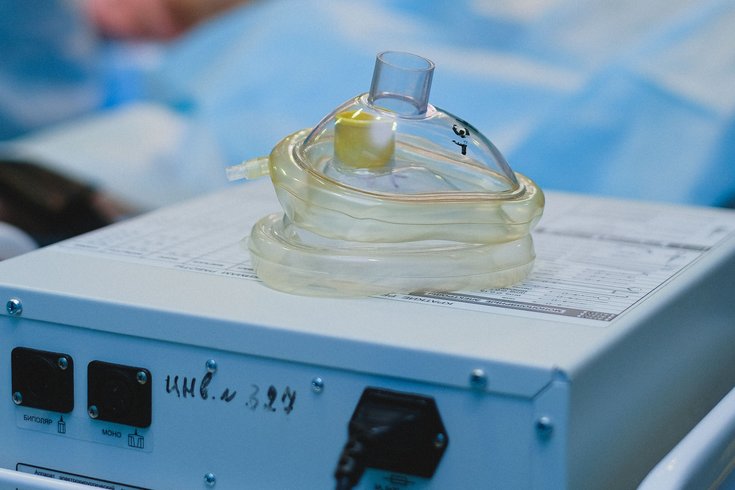 Anna Shvets/Pexels.com
Genetic variants associated with natural red hair may influence pain perception and responses to certain anesthetic and pain medications, but the effect varies considerably from person to person.
Emily is 38, healthy and has bright red hair. She is sitting in the preoperative area before surgery when the anesthesiologist walks in and begins asking the usual questions.
Any allergies? No.
Any problems with anesthesia in the past?
Emily hesitates. "Well … dentists always tell me I'm really hard to numb."
Then she adds something she has heard her entire life: "And everyone says redheads need more anesthesia. Is that actually true?"
It is one of those medical questions that sounds almost too strange to be real. But, unlike many health myths circulating online, this one has some legitimate science behind it. And recently, anesthesia itself has been unexpectedly prominent in the national news.
In Tennessee, 50-year-old death-row inmate Christa Pike survived a Sept. 30 lethal-injection attempt after receiving two doses of pentobarbital, a powerful barbiturate used for deep sedation and anesthesia as well as in execution protocols. Pike had been sentenced to death for the 1995 murder of Colleen Slemmer. The failed execution prompted Tennessee to halt additional executions while officials investigate what went wrong.
The circumstances appear to have had far more to do with difficulty establishing reliable intravenous access and delivering the medication appropriately than with any unusual biological resistance to anesthetic drugs. Her attorneys had warned beforehand about problems with her veins, and subsequent reports described significant injuries associated with the IV attempts.
So, Pike's case should not be viewed as evidence that redheads somehow "resist anesthesia." But it does raise a much broader and genuinely fascinating medical question: Why can the same powerful medication affect two people so differently? For people with natural red hair, part of that answer may sometimes be genetic.
Natural red hair is strongly associated with variants in a gene called MC1R, or melanocortin-1 receptor. MC1R helps determine which type of pigment the body produces. Certain variants shift pigment production toward pheomelanin, which contributes to red hair, freckles and fair skin.
But MC1R may do more than determine hair color. The melanocortin system also interacts with neurologic pathways involved in pain and the body's response to certain medications. That means the same genetic variation that helps give someone red hair also may influence how that person's nervous system processes pain. Your hair is simply the part we can see.
Now imagine another patient. Sarah, 45, is scheduled for a routine operation. She tells the anesthesia team that during a previous procedure, the doctors kept telling her she needed more medication than expected. She also has had dental work where one injection of local anesthetic was not enough. Should the anesthesiologist automatically increase all of her medications because she is a redhead?
No.
But should that history get their attention?
Absolutely.
One of the studies most often cited in discussions about red hair and anesthesia compared 10 natural red-haired women with 10 dark-haired women. The researchers found that the red-haired women required a higher concentration of the inhaled anesthetic desflurane to prevent movement in response to a painful stimulus — about 19% more in that small experiment. That study is probably responsible for much of the popular claim that "redheads need 20% more anesthesia."
But there is an important limitation. There were only 20 participants. And a much larger later study comparing 319 red-haired surgical patients with 1,595 controls found no clinically meaningful differences in anesthetic management, postoperative pain, recovery time or risk of awareness. The authors concluded that anesthetic care should not be changed solely because someone reports having natural red hair.
So, the 20% figure is not a rule. It is certainly not something an anesthesiologist simply plugs into a calculator based on hair color.
This may be the part that makes many redheads nod their heads.
Michael is 32 and has avoided the dentist for years. Why? Because every time he has needed dental work, the first injection of numbing medication seemed barely to work. Then came another injection. And sometimes another. He eventually began to believe he was simply "resistant to Novocain."
There may be some science behind experiences like his. A controlled study of 30 red-haired and 30 dark-haired women found that red-haired participants were more sensitive to certain forms of heat and cold pain and that injected lidocaine was less effective in the red-haired group. More recent dental research also has found that people with natural red hair were more likely to report difficulty becoming completely numb, although many factors — including anatomy, anxiety, inflammation and injection technique — can influence whether local anesthesia works well. That does not mean local anesthesia does not work in redheads. It means that individual response can vary, and a history of difficulty getting numb is worth mentioning before a procedure.
This is where the story becomes even more interesting. The answer is not simply yes.
Pain is not one thing. Heat pain, cold pain, pressure, a needle, inflammation, surgery and chronic nerve pain all activate the nervous system differently.
Research suggests that people with MC1R variants may be more sensitive to some painful stimuli while responding normally or sometimes differently to others. Studies also have suggested differences in the response to certain opioid medications. That is one reason studies on redheads can sometimes seem contradictory. One person may be more sensitive to temperature. Another may have difficulty getting numb at the dentist. Another may undergo completely routine general anesthesia.
The nervous system is far more complicated than hair color.
Imagine Emily from the beginning of our story is now in the operating room. Nobody looks at her red hair, presses a button marked "+20%" and walks away. Anesthesia does not work that way.
Medication is continuously adjusted based on the patient in front of us. An anesthesiologist watches blood pressure, heart rate, breathing, oxygen levels and the patient's response to surgical stimulation. We also consider age, weight, medical conditions, medications, previous anesthesia experiences, the operation being performed and how that individual responds minute by minute.
Hair color may be one clue. But it's never the entire answer.
When I meet someone before a procedure, there is a question that is much more useful to me than "Are you a redhead?"
It is: "What happened the last time you had anesthesia?"
That conversation can tell us much more. For example: "I always need several injections at the dentist." "I woke up extremely nauseated." "They told me I needed a lot of medication." "I was incredibly sensitive and slept for hours afterward." "I woke up during a procedure." "I have always been difficult to sedate."
Those details are valuable because they describe how you respond. And anesthesia is ultimately about taking care of an individual patient, not an average patient.
No. Being a redhead does not make anesthesia inherently unsafe. It does not mean you are destined to wake up during surgery. And it does not mean every medication needs to be increased.
But if you have experienced unusual responses to anesthesia, sedation, dental numbing or pain medications in the past, tell your physician. Do not assume it is irrelevant. Your previous experience may be one of the most useful pieces of information you can give the anesthesia team.
The myth: every redhead needs 20% more anesthesia.
The medicine: genetic variants associated with natural red hair may influence pain perception and responses to certain anesthetic and pain medications, but the effect varies considerably from person to person.
There is real biology behind the redhead-anesthesia connection — there just isn't a universal formula. And perhaps that is the more interesting lesson. Two patients can be the same age, the same weight and undergo the exact same operation yet respond very differently to pain and medication. Sometimes the explanation is obvious. Sometimes it is hidden in medications, medical history or previous experiences. And occasionally, part of the explanation may be sitting right on top of someone's head.
Dr. Michael J. Sabia is a professor of anesthesiology, division head of pain management and medical director of the Integrated Pain Program at Cooper Norcross Health. A board-certified anesthesiologist and pain medicine physician, he specializes in interventional pain management, chronic pain, minimally invasive pain procedures and multidisciplinary approaches designed to improve function and quality of life. His work and writing also explore the connections among nutrition, exercise, sleep, metabolic health, inflammation, wellness and longevity.
Sabia is the author of "The Wellness Formula: Unlocking a Doctor's Secrets to Longevity and Optimal Health," as well as the medical texts "Interventional Pain Management Procedures" and "Urogenital Pain." Through this column, he aims to make complex health science useful, practical and understandable — giving readers tools they can apply in everyday life to feel better, live healthier and take a more active role in their health.