



May 13, 2026

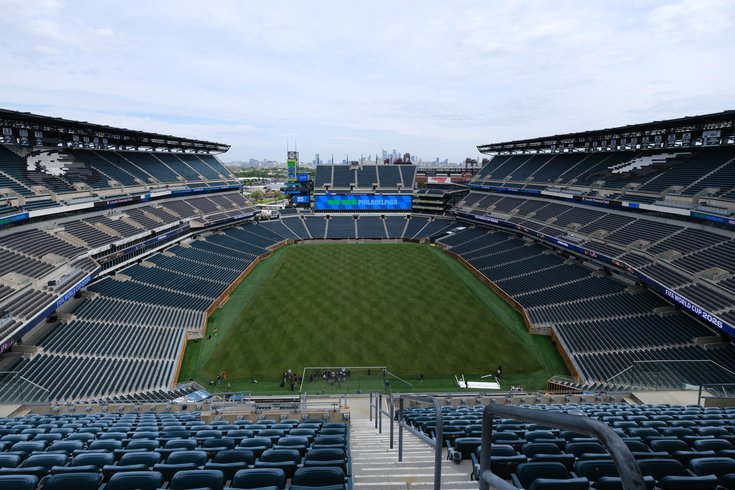 Kyle Ross/Imagn Images
The Philadelphia Department of Public Health is preparing for thousands of visitors when the World Cup is in town for six matches at Lincoln Financial Field in June and July. The pitch at the stadium in South Philly was unveiled Wednesday.
Public health officials from Philadelphia and four other World Cup host cities met Wednesday afternoon to discuss their safety preparations ahead of the start of the international soccer tournament on June 11.
Philly will host six World Cup matches at Lincoln Financial Field, including a knockout-round game on the Fourth of July, and more than half a million tourists are expected to visit the city during the 39-day event.
"We know it will be hot. We know that there's a good possibility that there will be poor air quality if there are wildfires," Philadelphia Health Commissioner Palak Raval-Nelson said during Wednesday's event hosted by the Big Cities Health Coalition. "We know that some folks will take the opportunity to enjoy themselves too much, and may get exposed to substances or other items that would not be so good for them."
The health commissioners of New York City, Atlanta, Dallas and Santa Clara discussed a range of potential public health concerns stemming from large crowds and international travel. Strategies to deal with outbreaks of infectious diseases, food safety hazards, sexually transmitted infections, drug and alcohol use and environmental risks are all at the forefront of planning at health departments in the 11 U.S. host cities.
Raval-Nelson said Philadelphia will have its cooling centers activated for heat health emergencies. She recommended residents and visitors use the city's Breathe Philly website that tracks air quality levels at 76 locations in the city. International travelers will be able to join a WhatsApp group for updates and sign up for the city's Ready Philadelphia text alert program, which is available in 11 languages.
"We want to make sure that all are welcome and feel comfortable," Raval-Nelson said.
To ensure that Philly restaurants are up to code, the city is taking advantage of the permit program that businesses are using to extend their hours during the World Cup. Any bars that want to stay open until 4 a.m. must first pass inspections and complete trainings on safe alcohol service.
"As folks submit applications, we're reviewing from a prevention lens," Raval-Nelson said. "(We're) reviewing their operations — approving, disapproving, or helping them get into compliance prior to everything opening up. And then, of course, we have our Fan Fest happening at Lemon Hill, and so we'll be on site conducting those inspections as well."
The city plans to expand its lab testing and wastewater monitoring capacity during the World Cup to keep an eye on pathogens spreading the population. The health commissioners who took part in the panel all said they're focused on activating "sentinel surveillance systems" that loop them in with local hospitals and doctors to stay ahead of potential outbreaks.
Many of the tactics cities use were refined during the COVID-19 pandemic, when healthcare workers and government agencies scrambled to develop monitoring, screening and reporting systems.
"We've gotten used to dealing with novel and emerging diseases, and for us, it's really our bread and butter," said Monica Roy, deputy health officer for the County of Santa Clara Public Health Department outside San Francisco. "... We are providing an invisible shield to the public. We do this every day with all our public health activities. And I think with World Cup, it's just a great example."
New York City Health Commissioner Alister Martin said the city is monitoring the recent hantavirus outbreak, but stressed that the risk of transmission between people remains low. Still, he said host cities are taking active precautions on other fronts.
"This is going to end up being a small scale use of the system that the health department implements during public health emergencies," Martin said. "We just think it's important to make sure that we have the resources."
Some cities are making public health preparations specific to their most prevalent local threats.
"In our area, mosquito-borne diseases are a big thing," said Phil Huang, director of Dallas Health and Human Services. "We have been a center for West Nile virus in the past, but we're increasing the number of pathogens that we're also testing for our mosquitoes."
The health commissioners said their cities have learned from hosting major events in the past, from Super Bowls to the Olympics and large festivals. Raval-Nelson recalled lessons from the 2015 papal visit in Philadelphia, the Democratic National Convention the following year and the NFL Draft in 2017. More recently, Philadelphia hosted eight soccer matches last year for the Club World Cup.
Marcus Plescia, district health director for the Fulton County Board of Health in Atlanta, noted that the World Cup poses challenges because fans often travel between cities with their national teams.
"Somebody might be here for a game in Atlanta and be exposed to something — let's say measles, since that's been so prevalent lately — but by the time we've realized that and started to look at who might be a risk, that band might have traveled to Dallas to see their team playing there."
The health commissioners urged travelers and city residents to embrace common sense habits like washing hands, drinking alcohol in moderation and staying home when sick.
"It's a lot of the same stuff that we do every day, every season, and some of those prevention messages are exactly what we need to keep reinforcing," Raval-Nelson said.
Immediately after major events, Philadelphia's health department holds debriefings called "hot washes" to review outcomes and pool knowledge for future reference. Communicating with the public and making it easy to find information is important, but Raval-Nelson said the best scenarios come from preventative steps set in motion behind the scenes.
"When we're doing good public health, you don't see us," she said.