






July 09, 2026

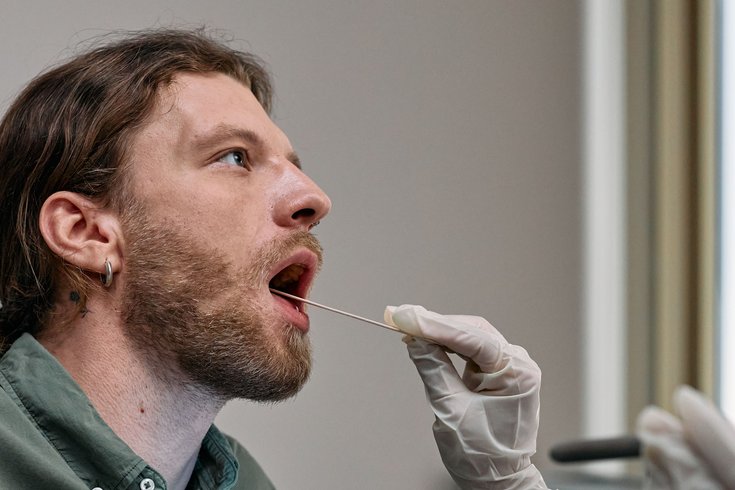 Source/National Cancer Institute
The reason men are diagnosed with many cancers at later stages than women may be partly due to women visiting their doctors more frequently than men, researchers say.
Men are more likely to die from cancer than women, but the reasons why have not been fully understood.
Nationwide, the cancer death rate is 171.5 per 100,000 men, compared to 126.3 per 100,000 women each year.
MORE: U.S. death rate dropped to record-low last year, CDC report says
"We know that, overall, males are more likely than females to die from many types of cancer," said Beth Maclin, a postdoctoral fellow in the Division of Cancer Epidemiology and Genetics at the National Cancer Institute. "We also know that cancer stage at diagnosis is a key predictor of cancer survival."
To gain insight into these disparities, Maclin and her team examined more than 2.4 million cancer cases from 21 NCI databases between 2015 and 2022. The findings of the study, published July 1, show men are more likely than women to receive cancer diagnoses at later stages, which results in worse outcomes and higher death rates.
Specifically, the study found men had significantly higher odds than women of being diagnosed when the cancer had migrated from its original tumor to nearby lymph nodes for 16 different cancers. Among those, men were 151% more likely to be diagnosed with tongue cancer when it had spread to close lymph nodes, 93% more likely for salivary gland cancer and 80% more likely for mouth and throat cancer.
Men also had higher odds than women of being diagnosed with 17 types of cancers after they had spread to other organs. For tongue cancer, men were 134% more likely to be diagnosed at an advanced stage. For thyroid cancer, they were 128% more likely, and for salivary gland cancer, they were 97% more likely.
Only for a few types of cancer were men less likely than women to be diagnosed after the cancer had spread. These included bladder cancer, liver cancer and anal cancer, among others.
One explanation for why men tend to be diagnosed later than women may be that women tend to go to the doctor more frequently, offering more chances to catch cancer at early stages, the researchers said.
"There is also the possibility that the way clinicians perceive cancer symptoms in males and females differ, leading to different types of diagnostic tests or treatment plans, which can either hasten or delay cancer diagnosis," said Maclin, the study's lead author.
"My overall message is that everyone should go to the doctor regularly," Maclin added. "Don't delay seeing a doctor if you notice something has changed in your body."