






September 30, 2026

 Ken Ruinard/USA Today Network via Reuters Connect
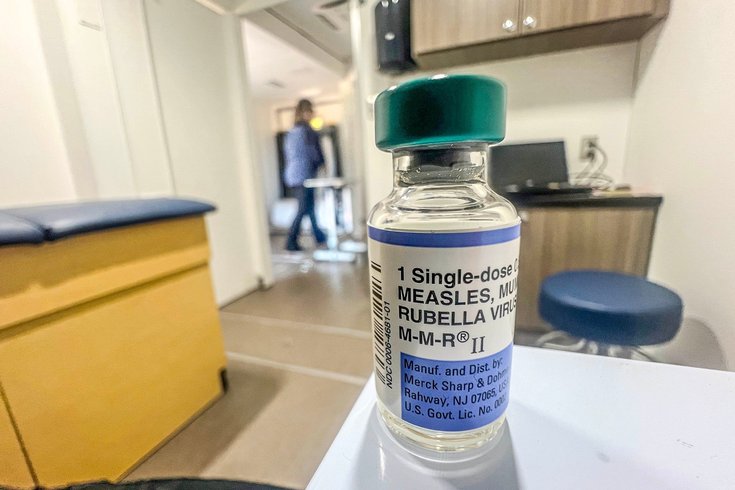
For people who are unsure if they are fully protected against measles, the first step is checking for proof of vaccination, Dr. Eric Sachinwalla says.
Pennsylvania health officials Wednesday reported the death of an unvaccinated, Lancaster County man who tested positive for measles. It marks the fifth measles-associated death in the state this year.
The four other measles-associated deaths in Pennsylvania this year included two infants in Lancaster County, an 18-year-old in Mifflin County and a 40-year-old in Jefferson County.
MORE: Creatine helps build muscle and strength even without exercise, study shows
The total reported measles cases across the state stands at 943, the largest outbreak in 35 years. And with 40 new cases since Monday alone, health officials continue to urge people who have never had measles, or who have not had two doses of the measles, mumps and rubella vaccine, to get vaccinated.
But some people may not know their vaccination status. So what should they do?
Dr. Eric Sachinwalla, an infectious disease specialist at Jefferson Health, explained that people who were born before 1957 are generally considered immune. That is because no vaccine existed at that time, and nearly everyone contracted the disease by age 15.
"It was so universal at that point, because it's so contagious, and there was no protection," Sachinwalla said. "You almost were guaranteed to get measles as a kid."
Measles is a highly contagious respiratory virus that can linger in the air for two hours after an infected person leaves the room. It infects 9 out of 10 people who do not have immunity and who are exposed. Before the first vaccine was introduced in 1963, 3 million to 4 million Americans were infected and an estimated 400 to 500 people died each year, many of them children. The only way to try to stop measles was to quarantine sick people.
People born after 1957 most likely got one of the two vaccines developed in the 1960s. An inactivated one introduced in 1963 was less effective than the live version that came out in 1968. People who do not know whether they got the live version are advised to get a booster at some point.
The combination MMR vaccine against measles, mumps and rubella was introduced in 1971 and refined in 1979. The combined vaccine has made it easier for people to stay on schedule and not miss shots. The current, two-dose vaccination schedule was implemented due to a resurgence of measles in 1989, mostly in unvaccinated school children.
For people who are unsure if they have full protection, Sachinwalla recommends first checking for proof of vaccination.
"Not like your mom or dad told you, 'Yeah, we got all of your shots,'" Sachinwalla said. "... Now, especially in our area, the best thing that you could have is documented proof of immunity."
People can contact their childhood healthcare providers to see if there is a record of their vaccination history. Healthcare providers in Pennsylvania and New Jersey are legally required to keep records for at least seven years before destroying them.
Pennsylvania also has a state vaccination registry, the Pennsylvania Immunization Electronic Registry System, but it only dates back to 2000, and healthcare providers are not required to submit information.
The New Jersey Immunization Information System was established in 1997 but only made it mandatory for pediatricians to report data starting in 2012.
People who are unable to determine their vaccination history should talk to a healthcare provider and may decide to get a blood test called a titer to check for measles antibodies.
"If you have antibodies, you're done," Sachinwalla said. "You're immune. You don't need to get any more doses."
People who have documented proof of having had two doses of vaccine, however, do not need a titer, which only tests for antibodies in the blood. It is possible that someone who is immune may not show antibodies in a blood test.
"But your immune system is not just your antibodies," Sachinwalla said. "There are other parts of your immune system, and the assessment by the CDC is that with that kind of cellular immunity, if you were to be exposed, your antibodies would run right back up."
During the current outbreaks, the Children's Hospital of Philadelphia and the Pennsylvania Department of Health recommend that babies get what is called a "zero dose" of the vaccine, an early dose for infants between 6 to 11 months, that gives protection now.
Those babies would still then receive their regular two doses, the first at 12 to 15 months and the second at 4 to 6 years old.
Because of the outbreak, health officials are also recommending an accelerated vaccination schedule as follows:
• Children older than 1 who have not started their MMR series should get two doses at least 28 days apart.
• Children who have had one dose should get their second dose at least 28 days later.
• Adults and teens who never had measles or the measles vaccine should get two doses at least 28 days apart.
• Adults and teens who already received one dose should get a second dose now if it has been at least 28 days since their first dose.
People who are pregnant, have severely weakened immune systems or have a history of severe allergic reactions to the MMR vaccine are advised to talk to a healthcare provider, according to the Pennsylvania health department.