





November 12, 2026

 Cody Scanlan/USA Today Network via Reuters Connect
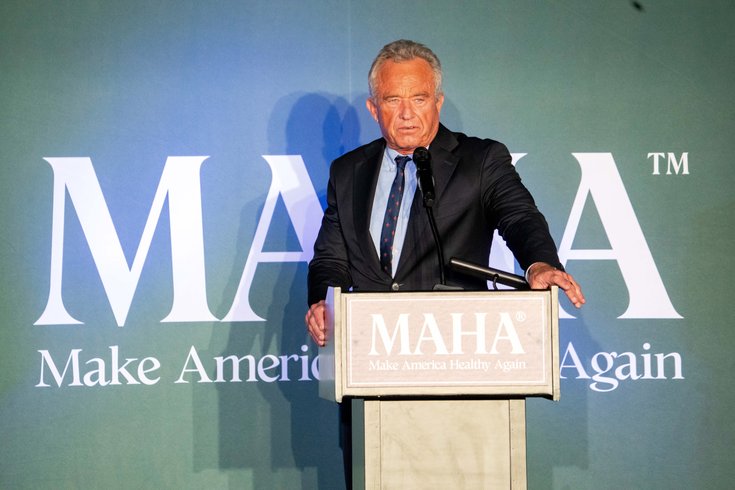
Health and Human Services Secretary Robert F. Kennedy Jr. announced $4.9 million in federal funding to set up trials into the psychedelic ibogaine to treat post-traumatic stress disorder.
The Trump administration is committing up to $4.9 million to research a psychedelic as a potential treatment for post-traumatic stress disorder.
The funding will help establish clinical trials for the development of ibogaine as a treatment for serious mental health issues, including PTSD in veterans, according to a Health and Human Services news release Thursday.
MORE: American Cancer Society recommends more aggressive prostate cancer screening
Ibogaine, which comes from a psychoactive plant long used in ritual practices in parts of Central and West Africa, is illegal in the United States, classified in the same category as LSD, ecstasy and other psychedelic drugs. That has mostly kept U.S. research into the drug at a standstill.
But the psychedelic has showed promise in giving veterans fast-acting relief from PTSD in a small 2024 study. Scientists do not fully understand how ibogaine interacts with the brain and body, but it also has been reported to help with withdrawal and cravings caused by opioid use disorder, according to the Rutgers Brain Health Institute.
Podcaster Joe Rogan and other ibogaine advocates have touted its medicinal potential.
The Trump administration has a history of support for research into psychedelic treatments for behavioral health issues. In April, President Donald Trump signed an executive order to speed up approval from the Food and Drug Administration for psychedelic medications for serious mental illness.
Two other more prominent psychedelics than ibogaine — psilocybin and MDMA — also have shown promise and are being studied for the treatment of mental health issues.
"Veterans have told us ibogaine changed their lives," Health and Human Services Secretary Robert F. Kennedy Jr. said in a news release. Their experiences demand serious scientific investigation. We will pursue the evidence, confront the risks and put affordability at the center of this work."
The Trump administration reportedly has embraced ibogaine's potential at the urging of Rogan, conservative activist Bryan Hubbard and former Texas Gov. Rick Perry.
Trump's executive order in April came after Rogan texted Trump about ibogaine, which he has touted on his podcast. Per the Associated Press, Rogan said Trump quickly responded, writing "Sounds great. Do you want FDA approval? Let's do it."
People who have taken ibogaine have reported feeling like being in a "waking dream," experiencing "visual and sensory distortions" and seeing a "slideshow" of memories, according to the U.C. Berkeley Center for the Science of Psychedelics.
The dangers of using ibogaine include severe balance issues, nausea and vomiting. Ibogaine also can have adverse effects on the heart and has been linked to deaths, according to Rutgers Brain Health Institute.
PTSD is a mental health condition caused by experiencing or witnessing an extremely stressful or terrifying event. It causes flashbacks, nightmares, severe anxiety and uncontrollable thoughts about the event. It significantly increases the risk of suicide.
PTSD affects about 7% of veterans, and is more common among female veterans than male veterans, according to the U.S. Department of Veterans Affairs. About 6% of the general population will have PTSD in their lifetime.
The primary treatment for PTSD is psychotherapy, including exposure and cognitive therapies, but treatment sometimes includes antidepressants and anti-anxiety medications.