






August 25, 2026

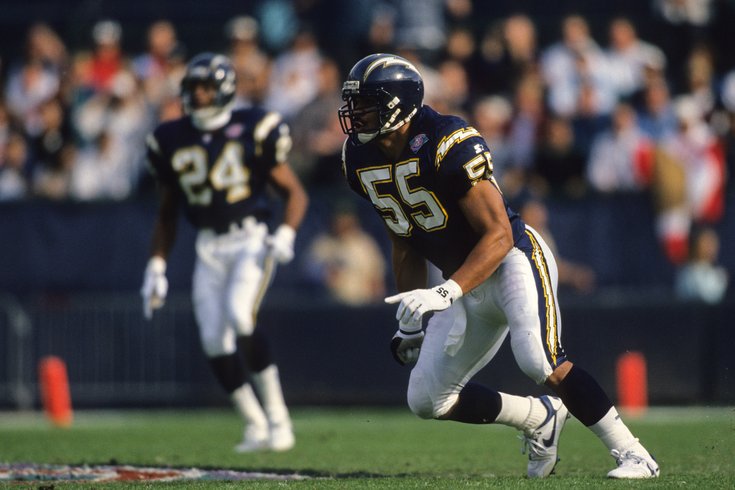 V.J. Lovero/USA Today Network via Reuters Connect
At least 1 in 4 former NFL players who died between 2016 and 2021 had signs of CTE, according to new research involving brain autopsies. Above, Hall of Famer Junior Seau, who was diagnosed with CTE after his death in 2012.
At least 1 in 4 NFL players end up getting the chronic, degenerative brain disease called CTE, a new study says.
Chronic traumatic encephalopathy, or CTE, is a neurodegenerative disorder that has been linked to repeated blows to the head. Attention to the number of NFL players who have CTE has risen over the past two decades.
MORE: Pennsylvania confirms 2 measles deaths — its first in 35 years
The study, published Tuesday, considered the 878 former NFL players who died between 2016 and 2021. The brains of 235 players had been donated to science for examination and, among that group, 215 showed signs of brain changes caused by CTE. This means that, "at a minimum," nearly one quarter of the 878 players showed signs of CTE, researchers said.
But the actual prevalence of CTE is likely much higher, because the brains of 643 players were not examined and many of them may have shown signs of CTE.
In a statement, lead author Dr. Daniel Daneshvar, chair of physical medicine and rehabilitation at Mass General Brigham, called the study's findings "a wake-up call for the NFL and scientific communities."
Health experts told the New York Times that these findings show NFL players are exposed to an occupational safety hazard far beyond that known in any other field.
"There are workers who've been exposed to high levels of asbestos exposure, which leads to very high rates of lung disease," David Michaels, who led the Occupational Safety and Health Administration during the Obama administration and is now a professor at the George Washington School of Public Health, told the newspaper. "And certainly, you know, a lifetime working in coal mines leads to very high risk of black lung disease.
"But a degenerative neurological disease — I've never seen anything comparable."
The NFL historically denied the connection between repetitive head trauma in football players and CTE, only acknowledging the association in 2016.
CTE is a neurodegenerative disorder that only can be diagnosed through a brain autopsy. Repeated head traumas lead to the death of nerve cells in the brain, according to the Mayo Clinic.
Signs and symptoms of CTE may include difficulty thinking, long- and short-term memory loss, impaired judgment, emotional instability and depression, headaches, paranoia and suicidal ideation. Eventually, CTE can lead to progressive dementia, according to the American Brain Foundation.
In addition to football players, people in other contact sports, such as boxing, also have experienced CTE.
Boston University's CTE Center has put out research through the years indicating the high prevalence of CTE in former NFL players. For instance, it published a study in 2023 showing that 345 of 376 players who had donated their brains for research had CTE. This rate is much higher than the approximately 0.5% in the general population, according to the researchers.
There is no cure for CTE. Treatment may include symptom management through rehabilitation techniques and medication, according to the Concussion and CTE Foundation, but current research on diagnosis and treatment is still limited.
The new study adds to the evidence that CTE is related to the cumulative force of repeated blows to the head over a lifetime, Daneshvar told the New York Times.
"It's a neurodegenerative disease where we know and have complete control over the risk," Daneshvar said. "And understanding the extent of that risk is one of the steps into making sure that we can mitigate and decrease that risk."
To minimize CTE risk, he said children should not play tackle football and teams at all levels should not include hits during practice.