




October 09, 2026
 Michaela Althouse/PhillyVoice
Waymo has been testing its autonomous vehicles in Philly with human safety drivers behind the wheel for more than a year, but the company has guarded details about its timeline for fully autonomous operations and commercial deployment.
A mom driving her kids to school in Fairmount one morning in September spotted a Waymo in front of her while making a left turn from 26th Street onto Pennsylvania Avenue, an intersection that's often backed up with traffic during rush hour. The woman wound up at a standstill looking ahead at the robotaxi through her windshield.
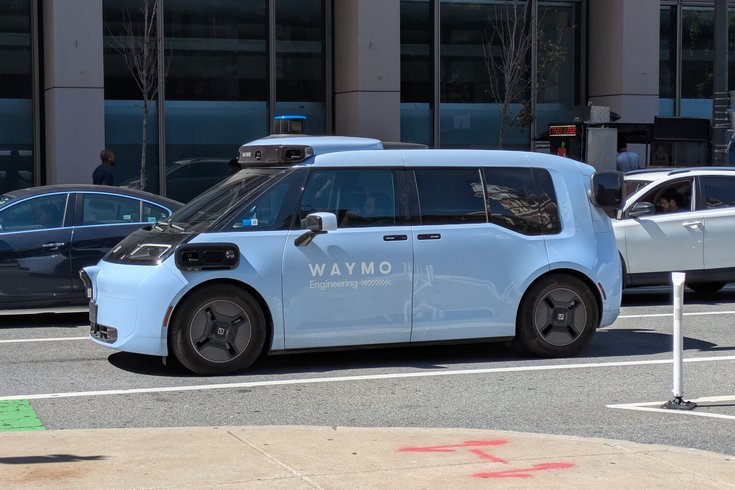
Seeing a Waymo driving around Philly isn't out of the ordinary. The robotaxi company has been testing its autonomous vehicles in the city and mapping Philly's streets since July 2025. The cars are either Jaguar I-PACE SUVs, in white or teal, or they're white Chrysler-Pacifica hybrids. The company hasn't launched commercially in Philly yet and it is not permitted to operate its cars without a safety driver behind the wheel.
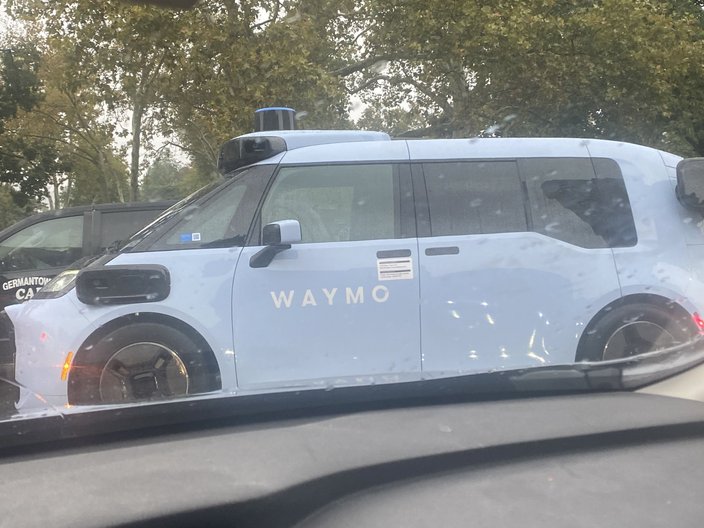
When the woman sharpened her focus, she couldn't make out a driver in the Waymo as it inched forward. She couldn't recall whether the company had reached the point of operating without safety drivers in Philly, so she quickly took a photo of the car, dropped off her kids and sent the photo — shown below — to PhillyVoice.
A Fairmount resident observed a Waymo vehicle that she said appeared to be operating autonomously without a human driver in the front seat on the morning of Sept. 22 at the intersection of 26th Street and Pennsylvania Avenue.
One hasty photo depicting a car from a single angle doesn't equal proof that this Waymo was driving without a person in the front seat. Could a driver have been leaning back or obscured by a reflection? Maybe. Waymo drivers do not keep their hands on the steering wheel during autonomous testing, but they are supposed to be ready to grab it at a moment's notice to prompt the car to safely pull over and come to a stop.
At the very least, the image looked ambiguous enough that it seemed worthwhile to send over to Waymo and PennDOT with a description of the woman's observation on Sept. 22.
"No Waymo vehicles are operating without a trained specialist behind the wheel in Philadelphia," Waymo spokesperson Ethan Teicher said after taking a look at the photo.
But PennDOT, which regulates all autonomous vehicle operations in Pennsylvania, thought enough of the picture that the agency decided to contact Waymo.
"PennDOT has directed Waymo to conduct an internal investigation of its routes based on the image provided," spokesperson Zachary Appleby said.
Waymo looked into the report, Teicher said, and the company reviewed about two dozen instances of its vehicles operating near the Fairmount intersection within 24 hours of when the woman took the photo. All of the Waymos were either in autonomous mode or manual mode with a driver behind the wheel, according to the company's review.
"The vehicles are not yet configured for fully autonomous driving in Philadelphia," Teicher said. "As to why it looks that way, it could be a combination of the seating position, window tint, and lighting, alongside the expectation that these vehicles will be fully autonomous in the future."
Waymo's driverless taxis are already available to hail in about 15 cities. They debuted in the Phoenix metro area in 2018 and are now in San Francisco and Los Angeles, where they're used with little fanfare among locals. Proponents expect self-driving cars ultimately will improve traffic safety by cutting down on human error and optimizing traffic.
That view has been supported by a number of studies, including recent findings from the nonprofit Insurance Institute for Highway Safety, with the caveat that research remains limited and lacks standardization. The Los Angeles Times reported this week that the number of crashes involving Waymo vehicles has risen each year in Los Angeles County as more of the driverless cars have hit the road.
Waymo is in the midst of a significant expansion into 20 new markets worldwide over the coming years. The company's fully autonomous rides recently rolled out in Atlanta and Dallas, where the testing periods overseen by state regulators each lasted between 14 and 15 months.
To date, Waymo has not commercially deployed its driverless cars for public use in any city in the Northeast. Testing with driver supervision is underway in Philly, Pittsburgh, Baltimore and the Boston area. Waymo also had been testing in New York City until March, when the city's Department of Transportation decided not renew the company's permits. The move came in response to opposition from the city's powerful taxi lobby and a range of safety concerns, including questions about how the vehicles will fare in dense urban areas with chaotic East Coast traffic.
For months, Waymo has declined to answer questions about its anticipated timeline to roll out in Philly. The company also has withheld information about when it hopes to start testing its cars in the city without a driver behind the wheel. The next step — which requires certification from PennDOT — will be testing the cars in autonomous mode with Waymo staff in the back seat.
Whenever Waymo is ready to operate its cars autonomously without a driver behind the wheel, whether in Philly or Pittsburgh, state law requires the company to give each city's governing authority 10 days' notice. Appleby said that window applies to the next stage of testing, not just the decision to make driverless rides available to the public.
PennDOT holding sole regulatory authority over Waymo's operations has been a source of frustration for some members of City Council who feel Philadelphia is powerless to influence how and when driverless cars are deployed.
"The state never wants to give up any authority, especially not to us in the city, which is always frustrating," Councilmember Jim Harrity (D-At Large) said. "We're the ones that have to hear from our constituents. People are actually scared of these things."
Harrity led a City Council hearing in May on Waymo's entry into Philly and invited the company to participate in the session. Waymo declined to attend, sending written testimony instead that offered few details about its plans and did not answer much about the city's concerns.
One woman at the hearing testified about a frightening experience she had using a Waymo in Phoenix, where she said she was lucky not to be injured after her robotaxi abruptly stopped in the middle of oncoming traffic. University experts were called to testify about potential cybersecurity risks with autonomous vehicles, including their vulnerability to hackers, and Uber and Lyft drivers were given the chance to voice worries about the income they'll lose from Waymo's competition. (An Obi analysis last year found that Waymo and Tesla rides are still slightly more expensive for consumers, on average, than human-driven rideshares, but that gap is closing).
When council members questioned staff at the city's Office of Transportation and Infrastructure Systems (OTIS) about their level of coordination with PennDOT on Waymo's operations in Philly, they were told the only initiative taking place at the municipal level was the development of training for first responders who will eventually interact with fully autonomous vehicles on city streets.
Harrity said he thinks the city deserves to be more involved and that more transparency is needed.
"We're trying to find out what we have in our legal repertoire that we can use," Harrity said. "I know that the city solicitor's office was looking into it. We were blindsided by this."
Since the hearing, Harrity said he's regularly received messages from constituents who share viral stories they see on social media about crashes and other incidents involving Waymo vehicles. Even if they are not representative of most Waymo experiences, Harrity thinks crashes and glitches raise questions of trust that are of a different nature from faulty human driving. Advances in technology are part of life, Harrity said, but he views self-driving cars as a major adjustment that will carry life-or-death consequences for human drivers.
"I'm worried about safety. That's my thing," Harrity said. "All we're asking is for (Waymo) to give us some real numbers to show us that what you're saying is actually true because we haven't seen a lot of that stuff. I'm curious to see the total number of accidents in the areas where they are driving without drivers and where they're driving with drivers."
As Waymo's testing continues in Philly, PennDOT is encouraging the public to submit reports with photo or video evidence if they observe vehicles driving without a human behind the wheel. If Waymo is found to be operating outside the scope of its certification, the company faces the possibility of a suspension or revocation of its certification.
Appleby said PennDOT has not received any other reports of Waymo vehicles operating in Philly without a person in the driver's seat.
Transportation agencies in Massachusetts, Washington, D.C., Louisiana and other places where Waymo is still in the testing phase did not respond when asked whether they have received any reports of Waymo operating outside of its regulatory permission.
When Waymo is prepared to commercially launch in Pennsylvania, Appleby said the company will need final approval from the Pennsylvania Public Utility Commission to operate as a Transportation Network Company, the same designation held by Uber and Lyft.
Harrity said he would prefer to see Waymo start with service in Pittsburgh before Philadelphia, noting the city's smaller size and population along with its status as an innovation hub for autonomous vehicles.
"I don't want to wish it on somebody else, but I hope they do it out there," Harrity said.
Waymo declined to say how many of its vehicles are deployed for testing in Philadelphia at this time and would not answer questions about which of its expansion cities appear closest to a commercial launch.
Even if safety fears about Waymo prove to be overblown, Harrity said he's still concerned about how autonomous vehicles will affect gig workers and low-income residents who depend on rideshare and delivery platforms to pay their bills.
"A lot of our citizens now, especially in the low-income neighborhoods, count on that second income," Harrity said. "It's easy. They can go on and off when they want. With these things, it's only a matter of time before it's cheaper, you know? They don't have to pay anybody."