






September 23, 2026

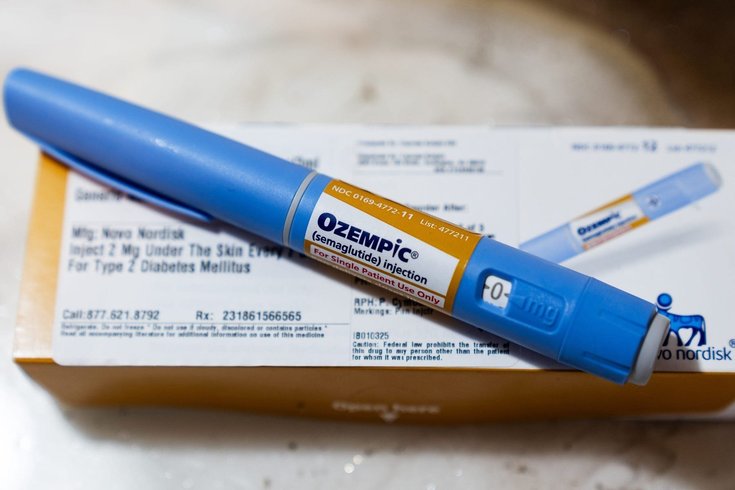 Josh Morgan/USA Today via Reuters Connect
Pharmaceutical giants Eli Lilly and Novo Nordisk are facing lawsuits that claim their GLP-1 medications have caused sudden vision loss. The companies refute the claims. Above, Ozempic, a GLP-1 produced by Novo Nordisk.
Two pharmaceutical giants that produce GLP-1 weight-loss drugs are facing lawsuits filed by people who claim their vision loss was caused by the medications.
The lawsuits claim Novo Nordisk, the maker of Wegovy and Ozempic, and Eli Lilly, which makes Zepbound and Mounjaro, should have warned consumers about vision loss as a potential side effect. The people filing these lawsuits blame their sudden, irreversible vision damage and loss, a condition called non-arteritic anterior ischemic optic neuropathy (NAION), on these drugs.
Nearly 100 lawsuits specifically relating to NAION have been filed in New Jersey since 2025, and another group of lawsuits have been filed in Philadelphia, USA Today reported.
Studies from 2024 and last year found an association between semaglutide, the active ingredient in Ozempic and Wegovy, and vision loss, but not a direct cause and effect relationship.
A Novo-funded study published this year found that patients participating in large clinical trials for Wegovy and Ozempic did not have an increased risk of developing NAION. Two other studies also found no link between the GLP-1s and vision loss.
The agency that regulates medications in Europe, the European Medicines Agency, recommended last year that Novo add warning labels to its weight-loss drugs, listing NAION as a rare side effect. Such labels have been added to certain GLP-1s in the United Kingdom, Japan, Australia and New Zealand, the Wall Street Journal reported.
The pharmaceutical companies are fighting the lawsuits and deny the link between NAION and their GLP-1s.
A Novo spokesperson also said in an email Wednesday that patient safety is a top priority, adding that Novo is fighting the lawsuits and that they had no merit.
"A causal relationship between GLP-1RAs, including semaglutide, and NAION cannot be confirmed based on the totality of data," the Novo spokesperson said.
Eli Lilly said in a statement that the company actively monitors, evaluates and reports safety information to the FDA, adding that the company will "continue to review data, including any data regarding ophthalmic issues."
The law firm Weitz & Luxenberg, which has an office in Cherry Hill and has filed lawsuits on behalf of New Jersey residents, did not respond Wednesday to an interview request. Seeger Weiss, another personal injury law firm in New Jersey that has filed lawsuits against the pharmaceutical companies, also did not respond to an interview request.
NAION is a type of sudden-onset, painless vision loss, most often in people 50 and older. It affects somewhere between 2 to 10 people per 100,000 in the United States, according to the American Academy of Ophthalmology.
NAION can cause blurred vision, partial vision loss and sometimes blindness, though rarely in both eyes. Sometimes called "eye stroke," NAION usually starts in one eye, with about 15% of people developing it in both eyes, the Cleveland Clinic says.
Why NAION occurs is not completely understood. The most common cause is swelling or damage to the optic nerve in older adults.
The condition is irreversible.