




November 19, 2026
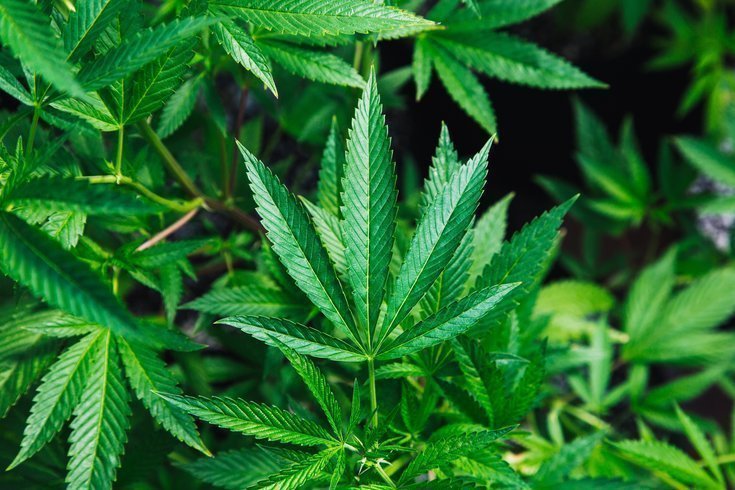 RICK PROCTOR/UNSPLASH.COM
Nearly 10,000 people were arrested in Pennsylvania for marijuana possession last year. A top Democratic lawmaker says legalizing cannabis won't be among the party's first priorities next year. One long-time marijuana advocate wants Democrats to start with a decriminalization bill.
Democrats soon will hold a trifecta in Pennsylvania's state government for the first time in more than 30 years, offering optimism to marijuana advocates who have watched legalization bills stall in Harrisburg for years as neighboring states embraced cannabis reform.
But with Democrats having a long list of goals to tackle in the new year, marijuana legalization is unlikely to be on the fast track.
"I think that will be one of the things that we discuss over the course of the coming months," top Senate Democrat Jay Costa, who represents parts of Allegheny County, said this week in an interview with ABC27. "It's not maybe necessarily one of the high-priority items that we feel like we've been given a clear responsibility to address, but I do think it's something we will talk about."
In the weeks since the midterms, Gov. Josh Shapiro, Costa and other leading Democrats have emphasized raising the state's minimum wage, funding mass transit, codifying reproductive rights and regulating data center development among their early objectives.
Chris Goldstein, regional organizer for the National Organization for the Reform of Marijuana Laws (NORML), thinks it's a mistake for Democrats to put cannabis reform on the back burner. An April survey by Susquehanna Polling & Research found 69% of Pennsylvanians support regulating and taxing cannabis. That includes 72% of Democrats, 67% of Republicans and 64% of independents.
"Why that's not a priority is really confusing," Goldstein said. "You really can't find many, if any, other issues that have that kind of plurality and multi-party support. ... I think that's a red flag as to everything wrong with the post-election victory."
Goldstein has long pushed for state lawmakers to start with a bill to decriminalize marijuana in Pennsylvania, where roughly 25 people are arrested every day for possession of cannabis. More than a dozen cities have passed ordinances decriminalizing marijuana, but thousands of people still face arrests statewide.
Philadelphia's decriminalization law, adopted in 2014, downgraded possession of 30 grams or less of marijuana to a civil offense with a $25 fine. But police officers still have discretion to make arrests that carry more significant penalties under state law.
Past attempts at decriminalization have stalled at the state level. State Rep. Danilo Burgos (D-Philadelphia) proposed a bill two years ago that would have turned possession of small amounts of marijuana into a summary offense with a maximum fine of $100, but the proposal did not advance past committee hearings.
Goldstein tracks marijuana arrests by pulling data from the Pennsylvania State Police Uniform Crime Reporting System, which reports all categories of drug arrests. In 2025, there were 9,827 adults arrested for marijuana possession and 630 arrested in Philadelphia. The arrest data accounts for cases in which marijuana possession was listed as the most serious offense, Goldstein said.
By comparison, state police data shows 5,110 arrests last year for opiates and cocaine, 5,946 arrests for other drugs and 1,436 arrests for illegal synthetic substances.
Philadelphia police declined to comment on the department's policies on marijuana arrests.
Goldstein said the arrest numbers highlight racial disparities in policing and show that Pennsylvania's policies are out of sync with the rest of the region. Every bordering state has legalized cannabis with the exception of West Virginia.
"That's a problem we should solve," Goldstein said. "Not only do Pennsylvania residents likely cross over and get cannabis in New Jersey, Maryland and New York, but people from those states are traveling through and getting popped here. Pennsylvania has turned into a very dangerous place for cannabis consumers, and that's not something you want on your tourism billboard."
Efforts to legalize marijuana in Pennsylvania hit a wall last year over competing visions for the kind of retail market and regulatory environment lawmakers want to create.
House Democrats passed a bill that would have made marijuana legal to sell in state liquor stores — a model that hasn't been tried anywhere else in the country — only to see the bill quickly killed by a Republican-led Senate committee. Bipartisan proposals in the Senate have resembled markets adopted in other states, where permits are issued to privately-owned dispensaries, but those bills have lacked enough Republican support to be put to a vote.
"There are major policy differences between parties and even within the same party about about the issue," said Meredith Buettner, executive director of the Pennsylvania Cannabis Coalition, an industry lobbying group and trade association for the state's medical marijuana operators.
The failure of last year's state store bill offered useful lessons, Buettner said, by clarifying lawmakers' range of priorities for legalization. The issue has come a long way in Harrisburg in the six years since Buettner joined PCC.
"When I started, we were battling the gateway drug theory and legalization never happening in Pennsylvania," Buettner said. "Now and especially during this last legislative session, we were really talking about how we should do adult-use and what the best way to do it is, and what the appropriate timeline is for it."
Goldstein is skeptical that Democrats in the House and Senate are philosophically on the same page about cannabis reform. He said he's met with state Reps. Rick Krajewski (D-Philadelphia) and Dan Frankel (D-Allegheny), the sponsors of last year's state store bill, and hasn't heard much from them to suggest their views have changed.
"They are very stubborn about this concept," Goldstein said. "No state has tried to do this, and no state has even gotten as far as Pennsylvania has."
Krajewski believes selling marijuana in state stores would maximize revenue for Pennsylvania to invest in social equity, allowing minority-owned small businesses to enter the industry at every level through targeted policies. Goldstein fears state control of the retail sector would cut off the most accessible path for small business owners to enter the market. He favors an approach more in line with the bipartisan bills that have been proposed for several years by Sens. Sharif Street (D-Philadelphia) and Dan Laughlin (R-Erie), who has led the charge of GOP efforts on cannabis reform.
"I do think that the senators who were involved with the issue have a better sense of where the cannabis community wants to go with this," Goldstein said.
Buettner was not surprised by Costa's remarks about Democrats' legislative agenda, parts of which will depend on generating new revenue. She expects legalizing cannabis will be part of the state's broader funding solutions. Shapiro's budget last year estimated cannabis would bring in $729.4 million for Pennsylvania in the first year of implementation from taxes and one-time licensing fees.
"I'm not hyper-fixated on the timeline, because they do need the revenue to support a lot of these other priorities that they have," Buettner said. "Generally, those bills that impact revenue don't start taking shape until April, May and June, coming up against that June 30th budget deadline."
Of the 24 states that have legalized adult-use cannabis, 18 first passed statewide decriminalization laws before establishing regulated markets for marijuana. Many of these decriminalization laws were passed after states had legalized medical marijuana, which gave consumers regulated options to purchase cannabis without turning to the black market.
There has been bipartisan consensus among Pennsylvania lawmakers to center restorative justice in any bill that legalizes marijuana, including provisions for the expungement of marijuana offense records. Goldstein said decriminalization could be the first step toward promoting cooperation on a legalization bill.
"I've had hundreds of conversations across Harrisburg over many years now, and I can tell you that there really is broad consensus for this first step of stopping arrests," Goldstein siad. "And if Democrats want to seize the power of today and really channel positive energy — both of the public and of their peers — it's a pretty simple lift. They all agree that they want to stop arrests, but nobody's really put a bill up to concentrate that energy."
The Pennsylvania Cannabis Coalition prefers to see decriminalization happen as part of a comprehensive legalization bill.
"I do not want people to continue to be put in jail over this plant," Buettner said. "That is not why our position is what it is. When you decriminalize without creating legal regulated access, you create a window for the illicit market to fill the demand for cannabis. Our position is based on public health and safety."
Buettner said Pennsylvania's greatest advantage is having a well-established medical marijuana industry that can scale up quickly to accommodate an adult-use cannabis market.
"We feel that with the right statutory language, existing operators could be prepared to sell cannabis to adult-use consumers within 90 days of legislation being signed, and we support the decriminalization happening at the same time," Buettner said.
Goldstein has reservations about that approach and how it will affect more than 500,000 people who are enrolled in the state's medical marijuana program. He opposed the plan Laughlin spearheaded last year to transfer oversight of the medical marijuana program — and future marijuana policy — from the Pennsylvania Department of Health to a proposed Cannabis Control Board.
The measure, touted as a regulatory overhaul to strengthen cannabis safety, was voted down in June and had been opposed by Shapiro. Goldstein viewed the bill's defeat as a relief for medical marijuana consumers, whose interests may by relegated after adult-use cannabis laws are adopted.
"I hear from patients every day that their biggest concern is the preservation of their access," Goldstein said. "In other states, when they legalize recreational cannabis, part of the problem is those medical dispensaries flip to recreational, and everything on the menu gets very expensive. ... Unless you create a system for patient access and preserve that access, the companies have no interest in doing it."
Putting an end to marijuana arrests should be Democrats' immediate goal, Goldstein said, and then lawmakers can chart the best path forward for a consensus bill on legalization. Without taking that step, Goldstein said the state will continue to send the wrong message to the public.
"It is pretty cold to consider that they would arrest us until the very day adult-use sales would begin," Goldstein said. "They'd arrest us right until they taxed us."