





November 03, 2026

 Kevin R. Wexler/USA Today Network via Reuters Connect
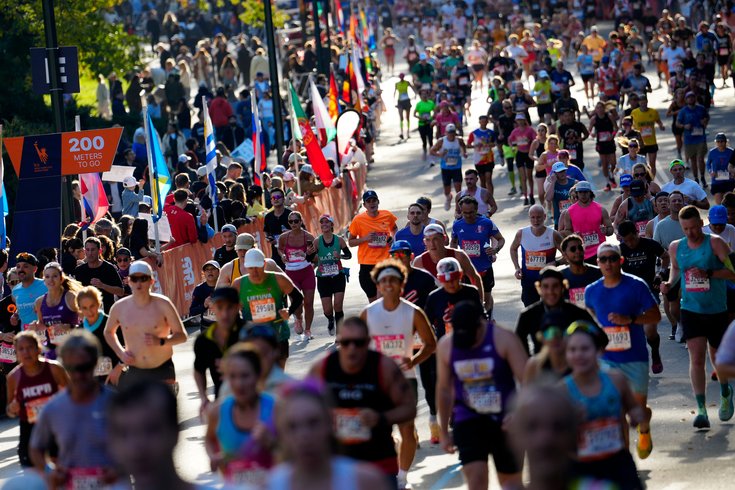
Rachel Apa, 24, of Lewisberry, Pennsylvania, died from a rare condition Sunday during the New York City Marathon. Above, runners near the finish line of the race.
The Pennsylvania woman who died after collapsing in Central Park while running the New York City Marathon on Sunday experienced a rare condition caused by extreme exertion.
Rachel Apa, 24, of Lewisberry, collapsed near mile 24 due to rhabdomyolysis, the New York Times reported Tuesday. The condition causes the muscles break down, releasing toxins throughout the body.
MORE: Creatine helps build muscle and strength even without exercise, study shows
Spectators performed CPR on Apa until marathon medical staff arrived and she was transported by ambulance to Mount Sinai Medical Center. Doctors there worked for six hours to try to save her.
"It's unfathomable," her father, Steve Apa, told the New York Times. "Perfect health, perfect shape, 24 years old."
Apa had played Division I field hockey at Bucknell University. She worked for an electrical component company as a project manager and was pursuing an MBA at Charleston Southern University.
Apa was running the marathon to raise money for Parkinson's disease, in honor of her grandfather who taught her to "stay active, push my limits, and embrace challenges," she wrote on her page as part of the Parkinson's Champions team. As of Tuesday, Apa had raised more than $8,000, more than doubling her $4,000 goal.
More than 61,000 people finished Sunday's race, breaking the record for the third year in a row as the largest marathon in the world, according to New York Road Runners, the organization that hosts the 26.2-mile race. It was the marathon's 55th year.
Rhabdomyolysis is a rare condition that can occur during extreme physical exertion without rest. The muscles disintegrate, causing proteins from dead muscle cells to enter the bloodstream and kidneys.
Rhabdomyolysis can lead to kidney damage and death, the Cleveland Clinic says.
The condition also can result from severe burns or crushing injuries that cause serious damage to muscles. Certain psychoactive drugs, long periods of inactivity and other medical conditions that cause severe muscle injury also lead to rhabdomyolysis, too.
Rhabdomyolysis is more common in men than in women, with about 75% of cases occurring in people under 40 – a statistic that may be linked to the age of the population that engages in extreme exercise, according to a 2020 piece in The Conversation.
Non-elite athletes who exercise regularly are at higher risk for rhabdomyolysis from physical exertion. This is because elite athletes' training strengthens muscles in ways that make rhabdomyolysis less likely. Conversely, people who do not exercise on a regular basis are unlikely to exert themselves to the point of developing the condition, The Conversation reported.
Extreme muscle pain, muscle weakness, muscle swelling and brown urine following exercise are all signs of rhabdomyolysis from physical exertion.
Immediate medical attention is needed, with supportive treatment involving intravenous fluids during a hospital stay to replace electrolytes and flush toxins from the body. Dialysis also may be required in cases that result in kidney damage, the Cleveland Clinic says.