





October 26, 2026

 Jenna Miller/USA Today Network via Reuters Connect
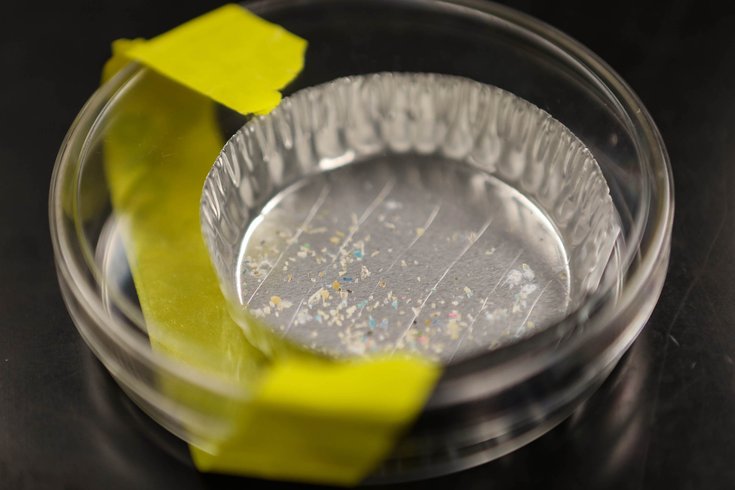
Microplastics, collected in the tray depicted above, usually measure less than 5 mm.
Mounting evidence suggests microplastics, the tiny shards that splinter off single-use water bottles and other common consumer goods, can negatively impact human health. Now, scientists are gaining further insight into exactly why.
A team of chemists at Columbia University and the University of California, Berkeley offered an explanation to the previously unanswered question in a new study published in Nature. The researchers found that when plastic breaks into smaller pieces — ones less than 5 mm are generally considered microplastics — their surface area actually increases enormously. This new material appears to be harmful, because it can create reactive oxygen species, or ROS, in water.
While these free radicals play a role in normal biological functions, an imbalance can damage the human body. Excess ROS creates oxidative stress, which scientists have linked to genetic mutation, cardiovascular disease and cancer.
"ROS are textbook examples of the kinds of molecules that can damage animal and human tissue," Naixin Qian, a co-author on the study, said in a statement.
Since human blood is mostly composed of water, this chemical reaction could explain the health problems that researchers have begun to link to microplastics. In the past, plastics were largely considered chemically inert and thus minimally harmful to human health.
"Water is a key active player here, rather than just a spectator," said Wei Lin, another author on the study. "It's integral to making these microplastics reactive. Water molecules become chemically active when they come into contact with plastic, which is hydrophobic. Contact between the water and plastic creates an environment that facilitates electron transfer, and the formation of reactive radicals. When plastics fragment into smaller particles, their increasing surface-to-volume ratio creates more of these chemically active areas."
Concern over microplastics has increased dramatically in recent years as scientists have uncovered the breadth of human exposure and consumption. A 2019 study suggested the fragments could be getting into our bodies through plastic bottles and food wrappers. By 2025, researchers had concluded that people are inhaling about 100 times more microplastics than previously thought.
Follow Kristin & PhillyVoice on Twitter: @kristin_hunt
| @thePhillyVoice
Like us on Facebook: PhillyVoice
Have a news tip? Let us know.