





November 27, 2026
 Provided image/George Reynolds
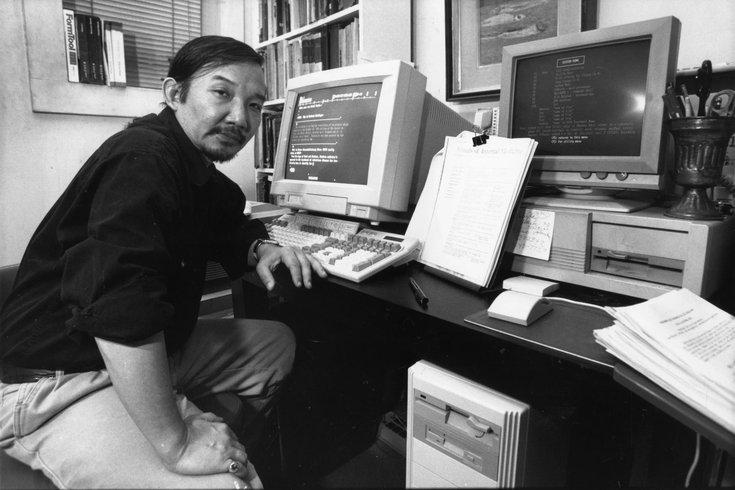
Kiyoshi Kuromiya, an AIDS activist and key witness in ACLU v. Reno, is the subject of the new documentary that premiered at the Philadelphia Asian American Film Festival.
Thirty years ago, as more and more Americans began logging onto the nascent internet, the U.S. government made its first attempt at regulating the World Wide Web. The Telecommunications Act of 1996 laid out numerous new rules for carriers and removed some that were burdensome for business. But the portion that grabbed perhaps the most attention was Title V, colloquially known as the Communications Decency Act.
While it was designed to keep "obscene" images, video and text away from teen users, it censored a broad range of material that, the American Civil Liberties Union argued in court, infringed on freedom of expression. A panel of Pennsylvania judges struck down the CDA — and later, the Supreme Court did, too — after hearing testimony from a number of plaintiffs concerned about its ramifications. Philadelphia activist Kiyoshi Kuromiya was particularly persuasive in demonstrating how the legislation would censor crucial public health information, playing what ACLU lawyers later described as a pivotal role in the outcome.
It was almost inevitable that Kuromiya, who called himself the "Forrest Gump of activism," would find himself at the center of another history-making moment. In his relatively short life, the University of Pennsylvania student marched with Martin Luther King Jr. in Alabama, participated in the earliest demonstrations of the gay rights movement, protested the Vietnam War and spearheaded the Critical Path AIDS Project, a multi-media resource designed to simplify the latest information on the disease's treatment and prevention. It was this latter work that landed him in court with the federal government. At the ACLU's request, he joined the group's lawsuit along with 46 other plaintiffs.
Kuromiya, the subject of a documentary that premiered at the Philadelphia Asian American Film Festival last month, opposed the CDA as an educator on sexual health. His Critical Path AIDS Project newsletter took findings from medical conferences and clinical trials and described them for the average reader. Even more information was available on the corresponding website, but if a user had additional questions, they could call a 24-hour hotline which Kuromiya often manned himself.
Across all these platforms, the activist described sexual activity in detail. It was, as he wrote in his court affidavit, necessary to include information on "the types of sexual activities that might put a person at risk for contracting AIDS and how a person might minimize or eliminate the risk of infection." But the government's new law made it illegal to create or share "indecent" information or publish depictions or descriptions of sexual activity "in terms patently offensive as measured by contemporary community standards" on sites available to minors. Frank discussion of HIV contraction and prevention could conceivably fall under these categories.
Kuromiya, who had tested positive for HIV the same year he launched the project, was unwilling to install age verification screens because he believed everyone, including teenagers, needed access to the resources.
"I do not know what 'indecent' and 'patently offensive' mean," he wrote in his affidavit. "These terms are vague and can be variably interpreted, in English as well as other languages and cultures. Some people would define all AIDS information as 'offensive' or 'indecent.'
"Safer sex information must be described candidly for it to be meaningful for many, and that very frankness may be considered by some to be 'offensive' or 'indecent.' ... In my view, the information that Critical Path provides saves lives of both teenagers and adults and any attempt to censor or restrict the free flow of this life-saving information would be a critical public health mistake."
His concerns, which were also relayed on the witness stand, were invoked several times by the federal judges in their questioning of the government attorneys.
"He wants to reach people under 18," Judge Stewart Dalzell said. "They are sexually active. He just doesn't want them to die of AIDS. ... Should we say to him, 'We'll give you the guidebook to the Federal correctional institutions?'"
Dalzell and his colleagues sided with the ACLU in their ruling, handed down June 12, 1996. Kuromiya received significant credit for the result. A week after the judges' decision, ACLU lawyers praised his testimony in a profile printed the New York Times. His involvement in the litigation, the paper wrote, "proved decisive" in the case.
"I think he was the perfect symbol of speech that is about sex and has strong social value," ACLU attorney Christopher A. Hansen told the Times. "He also symbolized that that speech is of value to minors as well as to adults. Somehow, Kiyoshi came to symbolize the essence of what this case is all about."
The federal government appealed the decision, sending the case to the Supreme Court the following year. But the justices upheld the ruling by unanimous decision, clearing Kuromiya and like-minded internet publishers of any criminal liability for disseminating vital information. He continued to do so until his death in 2000 from AIDS-related complications.
Follow Kristin & PhillyVoice on Twitter: @kristin_hunt
| @thePhillyVoice
Like us on Facebook: PhillyVoice
Have a news tip? Let us know.