






July 10, 2026

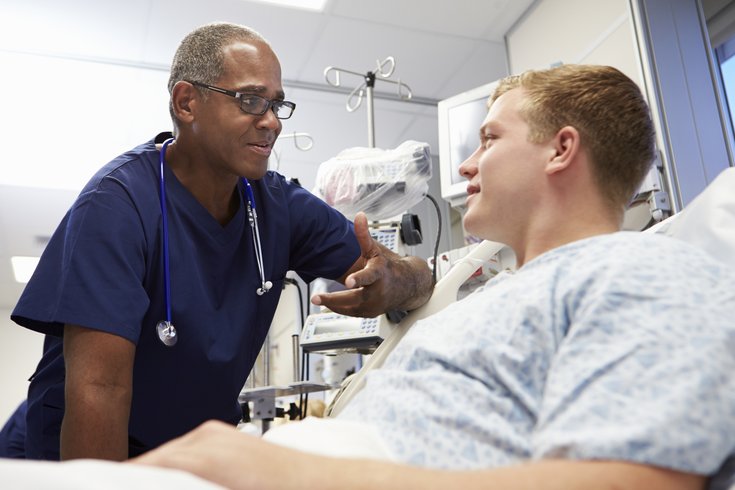 Source/Image licensed from Ingram Image
More than 13% of registered nurses in the United States were male in 2025, up from just 2.7% in 1970.
A report from The Global Wellness Institute last year noted that masculinity is being less defined by stoicism and self-reliance and more by mental health, emotional resilience and self-care. The report characterized the state of men's well-being as undergoing a profound transformation, while noting that men continue to face significant challenges, including loneliness, career stagnation and suicide rates that remain higher than those of women.
Adding to this paradox is social media, which plays a dual role by spreading toxic hyper-masculinity while fostering positive support networks that encourage vulnerability. These competing narratives balance concern with optimism, highlighting the severity of the challenges facing men and the emergence of meaningful positive change.
Within this context is a revealing trend that reflects an important evolution in modern masculinity and one with direct implications for men's health: the rise of male nurses.
More than 13% of registered nurses in the United States were male in 2025, up from just 2.7% in 1970. This growth reflects more than demographic change; it signals a gradual but significant shift in cultural perceptions of masculinity. Historically, nursing was associated with caregiving, empathy and nurturing — traits often linked to femininity. This reinforced the stereotype that nursing was "women's work."
This perception discouraged men from entering the field and narrowed the cultural definition of what it meant to be masculine in a healthcare setting. As more men take on these roles, they are helping break the traditional association between nursing and femininity, demonstrating that caregiving and technical expertise can be equally valued expressions of masculinity.
Men are increasingly drawn to specialties that emphasize technical expertise, physical endurance and decision-making under pressure, such as emergency, ICU and trauma nursing. These roles align with longstanding cultural expectations of men as problem solvers and protectors, providing a pathway into nursing that does not require abandoning traditional aspects of masculine identity.
Despite this progress, stereotypes persist. Men in nursing still encounter assumptions that they entered the profession because they could not become physicians. These biases continue to influence workplace perceptions and career advancement opportunities, including disparities in leadership representation. This suggests that though cultural attitudes are evolving, deeply rooted gender norms continue to shape perceptions and opportunities.
Though changing perceptions of masculinity may contribute to the growth of male nurses, powerful market and economic forces are also at work. Together, they create an interplay between financial opportunity and cultural change that helps explain the profession's growing appeal to men.
Peter Drucker famously observed that culture beats strategy every time, yet the growth of male nurses suggests that labor-market dynamics can accelerate cultural transformation. Consider the following.
Nursing is one of the most stable and fastest-growing professions in the United States, driven by an aging population and increased healthcare demand. The nation is projected to have hundreds of thousands of nursing openings annually, making it a reliable and resilient career path. According to the Wall Street Journal, many men cite job stability and long-term security as major motivations. As traditional male-dominated industries such as manufacturing and some skilled trades continue to shrink or become automated, healthcare — and nursing in particular — has emerged as a new route to middle-class stability.
Financially, nursing offers above-average wages, often substantially exceeding the median income of the overall workforce, while advanced-practice roles such as nurse practitioners and nurse anesthetists can provide six-figure salaries and leadership opportunities.
Beyond economics, nursing offers meaningful, purpose-driven work. This can be especially attractive to men transitioning from military service, emergency response, industrial occupations or technical fields where teamwork, action and mission-oriented work are highly valued.
Nursing provides a clear sense of purpose by allowing professionals to help people in tangible and immediate ways. Many men also enter nursing through adjacent occupations such as EMTs, paramedics, firefighters and military healthcare roles. These pathways reduce psychological barriers and make nursing feel like a logical progression rather than a dramatic career change.
From a workforce perspective, chronic nurse shortages driven by retirements, burnout and rising demand are pushing health systems to recruit more aggressively among underrepresented groups, including men. Men are increasingly viewed as a critical and largely untapped labor pool.
The growing number of male nurses has the potential to reduce men's hesitancy to seek medical care, although the effect is likely to vary based on setting and circumstance. Male nurses can serve as relatable role models, particularly in specialties such as emergency care, where they are more prevalent.
Their presence challenges the stereotype that nursing is exclusively a female profession and may help men feel more comfortable discussing sensitive health concerns with a same-sex provider. This may be particularly important for men who are hesitant to seek care because they are uncomfortable with female providers during intimate procedures.
Studies suggest that male providers can improve engagement in preventive care and reduce stigmas surrounding certain health issues. Male nurses working in mixed-gender care environments may help normalize men's participation in routine checkups, mental-health services and chronic-disease management. And the rise of male nurses is likely to contribute to reducing men's reluctance to seek care by increasing the visibility of relatable and gender-diverse healthcare providers.
Among the roughly 200 students at the Rutgers University–Camden School of Nursing, about 17% are men, a rate significantly above the national average. The school has been recognized by the American Association of Men in Nursing for its efforts to leverage military veteran connections and feature male students in promotional materials.
Nursing professor Scott Hirst says he still receives questions from patients and others outside the profession about his career choice but that attitudes have improved significantly since he entered nursing more than a decade ago.
Regarding the relationship between male nurses and male patients, Hirst notes that some men appear more willing to discuss certain topics with a male nurse, much like the longstanding preference some female patients have for female providers. Based on his experience encouraging men to obtain colonoscopies or schedule follow-up appointments, Hirst says increasing the number of male nurses can encourage more men to take a greater interest in their health.
On the broader question of culture and masculinity, Hirst says traditional gender-based occupational roles are steadily dissolving. He points to the growth of women in historically male-dominated professions and entertainment trends that increasingly portray men in nontraditional roles, including nursing.
"We want our students to reflect the communities we treat, and men make up half the population," Hirst says.
The inclusion of more men in nursing demonstrates a shift from rigid gender expectations toward more inclusive professional identities. Evidence suggests that changing perceptions of masculinity may be the more powerful long-term driver of this transformation. The trend reflects a broader societal movement toward greater gender diversity and equity in traditionally gendered occupations. This is helping loosen cultural expectations that have often limited men's health behaviors and career choices.
Viewed through the lenses of workforce development, healthcare access and men's well-being, the rise of male nurses represents a positive example of how social change can expand opportunity while potentially improving health outcomes. It is an encouraging development not only for nursing, but also for the ongoing evolution of masculinity in modern society.