





May 21, 2026
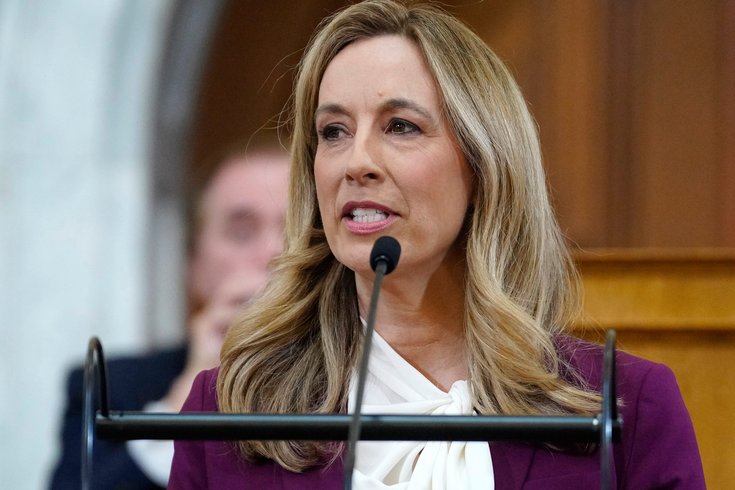 Kevin R. Wexler/Imagn Images
New Jersey Gov. Mikie Sherrill has requested federal support for the state's farming industry. Farmers suffered $300 million in crop damage due to a cold snap in April, she says.
New Jersey is under a state of emergency due to widespread crop damage last month.
Unseasonably warm weather followed by a cold snap in mid-April led to substantial damages, particularly to fruit crops, according to an executive order signed Wednesday by Gov. Mikie Sherrill. Crop losses could total $300 million.
Sherrill requested a disaster designation from the U.S. Department of Agriculture to mitigate financial pressure faced by the agricultural industry.
Many fruit trees flowered earlier than normal after temperatures surpassed 90 degrees last month before dropping into the 20s. The freeze hit when crops were in a vulnerable period of their growth, which exacerbated the damage.
"This freeze was unlike anything our growers have experienced in decades and the damage is staggering," Sen. Cory Booker said in a statement. "An entire season of peaches, apples and grapes were almost entirely decimated in a matter of hours."
The full extent of the damage will not be known until further into the growing season, but some farmers have already reported losses near or above 90%. Several farmers may have lost all of their crops.
Under a state of emergency, the state Director of Emergency Management is granted the authority to dispatch necessary measures to address the impacts of the losses.
Sherrill outlined the "catastrophic" damage in a letter sent Wednesday to USDA Secretary Brooke Rollins requesting federal assistance for impacted farmers.
Today, I requested a Disaster Declaration from U.S. Secretary of Agriculture @SecRollins to unlock federal relief for New Jersey farmers facing devastating losses following an unprecedented April freeze event.
— Governor Mikie Sherrill (@GovSherrillNJ) May 20, 2026
I urge her to issue this designation so farmers can recover, sustain… pic.twitter.com/SCRyNneLsj
"The financial pressure caused by this event will make it difficult for affected growers to prepare for the 2027 season without immediate federal relief," the letter said. "Emergency assistance is essential to preserve farm operations, stabilize local economies and protect New Jersey's agricultural capacity for future seasons."
The executive order called the agricultural sector the "engine of the New Jersey economy." As the state's third-largest industry, it generates over $1.5 billion in annual wholesale value, representing around 1.2% of the state's gross domestic product.
New Jersey has nearly 10,000 farms, which support tens of thousands of jobs, according to the state's most recent Census of Agriculture.
"I have spent the past few weeks speaking with farmers about the damage their crops sustained from April's below-freezing cold snap and I know too well that many are struggling right now," Assemblywoman Andrea Katz, a Democrat who represents portions of South Jersey, said in a statement. "Agriculture is one of our most important economic drivers in New Jersey and our family farms can't afford to sustain losses brought on by the weather."