




August 10, 2026
 USA TODAY Network/via Reuters Connect
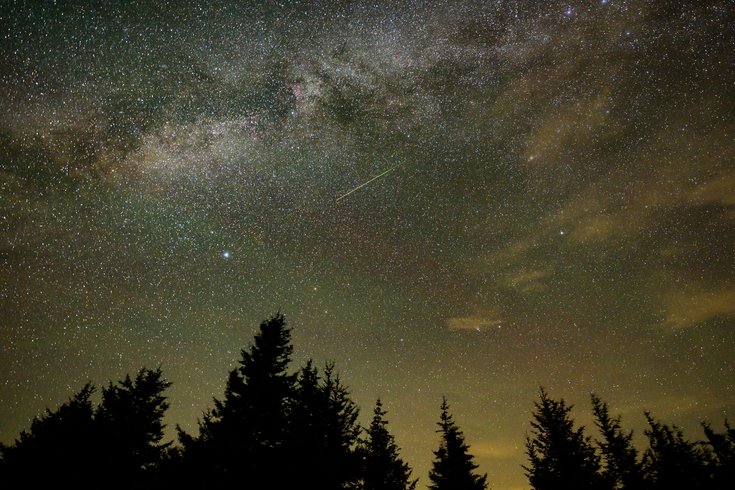
The annual Perseids meteor shower will hit its peak viewing Wednesday night. Above, a Perseid meteor zooms across the sky in 2021.
An annual meteor shower that occurs in late summer will be highly visible on Wednesday night into Thursday morning, scientists said.
The Perseid meteor shower begins in July and has peak viewing in mid-August, when dozens of meteors can be seen every hour. This year, NASA said viewing conditions will be "ideal" because the most active time coincides with a new moon phase, making the skies darker.
"The moon is beautiful, but it's such a diva," University of San Francisco astronomer Aparna Venkatesan told the Associated Press. "New moon means we don't have moonlight flooding the sky, and you tend to see way more meteors as a result."
While NASA says the Perseids shower can produce up to 100 meteors every hour, the American Meteor Society predicts that about 30 to 50 meteors will be visible over a 60-minute span during its peak in rural areas.
In the Philly region, light pollution and a partly cloudy forecast could impact visibility. Astronomers recommend stargazers travel away from urban glow. Viewers should give their eyes 20 to 30 minutes to adjust and no telescope is required to see the shower. The best time for watching will be after midnight but before dawn, when the Perseus constellation is high, the Associated Press reported.
The Perseids shower comes from debris from the Swift-Tuttle comet, which has a 133-year orbit. Every summer, the Earth moves through the orbital path and shooting stars can been seen when these particles collide with the Earth's atmosphere.
This is one of the oldest meteor showers on record, going back 2,000 years, and it will sometimes produce fireballs, a type of particularly bright meteor that leaves a trail behind as it moves across the sky.
The Perseids shower is named after the constellation Perseus because that's where its radiant point — the place in the sky where the meteors appear to fall from — is located. The best way to find shooting stars is to first find that constellation.