




May 27, 2026
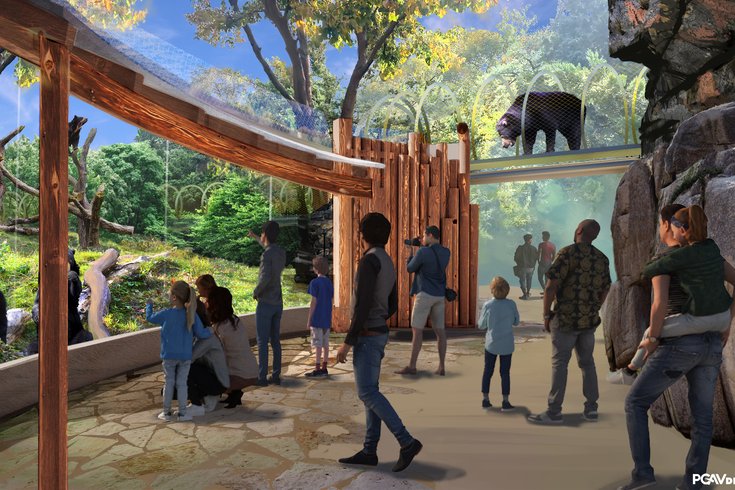 Provided Image/Kory Aversa PR
The Philadelphia Zoo's new bear exhibit, shown in a rendering, rendered, is reopening Thursday, June 4, following the completion of a $25 million renovation projection.
The Philadelphia Zoo's bear exhibit is reopening next week following the conclusion of a two-year, $25 million renovation project.
The exhibit, called Francis J. Carey Bear Country, now includes a mesh trail so the bears can roam — an extension of the Zoo360 program that allows the zoo's big cats and primates to meander pathways in their exhibits. The bears also have access to a cave that visitors can look into from glass viewing areas.
MORE: Photography exhibit shows social impact of boxing gyms for kids in North Philly
The exhibit reopens Thursday, June 4. Zoo members can preview it beginning Tuesday, June 2.
The project was the zoo's largest since the $32 million KidZooU that opened in 2013. The exhibit includes new and upgraded habitats, digging pits for food foraging, heated pools, climbing structures and new indoor and outdoor den spaces for breeding.
The zoo transferred its bears to other zoos during construction. Sloth bears Bhalu and Kayla are returning, but Andean bear Sinchi was permanently moved as part of an Association of Zoos and Aquariums' breeding program. The zoo has not said when it will acquire a new Andean bear.
Renovations to the zoo's Humbolt penguin exhibit, which borders the bear exhibit, are ongoing. The penguins have been temporarily removed.
Sloth bears are found in the forests of India, Nepal and Sri Lanka. They eat eggs, insects, honeycombs and vegetation. Their snouts, lips and strong lungs help them eat termites and ants found 8-10 feet underground.
Andean bears are native to the Andes Mountains in South America and mostly eat fruit, grasses, berries and sugar cane. They're known for their white markings on their faces which resemble spectacles.