




September 23, 2026
 Kirby Lee/USA Today Network via Reuters Connect
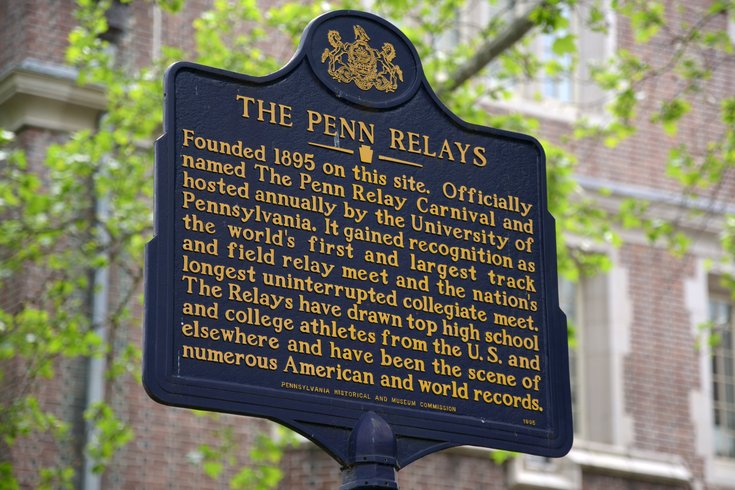
The Pennsylvania Historical & Museum Commission will be repairing and repainting hundreds of the state's historical markers in Philadelphia and elsewhere in the region over the next six to eight weeks. Some may be removed for several weeks before they're reinstalled. Above, a recently installed plaque commemorating the history of the Penn Relays at the University of Pennsylvania.
Hundreds of state historical markers in Philadelphia may temporarily vanish over the coming weeks to allow contractors to make repairs to the blue and yellow signs that are scattered throughout the city.
The Pennsylvania Historical & Museum Commission, which is responsible for more than 2,500 markers statewide, said it's time for Philly's collection of signs to undergo maintenance. The state cycles through fixing up the markers in all 67 counties, covering every region about once a decade.
Philadelphia has more than 300 plaques that give background on significant people, places and events that have shaped the history of the commonwealth. They range from popular landmarks, like Reading Terminal Market and the site of the former Veterans Stadium, to lesser-known achievements like the reputed location of the nation's oldest surviving photograph. Watchmaker and inventor Joseph Saxton made the daguerreotype using a cigar box and glass lens, capturing an image of the original Central High School at Juniper and Market streets. That plaque is placed at Juniper and Chestnut streets, where Saxton took the photo from his office window at the early U.S. Mint building.
When the state started the marker program in 1913, the plates were originally made of bronze and set in stone. They later transitioned to bronze plaques on posts before cast aluminum became the standard in the 1940s. Over the years, some of the markers formed cracks that need to be welded and others are due for a fresh coat of paint or sandblasting.
"Each marker is inspected and (it's) determined whether they need refurbishment," PHMC spokesperson Jay Losiewicz said. "The majority of markers are likely to be removed for minor touchup work, such as repainting."
PHMC is starting working on the markers in Philadelphia and Chester, Berks and Northampton counties. The agency expects to complete repairs over a period of six to eight weeks.
When a plaque is removed, a yellow vinyl tag is placed on the post to indicate that a marker has been taken for maintenance. The work is done by a small business contracted for craftsmanship, and some markers may remain out of service for several weeks.
"We are deeply committed to preserving these stories, and these specific markers will be reinstalled as soon as their structural and cosmetic refurbishment is complete," Andrea MacDonald, director of the Pennsylvania State Historic Preservation Office, said in a statement.
Pennsylvania's collection of historical markers continues to grow each year. Public nominations are reviewed by a panel of historical experts assembled by the PHMC. Philadelphia got 19 new markers approved last year, including for the Archdiocese of Philadelphia, the birthplace of the U.S. Army across from Independence Hall, the Bellevue-Stratford Hotel in Center City and an Underground Railroad safe house at Belmont Mansion.
"Pennsylvania's Historical Markers are vital storytelling tools that reflect the diverse and vibrant history of our communities," MacDonald said. "We are dedicated to maintaining these markers to ensure they remain pristine and legible for visitors and future generations."