





August 28, 2026
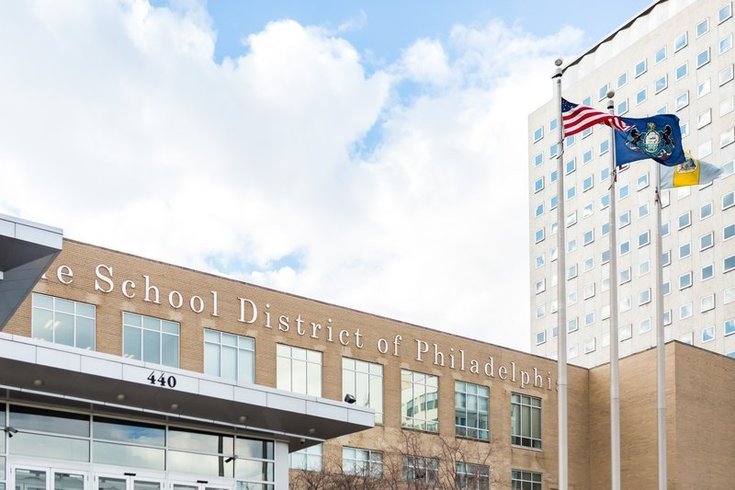 Thom Carroll/For PhillyVoice
Superintendent Tony Watlington said members of school transition teams will help carry out the district's vision of enacting its $3 billion, 10-year facilities plan that calls for the closure of 17 schools.
Tony Watlington said he has "clear marching orders" to implement the School District of Philadelphia's facilities plan, which was adopted by the school board in the spring and calls for 17 schools to be closed starting at the end of this academic year. But the superintendent said he hopes input from the School Transition Committees will help smooth the process.
During a wide-ranging interview with PhillyVoice on Wednesday, Watlington said the district remains committed to working with stakeholders who oppose the $3 billion, 10-year plan, which also includes upgrades to many schools. District officials plan to use the school year to evaluate some of the plan's funding inadequacies and round out some of its finer details.
"We're not trying to place a muzzle on anybody, but I'm off implementing the plan," Watlington said. "I've got clear marching orders from the Board of Education, and we intend to deliver on time and on budget."
The facilities plan, titled "Accelerating Opportunity," is characterized as a way to better allocate the district's limited resources amid dwindling enrollment. It was approved by the Board of Education in April during a highly contentious meeting. Aside from approving closures, the plan also moves to fund modernization projects in 169 schools district-wide and co-locate six others.
"This is a once-in-a-lifetime opportunity for the city of Philadelphia," Watlington said. "It requires some additional resources, but I think our children are worth it and I'm going to make the case to take advantage of it."
The district is confident that it can cover $1 billion of the plan's total cost through its bond borrowing process, but it is still seeking the remaining $2 billion from state funding and philanthropic sources, Watlington said.
"We want to move on with the work of advocating for the additional $2 billion that's needed," Watlington said. "At the end of the day, Philadelphia will have to decide: Do we want to modernize 169 schools or do we want to modernize significantly less than 169 schools? Either way, we intend to modernize some of our schools. … Hopefully, elected officials will continue to push and make the case for that."
Local legislators, like City Councilmember Isaiah Thomas, who chairs the Education Committee, have emerged as some of the most vocal opponents of the plan. During the April board meeting Thomas passionately addressed the crowd, vowing to "fight until the bitter end" and threatening to cut off sources of district funding to prevent schools from closing.
Just last month, Thomas repeated claims that he is considering legal action against the school board and asked its members to return to the negotiating table over the facilities plan, Chalkbeat reported. Watlington said he remains open-minded to working collaboratively with council members, but his duty as superintendent is to carry out what the Board of Education directs him to do.
"I am absolutely committed to staying at the table to keep dialogue open about the way forward," Watlingson said. "As superintendent, I am marching down the road to implement it, but I'm not walking down the road with earplugs in. I'm listening and I'm paying attention."
School Transition Committees have been touted as a bridge between community members who are concerned about the future of their schools and district officials. The teams will have 20 members and be set up for any school that's closing or beginning to be phased out at the end of the 2026-2027 academic year, as well as any school receiving students who are impacted by the facilities plan.
The application process will be open to parents, students and "community partners" from Monday to Friday, Sept. 18, the district said last week. A representative did not reply to a request for comment about what information will be required in the application.
Committee groups seem to be more or less self-governing. Members can dedicate as much or as little time as they need to make decisions about how the facilities plan will impact their communities and make recommendations about how to alleviate any burdens on communities, Watlington said. Transition Committees will report to the district's newly formed School Transition Office, which will also be responsible for coordinating community engagement, project management and disseminating information in a timely manner.
"It won't just be a token, 'We just brought you here to have one meeting and get the photo op,'" Watlington said. "None of that. We're talking about true, authentic engagement."
Aside from those general guidelines, details about what the district is looking for in committee members, its selection process or the influence that the committees will have over the enactment of the plan are, so far, scarce.
"The purpose of these transition committees is to help shape implementation of the work that the Board of Education has approved," Watlington said. "And to do it in a way that we're not sticking our finger in anybody's eye."