




August 04, 2026
 Daniella Heminghaus/USA Today via Reuters Connect
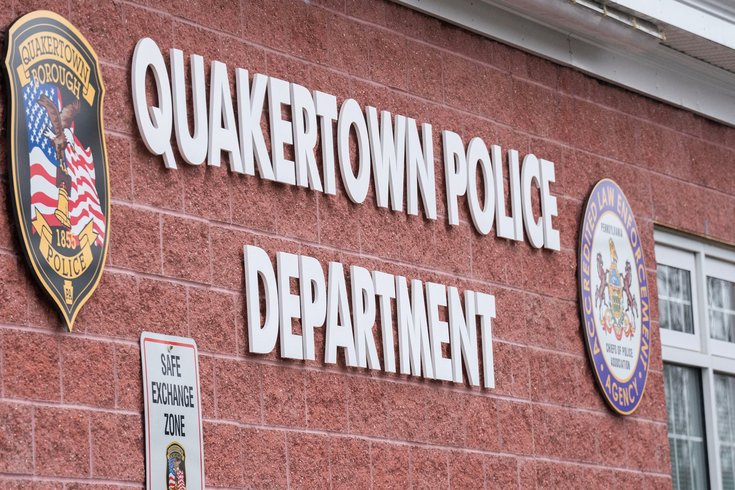
Quakertown Police Chief Scott McElree created a 'fog of war' during a student protest against ICE by charging after teens while in plain clothes, an investigative report says. But his use of force was found to be lawful.
Quakertown's police chief chief made a "calamitous" decision to charge into a crowd of teenage protesters in February, leading to a clash with police, but he will not face criminal charges, according to an investigative report released Monday by the Bucks County District Attorney's Office.
Students from Quakertown Community High School held a protest against Immigration and Customs Enforcement in the borough's streets on Feb. 20, blocking some traffic moving through the town. Police Chief Scott McElree, 72, was not wearing a uniform, badge or body camera, and was not equipped with handcuffs, when he entered the "agitated" crowd, the report said. This sparked a violence response, investigators found, because the students believed an unknown person was attacking them and sought to defend themselves.
"This fateful decision was immediately met with confusion about McElree’s identity and intentions, followed by violence in the streets which divided the community while creating a 'fog of war' for everyone caught in the chaos," the report said.
The 20-page report referenced eyewitness testimony and cell phone videos that show McElree in a scuffle with one teen and with his arm around the neck of another. Investigators found McElree's use of force did not exceed legal limitations because he was not restricting the teen's airflow, the report said.
In the aftermath of the clash, McElree's actions drew criticism from the Quakertown community, including calls for him to be arrested and charged.
The report was critical of McElree's conduct, saying that he had no reason "to engage high school students in an uncontrolled and emotionally charged environment" due to the number of uniformed officers wearing body cameras. Charging toward protesters, without waiting for additional officers or communicating his intentions, was unprofessional and did not reflect the coordination or supervision expected of a police chief, the report said.
"Although McElree was legally authorized to use force, his decision to do so in the manner he chose was not a measured tactical approach that balanced public safety with First Amendment rights," the report said. "It was a calamitous decision that disrupted a student protest and led to confusion and trauma for an entire community."
Investigators found that most students protested lawfully, but some assaulted uniformed officers and McElree, even after it was made clear that he was a police officer. McElree was treated for injuries, including fractured ribs, and received worker's compensation leave before he returned to work in May.
Five teens initially were charged with aggravated assault and misdemeanor offenses, but the aggravated assault charges have been dropped. Quakertown Police sought charges against additional juveniles for assaulting McElree, but the Bucks County District Attorney's Office said Monday that it has denied that request.
The Quakertown Police Department is one of the only police departments in Bucks County that has not updated its use-of-force policy to restrict techniques meant to cut off oxygen flow, the report said. Investigators recommended the department immediately provide a timeline for adopting use-of-force reforms.
The Bucks County District Attorney's Office plans to host conversations with the police department and the community about the clash over the next 45 days. Afterward, the office will release recommendations on how to improve relationships between the police department and Quakertown community.