


September 21, 2026
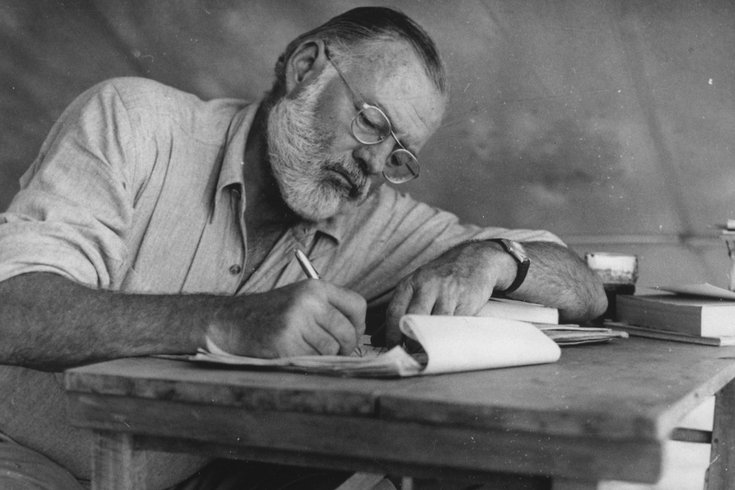 Public domain/Wikimedia Commons
Before he wrote 'The Old Man and the Sea,' Ernest Hemingway took scientists from the Academy of Natural Sciences aboard his boat to search for new fish species in Cuba.
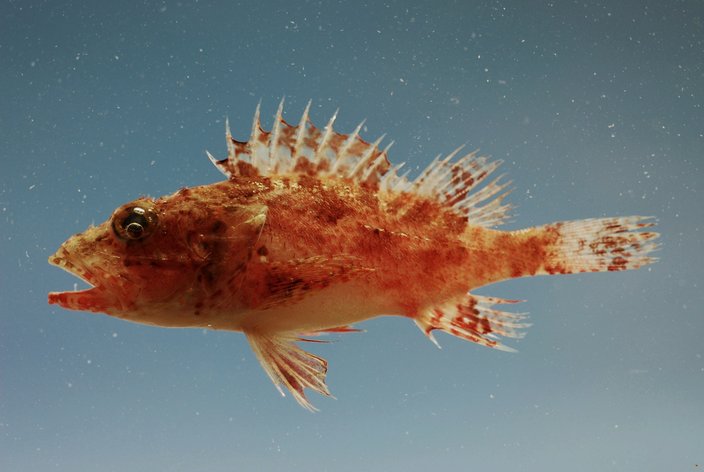
One of the 19 million specimens in the Academy of Natural Sciences collections is an orange fish with a big head, spiky fins and rows of teeth. It was first described by Henry Fowler, an ichthyologist at the Philly institution, in 1935. And though the carnivorous sea creature is more commonly known as a spinycheek scorpionfish, Fowler drew its scientific name from a colleague who helped him identify several Gulf Stream fish: Ernest Hemingway.
The famous writer had a scholarly relationship with Fowler and Charles Cadwalader, the academy's president, during the yearslong stretch between his 1929 anti-war classic "A Farewell to Arms" and 1937's "To Have Have Not," a novel about a boat captain in Key West. That was essentially Hemingway's title for much of the 1930s, as he devoted more and more of his time to fishing for big game of the sea — marlin, swordfish and bluefin tuna — aboard his boat Pilar.
"He had always, since he was a little kid, enjoyed fly fishing," said Verna Kale, an associate research professor at Penn State University and associate editor of the Hemingway Letters Project. "Then he ended up going to Florida ... and that's when he first went out on the ocean and went big-game fishing. He was just immediately captivated by it.
"It was so exciting for him. It had the kind of excitement that freshwater fishing had, plus the excitement of big-game hunting just sort of rolled into one. And what was most exciting to him was it was this unknown territory. Because there were fish out there that people had never described it before."
Letters between Hemingway and Cadwalader, which are also part of the academy's collections, indicate that the scientists actually reached out first. As Kale explained, Cadwalader wrote on a mutual acquaintance's recommendation, hoping to learn more about the large fish Hemingway was reeling in Cuba. When the author returned from an African safari in early April 1934 and read the letter, he enthusiastically volunteered his help.
"I plan to fish the North Cuban Coast again this summer and with decent luck should be able to get you typical specimens of the white, Striped and black Marlin, the Cuban sailfish, wahoo and the big dolphin as well as the mako shark," he replied. "There are other game fish we might get if very fortunate."
Henry Fowler, an ichthyologist at the Academy of Natural Sciences, named the spinycheek scorpionfish, scientifically known as Neomerinthe hemingwayi, in honor of author Ernest Hemingway in 1935.
Hemingway visited the Academy of Natural Sciences a week later on his way home from New York to Florida. While his stop was brief, he spent more time with Cadwalader and Fowler when the two men came his way that summer. The trio explored the Cuban waters from Hemingway's boat each day from July 24 through Aug. 15. According to Kale, these expeditions weren't very fruitful, but the author sent several photos, measurements and even specimens after the men returned home. An albacore tuna he shipped to Fowler is still with the academy today.
How did Hemingway mail fish from Key West to Philadelphia? Letters indicate he leaned on friends and ferry boat captains to help ice, box and transport the samples north. These packages apparently contained more than heads and gills. Hemingway promised to include the sucker fish attached to the marlins he caught — and the parasites inside their bellies — in his messages.
"He's basically mailing them a lot of weird stuff," Kale said.
The amateur ichthyologist continued corresponding with Fowler and Cadwalader into the fall and following year, to the apparent concern of his editor Maxwell Perkins, who warned Hemingway "for God's sake don't get to be too much of a naturalist or you won't have time to write." Little did he know that these and other experiences were forming what many consider the writer's greatest novel. While "The Old Man and the Sea" wasn't published until 1952, the author's mid-1930s fishing expeditions "certainly influenced his work on that novel," Kale said, as well as earlier stories he wrote for Esquire.
Hemingway did not personally catch the fish that Fowler eventually dubbed Neomerinthe hemingwayi. In fact, it wasn't even native to the Gulf Stream. The spinycheek scorpionfish in the academy's collections was bagged about 70 miles southeast of Cape May by Otway H. Brown, a botanist and founding member of the Cape May Geographic Society. With a max length of about 15 inches, this species wasn't the type of game Hemingway would pursue. In Kale's estimation, it's a "tenacious, slightly ugly little fish." But the writer was still "very honored and pleased" by Fowler's acknowledgement of his efforts, as he wrote in a July 23, 1935 letter upon learning the news.
The 91-year-old marine specimen is now one of many with an uncertain future, as the Academy of Natural Sciences prepares to close its museum. It's also, Kale said, "one more way the Academy museum is a significant cultural site" — one that concerned city lawmakers and residents are fighting down to the wire to save.
Follow Kristin & PhillyVoice on Twitter: @kristin_hunt
| @thePhillyVoice
Like us on Facebook: PhillyVoice
Have a news tip? Let us know.