



November 02, 2026
 Colleen Claggett/For PhillyVoice
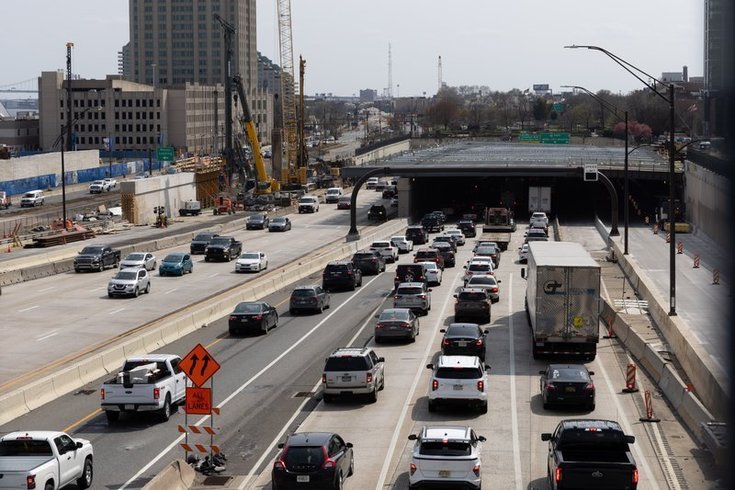
Office of Transportation and Infrastructure Systems' Vision Zero annual report for 2025 showed progress in improving road safety, but more work needs to be done to protect pedestrians, officials said.
Philadelphia reported 89 traffic fatalities in 2025 — a 26% drop from the year before — yet severe injuries reported as the result of a crash increased by 4% in the same time frame, according to the city's annual Vision Zero report released Monday.
Officials with the Office of Transportation and Infrastructure Systems credited the decreased death rate to policies like speed camera enforcement and traffic calming infrastructure projects under the Vision Zero program, which aims to eliminate traffic fatalities.
A total of 381 serious injuries as the result of a traffic crash were reported in 2025, the report says. In 2024, 362 serious injuries were reported, a significant decrease from the three years prior, when serious injury crash counts were 404 in 2022, 442 in 2023 and 460 in 2021. Marco Gorini, Vision Zero program manager, said that while a certain degree of severe crashes are expected to occur in a given time frame, the advancement of solutions promoted by the office have helped reduce the severity of some cases.
"You may see that some crashes that would have otherwise been fatal end up as a serious injury crash," he said. "While we're seeing success in removing a lot of the conditions that are going to contribute to a fatality, there is more work to do to make sure that those crashes are of an even lower severity than a serious injury."
Over the past five years, people outside of a motor vehicle have been at a greater risk of dying or being seriously injured during a crash than motorists inside a vehicle — especially at night. Monday's report found that 46% of people involved in fatal crashes since 2020 were either walking or cycling. A majority of those crashes occurred in the dark near streetlights.
"While this disparity existed prior to the (COVID-19) pandemic, it's getting worse today, despite the overall crash picture returning to the pre-pandemic trend," said Virginia Lynn, coordinator for Vision Zero.
Last year, the ratio of people who died outside of a motor vehicle was 5% higher than the average amount of traffic deaths from 2015-2019. Around 42% of last year's traffic fatalities were people who were walking or rolling. Black and Hispanic residents were also found to be injured and killed at a greater rate than white and Asian residents in the city.
Vision Zero planners said expanding its traffic calming programs like speed cameras have worked to curb some of the more common factors that contribute to severe crashes like speeding, running red lights, distracted driving, impaired driving and running stop signs.
Starting next year, camera-based enforcement is scheduled to expand to corridors like Allegheny Avenue and Erie-Torresdale Avenue, including portions of Delaware Avenue. Earlier this year, the Philadelphia Parking Authority found that since speed cameras were installed along Broad Street to enforce a 25 mph limit, speeding has fallen by 67%.
Local legislation to redesign streets, install safety improvements or promote bike lanes along busy roads have been a step in the right direction, officials said, but inaction in Harrisburg on bills that would permit measures like Parking Separated Bike Lanes has stifled some of the city’s progress on state-owned roads.
"We had a pilot with PennDOT for a certain number of corridors. … (Parking-Separated Bike Lanes) have been very successful,” said Kelley Yemen, director of OTIS' Office of Multimodal Planning. "We've seen a decrease in speeding and crashes on those corridors. Unfortunately, at this point, we need legislation."
This fall, OTIS has begun rolling out a new communication strategy to educate Philly residents and drivers about speed cameras and the dangers that the area's roadways pose. The program will include social media outreach, educational resources and expanding transit safety lessons within the city's schools.
"It's not enough to redesign dangerous corridors, slow vehicle speeds and create safer conditions for road users," Gorini said in a statement. "We need to meet people where they are — in schools, at neighborhood events, at places of worship. Together, we can create a culture of safety where every Philadelphian plays a part in making our city safer."