




July 24, 2026

 Provided Image/John Chovanes
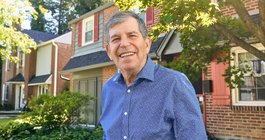
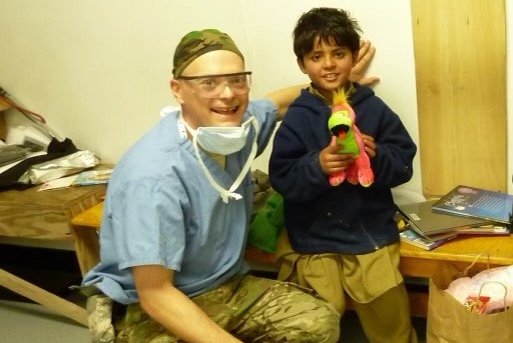
Dr. John Chovanes is a trauma surgeon for Cooper University Health Care and the founding medical director of Cooper's Section of Military, Diplomatic and Field Affairs.
A centerpiece of my men's health advocacy is what I call the proximity of motivation — powerful inspiration that resides directly in front of us but is too often overlooked. This inspiration can be found in the relationships, ambitions and daily experiences that drive purpose and support a healthy lifestyle — if we recognize the opportunity and leverage its power.
The oversight is understandable. There is something about proximity that represents tremendous potential, though frequency and familiarity can cloud our view of what can become a significant personal asset. A recent epiphany brought this point clearly into focus.
At Cooper University Health Care, we employ so-called "dyad" structures to manage various units of the enterprise. These pairings of administrative and clinical leaders provide an effective approach for overseeing complex programs with multifaceted dimensions. I am fortunate to be paired with an outstanding clinical partner in the oversight of our military programs: Dr. John Chovanes, the subject of my epiphany. Beyond being a great dyad partner, it occurred to me that Chovanes is a phenomenal role model for men over 50, with an inspiring story of resilience and a lifestyle built on motivating relationships.
Chovanes, 56, is a trauma surgeon at Cooper and the founding medical director of Cooper's Section of Military, Diplomatic, and Field Affairs, where he has developed a nationally acclaimed clinical trauma training program for military and diplomatic clinicians recognized by the American College of Surgeons.
Chovanes grew up in Bala Cynwyd in a family of five boys. Today, he lives in Mullica Hill, New Jersey, with his wife Samantha and three children. He also has an adult son from a prior marriage.
As a teenager, Chovanes volunteered with the Narberth Ambulance Company and became an emergency medical technician in Pennsylvania and New Jersey at the minimum allowable age. From there, he advanced to flight paramedic and then became a nurse, working throughout the region.
His love for emergency medicine shaped his academic journey, which brought him to West Chester University at age 21. While his medical experience delayed the start of his collegiate career, the maturity gained through those years became an asset that helped spur his ascension to medical school and beyond. It was a course strongly encouraged by his father, whom he credits with inspiring him to become a doctor. "Johnny, Johnny, you're meant to do more," Chovanes recalls his father saying.
From West Chester, it was on to the Philadelphia College of Osteopathic Medicine, where he completed an internship and residency in general surgery. That was followed by a double fellowship in trauma surgery and surgical critical care at the University of Pennsylvania School of Medicine and, ultimately, a position at Cooper in 2010.
As a surgical resident in his 30s, Chovanes saw an opportunity to generate additional income as a divorced parent with a son, pay homage to the military service of his father — an Army veteran — and distinguish himself among his four competitive brothers. He joined the U.S. Army Reserve Medical Corps.
Chovanes was sworn in on June 29, 2001, and, with an age-required waiver, continues his service to this day, having risen to the rank of colonel. He has completed six tours of duty and is the recipient of several awards, including the Army Commendation Medal for Meritorious Service and the Soldier's Medal for Heroism.
At Cooper, Chovanes has fashioned a post-50 encore career on top of his work as a trauma surgeon. The Section of Military, Diplomatic, and Field Affairs attracts military physicians and other clinicians from all branches of the military, as well as professionals from the State Department and Homeland Security who seek exposure to Cooper's Level One Trauma Center and related EMS opportunities.
Through Chovanes' leadership, this has blossomed into a nationally renowned training program that supports our nation's military medical readiness. Chovanes credits his bedside interactions with trainees, including Green Berets and Special Operations personnel, as a major motivating factor in his continuing engagement with the program.
Chovanes is a busy man, but he still finds time to attend to his personal health and well-being. He credits his wife, Samantha, with helping him manage his diet and providing emotional support.
As a self-proclaimed outdoorsman, Chovanes enjoys splitting wood on his farm and taking walks. He is in the later stages of recovering from a hand injury, but that has not held him back from exercising in a gym he has set up in his garage to maintain his fitness routine. At the hospital, he usually takes the stairs for added physical activity. Prayer enables him to balance his physical and mental well-being.
At 56, Chovanes' story reads like a chapter from the men's health playbook of well-being: an accomplished physician who continues to serve his country and remains grounded by the inspiration of his wife and his faith. He is a man whose resolve to pursue his dream was clear at a very young age, yet he was humble enough to heed his father's counsel and turn that support into motivation to become a physician.
His advice for men over 50? "Do what you love doing, have a great spouse, strong faith, and good physical fitness," Chovanes said.
As someone who frequently works with younger men, Chovanes acknowledges that he cannot always keep up with the young, highly fit Special Forces personnel around him. Still, he finds value and confidence in the wisdom that comes with experience — a valuable perspective for older men.
"Knowing where I screwed up — and I screwed up a lot — but letting my age work for me to see things in another way and to use that to help a bigger cause, I think, is a great thing," he said.
Chovanes has saved lives, served his country, and helped ensure that our military clinicians are combat ready while maintaining his own well-being. It is a motivating story that was right in front of me, waiting to be fully appreciated.
Take a fresh look at the people and relationships immediately around you. Whether it is a spouse, child, co-worker, friend, mentor, or casual acquaintance, there may be a meaningful source of inspiration right in front of you — one that can strengthen your sense of purpose and your commitment to a healthier life.