




November 06, 2026
 Thom Carroll/PhillyVoice
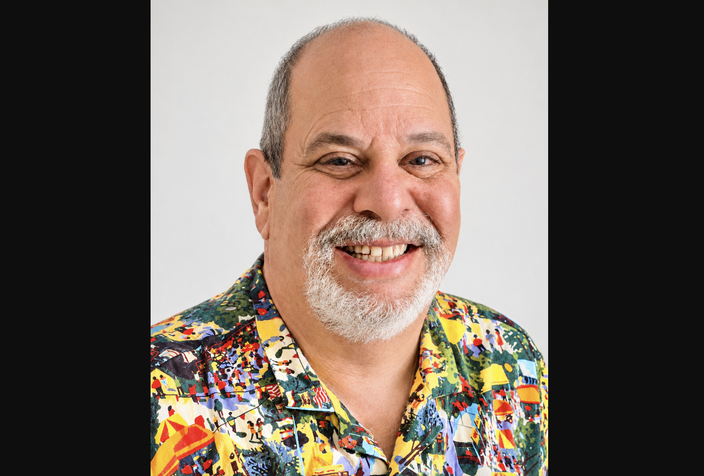
Rich Temple, 66, of Society Hill, will spend two days riding all 13 Regional Rail lines to advocate for a sustainable, long-term funding solution for SEPTA.
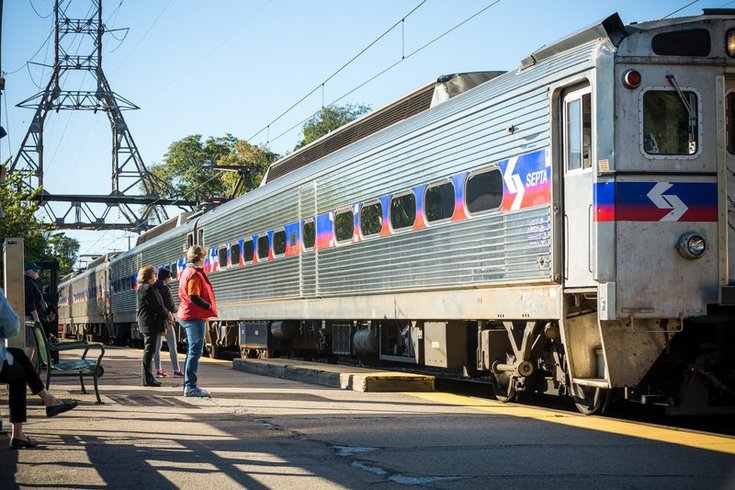
Over the course of two days, Rich Temple will be spending roughly 24 hours riding all 13 SEPTA Regional Rail lines and passing through all 158 stations.
As a self-proclaimed "public transit nerd," the 66-year-old from Society Hill isn't trying to sightsee or break a world record (he’s done that already). Instead, he said he views the trip as an opportunity to support the transit authority and advocate for the long-term funding he believes it deserves.
"It will be kind of a thrill to do it, but I think I've got a more serious motive as well," Temple said. "I want to call attention to what is so extraordinary about the SEPTA system as a whole, but also some of the unique challenges that SEPTA faces."
Having lived in Philly for the past 11 years, Temple said SEPTA has been a reliable and viable alternative to driving, and he believes that the transit authority's recently unveiled plan aiming to expand its reach is a step in the right direction.
"I know how close we came to Armageddon a year ago," Temple said. "(I'm) doing something fun, something lighthearted and sort of putting SEPTA in a positive light. … Let's get SEPTA into the middle of the conversation, see why it's so valuable and drive home the point that SEPTA is vital."
With the help of artificial intelligence, Temple compiled a three-page spreadsheet that plans departure and arrival times for all 22 trains he will take during his two-day journey. Guinness World Records has specific rules for different public transit challenges. Even though Temple isn't going for the record, he's going to follow the international authority's guidelines that allow him to pass through each station, rather than exiting at each stop.
Temple will begin his journey at 30th Street Station at 4:05 a.m. Tuesday, Nov. 10, and head toward Trenton Station. Once in Trenton, Temple will wait 41 minutes before boarding a roughly two-hour train to Chestnut Hill East. From there, he will walk 20 minutes to Chestnut Hill West and return to Center City — all before 9 a.m.
The remainder of his first day will be spent hopping through the Media/Wawa, Lansdale/Doylestown, Warminster, Airport and Paoli/Thorndale lines before he returns back to Philly for the night. His second day itinerary will begin with a 5:10 a.m. train out of 30th Street and run through the remaining five lines.
During each train ride, Temple said his plan is to relax as much as he can by taking in the views, introducing himself to new acquaintances, blogging about his experience on Facebook and posting photos on Instagram. He's also not naive to the realities of Philly public transit, where anything from delays and detours to equipment malfunctions and police activity can throw off a train's schedule.
"If I miss a train, I could be sitting there festering for 40-60 minutes and that could throw everything off," he said. "I'm not going to trivialize it, it's pretty complex."
This will not be Temple's first time "marathoning" a U.S. public transit system. Three years ago, he also set out to traverse the entire Los Angeles metro system. And in December 1988, he and two friends set the mark for the fastest navigation of the entire New York City subway on a single fare, hitting all 466 stations in 29 hours, 47 minutes and 12 seconds. They were named in the Guinness Book of World Records, which Temple calls his "15 minutes of fame." The record was broken the next year by Kevin Foster, who rode the entire system in 26 hours, 21 minutes and 8 seconds.
Rich Temple, left, and two of his friends were named in the Guinness Book of World Records for traveling the entire New York City subway system in just under 30 hours in 1988.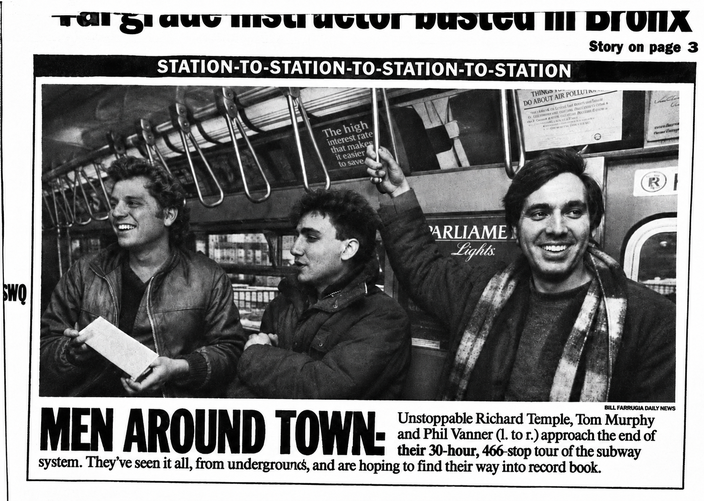 Provided Image/Rich Temple
While niche, the hobby of traversing a public transit system as fast as possible — known as "transit speedrunning" — is an international phenomenon. The Bay Area Rapid Transit system in California has kept track of its fastest speedrunners over the years and world records have been broken for metro systems in cities from Toronto to Madrid.
TransitRuns, a database that informally tracks users' speedrunning times, lists five SEPTA users who have traveled on either the Heavy Rail (Market-Frankford Line, Broad Street Line and the Norristown High Speed Line) or the Light Rail (T and G trolley lines and the Media-Sharon Hill Line).
The fastest time for a run through every Heavy Rail station is by a user known as JohnnyG1_4, who completed the course in 2 hours, 47 minutes and 15 seconds in July of this year. Representatives with SEPTA did not respond to a request for comment regarding their awareness of the activity.
"This is a little eccentricity that I have, but something I really enjoy," Temple said. "It's fun to look out the window and see the scenery that's outside as the train whizzes by."
Rich Temple, 66, of Society Hill, will be embarking on a 'Regional Rail marathon' for two days straight.
Growing up in New York City, Temple said he's always been a "subway person," even admitting to occasionally cutting school just to ride trains around the city. He studied political science in college and worked in healthcare communications up until his retirement last year. But his passion for public policy and transit never wavered.
"SEPTA is sort of a confluence of both of those things," he said. "Its efficiency and ability to do the job it desperately needs to do to keep the Philly area humming is very much contingent on potentially controversial public policy options that really need to come to fruition."
Last year, the region's largest transit authority was forced to implement sweeping service cuts and fare hikes after lawmakers at the state level failed to identify a recurring revenue source. The service cuts were eventually blocked by a judge. Gov. Josh Shapiro (D) requested the state's Department of Transportation to use around $400 million in capital funding to supplement its operational needs.
The funding, which Shapiro called a "Band-Aid" for the authority's $192 million deficit, will run out by July 1, 2027. After Democrats won a "trifecta" in Pennsylvania during Tuesday's midterm elections, Shapiro promised that he and the legislature would fund mass transit.
"I would like to catalyze the discussion in the legislative branch to come up with a solution to sustainably fund SEPTA," Temple said. "Not just do it out of a sense of charity, but do it because it just makes a lot of sense as an economic engine for the state. … Maybe this elevates the discussion so more people are involved, feel like they have a stake or think they could actually make it happen."