



November 12, 2026
 John Kopp/PhillyVoice
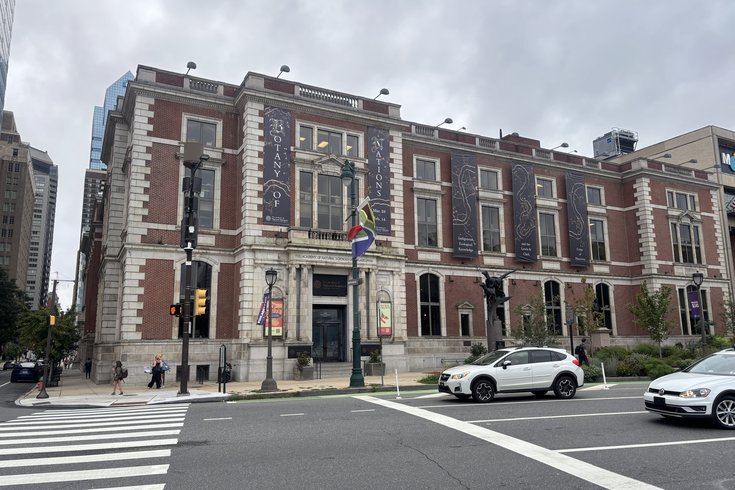
State Sen. Nikil Saval (D-Philadelphia) will soon introduce legislation that would allow Philadelphia to increase its local sales tax as part of a plan to create a steady funding source for the city's arts and cultural institutions. Saval cites the recent closure of the Academy of Natural Sciences museum, above, as a call to action to support Philadelphia's cultural assets.
In the wake of Drexel University's closure of the Academy of Natural Sciences museum, a bill proposed Thursday in the Pennsylvania Senate seeks to give Philadelphia a dedicated funding source to support the city's arts and cultural institutions.
State Sen. Nikil Saval (D-Philadelphia), who has been outspoken about Drexel's decision to shutter the nearly century-old museum at the end of September, introduced legislation that would boost public arts funding using a method that has been adopted elsewhere in the state.
The bill would give Philadelphia authority from the state to increase the city's sales and use taxes, keeping a portion of the increased revenue available for a variety of cultural and community assets. Money from the taxes could be used to support museums, galleries, theaters, libraries, and parks and recreation centers, among other public venues.
"We have an opportunity to make a generational investment in our arts and cultural institutions, parks, and civic space — preserving these treasured community assets and expanding public access," Saval said in a statement. "We can ensure that public money goes to support the public good.”
Saval said Democrats' success in this month's midterm elections — giving the party a trifecta in state government come January — offers a path for state lawmakers to help Philadelphia protect threatened institutions. Beyond the Academy of Natural Sciences museum, Saval noted the closure of the University of the Arts two years ago and the shuttering of the Philadelphia History Museum (formerly the Atwater Kent Museum) in 2018.
The state passed a similar measure in 1993 — the last time Democrats held a trifecta in state government — to help create Allegheny County's Regional Asset District in western Pennsylvania. The Allegheny RAD has used half of the revenue from a 1% local sales tax to fund the county's libraries, cultural centers, parks, trails and other institutions for more than three decades, investing more than $5.5 billion in the effort. The other half of local sales tax revenue goes to a combination of county and local government services and property tax relief.
Only Philadelphia and Allegheny counties have local sales taxes on top of Pennsylvania's statewide 6% rate. Philadelphia's 2% local sales tax was enacted in two stages, starting with 1% levied during a fiscal crisis in 1991. Another 1% increase was passed in 2013 to offset municipal pension obligations. Such changes require enabling legislation to be passed in Harrisburg.
Philadelphia's 8% combined state and local sales tax is Pennsylvania's highest, but Saval said the closure of the Academy of Natural Sciences museum has made clear the city's arts and cultural sector is on the line.
"As the oldest natural history museum in the country, this irreplaceable loss has been felt deeply throughout the Greater Philadelphia region and reverberated in scientific communities across the world," Saval said in a memo introducing the bill.
Philadelphia currently ranks last in the United States in public arts funding, according to a recent study Saval cites from Southern Methodist University's national DataArts research center. The city's arts and cultural sector was hit hard by the COVID-19 pandemic. Philadelphia had the steepest reduction in municipal arts grant funding per resident from 2019 to 2024, the study found.
Momentum for Saval's legislation could be bolstered by Philadelphia voters' approval of a ballot question this month that formalizes Creative Philadelphia, the city organization that runs grant programs and oversees public arts and education initiatives. The office has operated under an executive order since 1984. Nearly 84% of voters in the city approved the measure to establish the office under Philadelphia's Home Rule Charter moving forward.
"It’s clear that the public has the will to fight to preserve our vital community assets," Saval's statement said. "Philadelphians now need their elected representatives to fight for the city’s future, too."
Saval has not indicated how significant of a sales tax increase might be recommended in Philadelphia, and raising the city's rate may prove to be a tough sell among voters. Philadelphia is once again the poorest big city in the nation, and a local sales tax increase would hit city residents more squarely than people in the broader region who benefit from Philadelphia's cultural attractions.
A 1997 referendum to expand the Allegheny RAD — raising local sales taxes as part of a proposed Regional Renaissance Initiative — was soundly defeated by voters in 11 counties in western Pennsylvania at the time. The plan would have levied a regional 0.5% sales tax primarily to raise funds for new sports stadiums in Pittsburgh. The Steelers and Pirates stadiums ultimately were funded through a separate public-private package.
Some leaders expressed support for Saval's proposal on Thursday.
“Philadelphia’s arts and cultural sector is at a critical crossroads, and we cannot continue to rely on short-term solutions to address long-term challenges," Patricia Wilson Aden, president and CEO of the Greater Philadelphia Cultural Alliance, said in a statement.
Jane Golden, the founder and former executive director of Mural Arts Philadelphia, also backed Saval's plan.
"This important legislation recognizes that culture is not a luxury, but an essential public investment in the long-term health, vitality, and future of our city," Golden said.
Advocates are continuing to put pressure on Drexel University and city leaders to find a path forward for the Academy of Natural Sciences museum. City Council members grilled university officials about the strategic and financial reasons for the museum's abrupt closure at a hearing last month, and on Thursday the council adopted a resolution to create a task force that will study the future of the Academy of Natural Sciences, including options for reopening its museum to the public.