


October 30, 2026
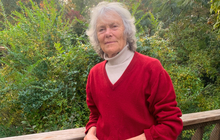
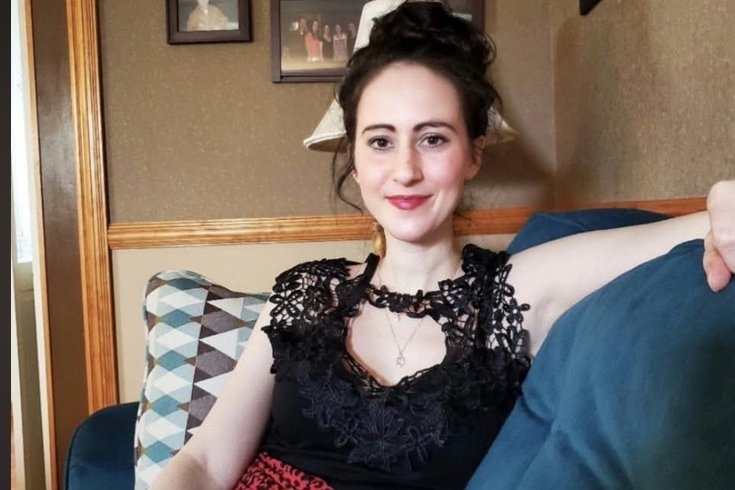 Provided Image/Barbara Rotella
Barbara Rotella uses digital tools, public records and research strategies to help families find missing loved ones. She found links between a cluster of local missing women and Raymond 'R.C.' Horsch years before police got a search warrant for his house in Olney.
Two years before a federal investigation uncovered troves of disturbing images and videos that suggest multiple women may have been killed at Raymond "R.C." Horsch's house in Olney, an online sleuth from South Jersey started feeding tips to the Philadelphia police that linked missing women to the suspected serial killer.
"I simply was looking into all the people in the local area, and I zeroed in on the South Jersey/ Philly area after realizing that there was a cluster of missing women that shared many commonalities," said Barbara Rotella, who's been using digital tools, public records and research strategies to investigate missing people since the early 2000s.
RELATED: Investigators have found no human remains at the Horsch house in Olney, health officials say
As she looked deeper into the "alarming number" of local women going missing, Rotella in 2024 found a "distressing photograph" of Horsch's ex-wife, Amy McHale, that was in a review of a film Horsch made in 2016 that was titled, "Deleted Scenes: a serial killer's video journal."
Horsch was a producer of violent pornography and had a long criminal record, including a 2009 arrest for attempting to lure a 9-year-old girl into his car, and had served four years in federal prison for drugs and weapons convictions. Horsch was released in 2013 after providing investigators with information about "crimes against minors, including child prostitution, marijuana and cocaine trafficking and fraud," according to unsealed court documents reviewed by NBC10. Horsch died a free man at 82 in May 2025.
"I do remember the feeling of seeing that title of the video and being shocked that a missing woman was part of a serial killer's video journal, so that was kind of what triggered all of this research into R.C. Horsch," Rotella said.
On Sept. 26, 2024, Rotella messaged McHale's daughter, Amanda Stofer, on Facebook to send her the photo and tell her what she had found. Stofer confirmed the image was her mother and said she "had not heard about anything like this in 2016," when McHale was reported missing. "Detectives have only gotten cold leads these past few years," she added.
"Do you have any idea what has happened to her?" Stofer asked.
"No, I don't, sorry," Rotella replied. "I hope (Horsch) let her go, but he boasts about his own deviance."
The next day, Rotella warned Stofer, "This man is highly dangerous."
Stofer and Rotella gave the information to detectives in Philadelphia's South Division.
Rotella shared screenshots with PhillyVoice of Facebook messages between her and Stofer. Both parties confirmed the correspondence and timeline of events.
McHale is one of at least seven missing women who have been linked to the Horsch house amid a federal investigation that has drawn international media attention and intense speculation on social media.
In June, R.C.'s son, Eugene Horsch, 44, was arrested during a traffic stop in Old City after a park ranger allegedly heard him threaten a female passenger in a black BMW. When the ranger approached the car, Eugene Horsch produced a false Drug Enforcement Administration credential. The passenger gave an ID that belonged to a missing woman named Blair Tonzelli. Police also discovered a switchblade and two firearms without serial numbers.
That arrest led investigators to search Horsch's home at 417 Chew Ave., where they found hard drives containing more than 1 million photos and videos — including some depicting women who appeared unconscious and are presumed to be dead.
Evidence of a narcotics grow operation and hazardous chemicals also were found on the property. No bodies of the missing women linked to the house have been discovered.
McHale was 44 when she went missing. Her family has reportedly said that she was last seen at Horsch's house.
In August, police identified Maribel Fresses and Gabrielle Amarando, who were reported missing in February 2018 and September 2012, respectively, from the footage recovered at the home.
The family of Nicole Fusaro, who was 27 when she disappeared in 2018, reportedly said investigators had identified her as a woman Horsch was apparently strangling with a zip-tie in a video.
There are also two other women who have been connected to the case. Investigators know the identity of one of them, but have not publicly released it. They had not identified the other woman as of mid-September, when investigators last held a news conference on the case.
So far 58 people have been identified from the immense amount of photos, videos and digital evidence collected, and most of them are still alive, police said last month.
Eugene Horsch is being held in federal custody on firearms charges.
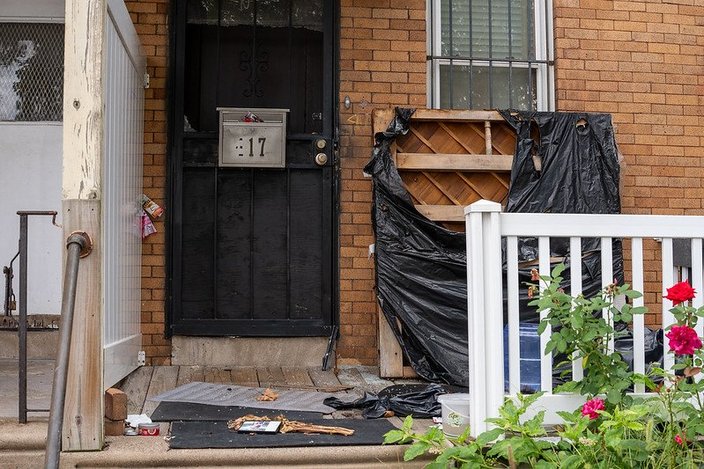
Investigators say they found hard drives containing more than 1 million photos and videos — including some depicting women who appeared unconscious and are presumed to be dead — at the Olney home of Raymond 'R.C.' Horsch.
At Stofer's urging, Rotella shared her findings about R.C. Horsch and McHale, including the photo, with a Philadelphia police detective via a Facebook message on Sept. 27, 2024. Rotella said the detective called her three days later and told her that R.C. claims "the works he does are fictional" and suggested that R.C. could have "just taken" McHale's photo "like that as her being a 'model.'"
Rotella said she also shared information with police in 2024 potentially linking R.C. Horsch and associates with other missing women, including Tonzelli, Fusaro and Fresses — all of whom police have now said are connected to the investigation.
"A search warrant was not obtained in 2024 when I first alerted authorities on (Horsch's) case, stating that I had found strong evidence that he was a serial killer and linked to multiple women's disappearances," Rotella said. "I went on to identify many of the people in his photos."
Rotella said she also sent a "lengthy follow-up document" to Philadelphia police on June 19, the day Eugene Horsch was arrested. The document named most of the women — "and more" — who are now publicly linked to the investigation.
"It turns out many people suspected R.C. of crimes, but no one had found the evidence I had to tie him to multiple missing women until then," Rotella said.
Two homicide detectives came to her house in late June to discuss some of the information she had to share, and she has been working with police ever since, Rotella said.
"I gave tips throughout the years, long before they were in the news, and I don't know what happened with my tips," Rotella said. "I don't know if they just couldn't get a search warrant … and that's ultimately what this came down to. They really needed a search warrant for Horsch's house."
Philadelphia police declined to answer specific questions about information Rotella has shared with them through the years.
"The Philadelphia Police Department appreciates information provided by members of the public, as tips can play an important role in ongoing investigations," a police spokesperson wrote in an email. "All information received is reviewed and evaluated by investigators, who determine what additional follow-up may be necessary.
"Regarding your specific questions about Ms. Rotella and the Horsch investigation, we are unable to confirm individual investigative steps, conversations between detectives and potential witnesses, or the information provided by specific individuals. As this remains an active investigation, we cannot discuss investigative timelines, the significance of particular tips, or the circumstances surrounding investigative developments.
"We recognize the public's interest in this case and remain committed to conducting a thorough investigation. Any additional information appropriate for public release will be shared as it becomes available."
Retired detective Chris McMullin, who started his career as a Philadelphia police officer in the 1990s and spent more than two decades with the Bensalem Police Department, said verifying tips from the public was a routine part of his job over the years.
McMullin, who's not involved in the Horsch case, welcomed tips — and occasionally sought them out in online forums — while investigating homicides and cold cases. The evolution of the internet has opened more channels for law enforcement to gather evidence from the public, McMullin said, and he sometimes used that information to advance cases or to keep missing and unidentified people in the public eye.
"Corroboration is critical, and a tip doesn't really have to immediately produce an arrest to be valuable, but it might provide one step in the right direction, where you may find another witness, or maybe it establishes a timeline," McMullin said. "It may not be a grand slam, but it might be a base hit."
Credible tips may not directly lead anywhere if the evidence doesn't amount to probable cause for an arrest, for example, or if police are not ready to question a potential suspect in a complex case.
"Generally, the public is not working with as much information as law enforcement has," McMullin said. "It's very rare that you're going to see a law enforcement agency release everything."
McMullin now runs a nonprofit that investigates cold cases, and he's the host of the true crime series "Philly Homicide." He recently met online sleuths and podcasters at the inaugural Crimestery Fest in Massachusetts, where he was a guest speaker this month.
"For the most part, the people that are either online detectives or into the true crime community, I think their heart's in the right place," McMullin said. "... They're civic-minded people that just want to see justice."
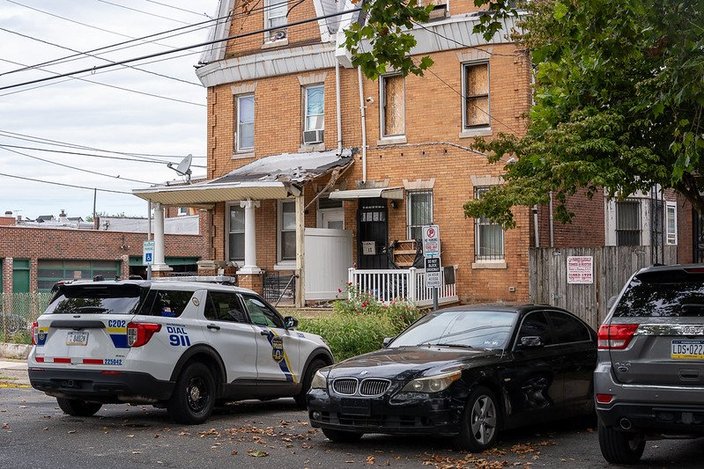
The house of Raymond 'R.C.' Horsch, shown in September, has been linked to at least seven missing women. Barbara Rotella, who has spent years helping families find missing loved ones, says she first alerted police to Horsch's connections to missing women in 2024.
When Rotella began connecting a group of missing women from Kensington's large open-air drug market to R.C. Horsch, she said she was not looking for a "serial killer" but found these potential victims as a result of her passion for "making sure people are accounted for in this world."
"Ever since I was a child, I wondered about the missing people that I'd see on flyers and in the newspapers," said Rotella, who is 43 and lives in Erial, New Jersey. "Back then, I didn't think there was anything I could do to help, because I was just a kid. As I got older, I realized that there are so many avenues I could take to help."
Rotella's interest in finding missing people intensified when she saw human trafficking while working at a hotel in Atlantic City in the early 2000s.
"This one girl signaled to me for help, and I'll never forget that because I tried to get her help," Rotella said. "I called the police, and of course they didn't do anything. … There was a pimp with her, and he was yelling at her and abusing her."
At home, Rotella looked through missing persons flyers she collected, found one for the woman she had seen and contacted her mother.
"I became obsessed with (investigating missing people) after that," said Rotella, who has chronic health issues that limit her daily activities.
She devotes as much time and energy as she can into researching missing people.
"I am fully engulfed in this endeavor, and it's my main purpose in life," Rotella said.
Kathryn Coduto, a media science professor at Boston University, studies the phenomenon of "forensic fandom" and how true crime stories captivate online communities.
Earlier this year, Coduto closely followed the way people latched onto the case of Lindsay Clancy, the Massachusetts woman who was charged with strangling to death her three young children. She said similar factors can explain interest in the Horsch investigation and suspicions about unanswered questions.
"People who are very into true crime tend to have a distrust of authority figures like police officers and detectives, and that's because they have followed enough cases where the police missed something or didn't do something right that they think they are going to be able to do better," Coduto said. "But I also think there is a strong distrust of mainstream media and a belief that most news sources are going to cover the story the way the police have presented it to them. ... They want to analyze it for themselves."
Some people may be very skilled researchers and independent investigators, operating with the belief that they can support families seeking justice, Coduto said, but others seem to be driven by their own quest for clout.
"It can be very difficult to know who is genuinely trying to help, who really thinks like they have this ability to find something, versus who thinks they're just going to be the next true crime influencer," Coduto said.
Rotella seems to fall into the first category. She uses a variety of tools in searching for missing people, including open-source intelligence, records searches, geo-location, Python scripting, facial reconstructions, Freedom of Information Act requests, forensic genealogy and interviews with families and friends. Rotella also has built her own novel searching technology and said she has shared some of her methods with police.
Additionally, Rotella runs a number of websites and maintains a public database that she created for unreported missing people in the United States and abroad. Rotella said she has been able to locate and identify hundreds of missing people, alive and deceased.
Karen Staney, of Tennessee, said Rotella helped her find her nephew several years ago after he had been missing for nearly a decade. Rotella discovered photos and a phone number that the family used to contact him. Even though he ultimately decided to maintain his transient lifestyle, knowing he was alive gave the family peace.
"I was shocked how (Rotella) found him," Staney said. "The way she did it was very genius."
Rotella also found Kandi Snow's step-sister, who was missing for four years. She recently had been diagnosed with multiple sclerosis and had been experiencing mental health issues. When Snow last heard from her, she was in a shelter in Philadelphia.
Snow's son, now 10, "got used to mommy always looking at Jane Doe's every night," Snow said. "He's like, 'Mom, are you looking at more dead bodies?' And I'm like, 'Yeah.'"
"With like the whole R.C. Horsch case and everything, I kept thinking, 'Could she have been one of the victims?' All of us, we just assumed that she was probably dead."
Snow's family had filed a missing person's report in Gloucester County, New Jersey, where another sister lives. But the detective on the case was not helpful, Snow said.
Rotella saw Snow's posts in missing persons' forums and reached out to her in early October. Rotella found Snow's step-sister within two days. The woman had been bedridden in a Burlington County nursing facility for four years.
"She just came out of the blue, and she was like, 'You're welcome.' And I'm like, 'Oh my god! You're like an angel,'" Snow said about Rotella.
Rotella does not typically chase cases with notoriety, make money off her endeavors or seek publicity. She is dedicated to helping families get unreported missing loved ones officially reported and to searching for people in the shadows.
"When I stumbled on R.C., it was because I was looking for these missing women," Rotella said. "This is bigger than what I expected."