



October 22, 2026
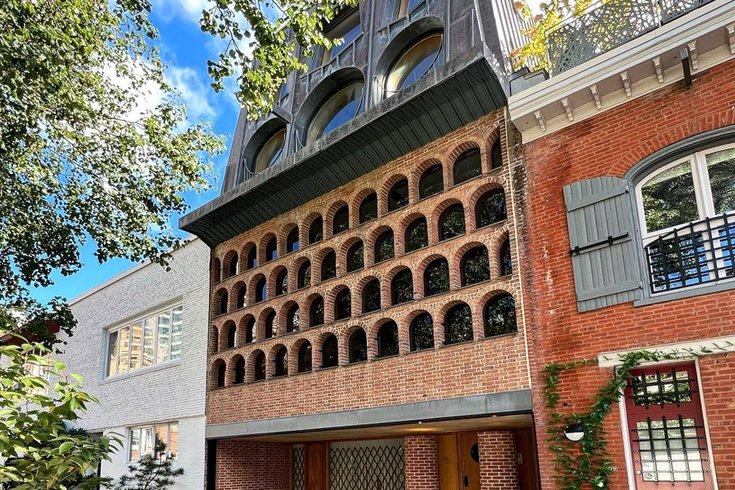 Provided Image/Michael Bixler
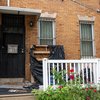
The Frank Weise home and studio, located at 307 S. Chadwick St. in Rittenhouse, is among the most prominent examples of modernist architecture in Philadelphia. The property is one of hundreds included in a new interactive map of modernist architecture.
The Philadelphia region is home to hundreds of buildings made in the mid-century modernist style, from low-slung houses bathed in natural light to schools and places of worship designed with elegant geometry.
Well-known examples include Chestnut Hill's Margaret Esherick House, a masterwork designed by Louis Kahn in 1959, and the zig-zagged Parkway House apartments built across the street from the Philadelphia Museum of Art in the early 1950s. Frank Lloyd Wright's Beth Shalom Synagogue, completed in Elkins Park in 1959, resembles a glass pyramid that encapsulates some of the more ornate aesthetics and innovative materials associated with the architectural movement that took hold after World War II.
Thomas Jefferson University's Center for the Preservation of Modernism, which is based out of architect Richard Neutra's Hassrick House in East Falls, is working to document all of the region's modernist buildings in one interactive map.
University researchers teamed up with the Preservation Alliance for Greater Philadelphia and Docomomo Greater Philadelphia, an organization that works to conserve modernist buildings, to collect information about local landmarks emblematic of the style.
"Philadephia is not a slacker when it comes to great architecture, and we have some amazing, iconic buildings," said Suzanne Singletary, a Jefferson professor who specializes in historic preservation and helped spearhead the map project. "But when people think of Philadelphia, they think primarily of colonial or maybe Victorian. They don't think of modern."
The Preservation Alliance had already been accumulating a list of modernist buildings for several years running, but their inventory grew larger than expected. To move their work forward, the center at Jefferson and Docomomo joined together to start designing a searchable map that includes descriptions of many buildings and a growing catalogue of photographs.
"We want to make it as available as possible to anybody who wants to do research on this topic and see another side of Philadelphia that they may not expect," Singletary said.
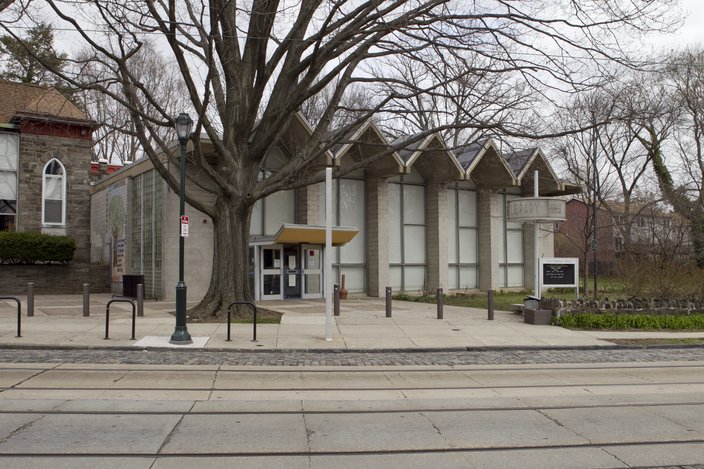
Architect Robert F. Bishop disgned the modernist wing that was added to the Lovett Memorial Library in Mount Airy in 1961. The design incorporated floor-to-ceiling glass windows next to Wissahickon schist stone used when the building was constructed in 1886. The address is 6945 Germantown Ave.
People who use the new map can scan at random or filter results by architect, neighborhood and date of construction.
Most modernist buildings are clustered across Center City and University City, but a surprising number of them can be found in Northeast Philly and suburban communities in Montgomery County. There also are a few recorded in South Jersey. As the project gains traction and elicits public feedback, the map could grow to encompass other parts of the region.
"This is certainly not behind a wall," said Kevin King, a Jefferson graduate student who helped create the map. "If people have stuff to contribute, feel free. We would love to hear from folks that have a building that they don't see that is worthy of the list."
The Philly area's modernist architecture runs the gamut of residences, libraries, schools, churches, and commercial and industrial properties. Some are rooted in the functionalist principles associated with modernism, while others showcase the bolder expression, curves and materials favored by some architects.
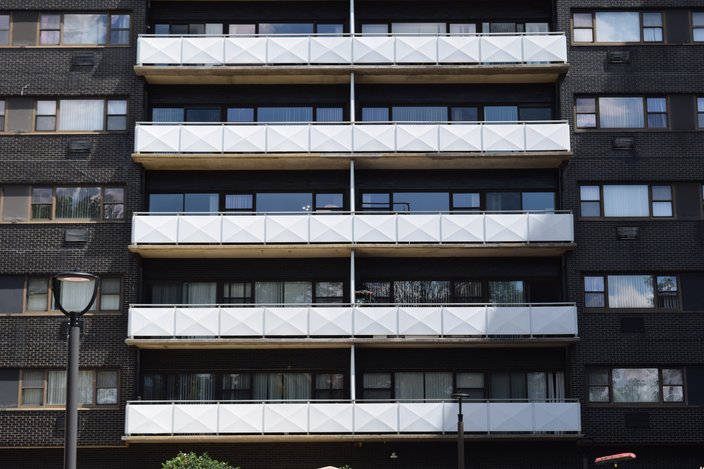
The Iroquois Apartment Building is a mid-century modern residential complex constructed in West Philadelphia in 1963 and designed by architect Leon Lewis Levin. It's located at 2805 N. 47th St.
"The map leans heavier on the commercial and industrial side than it does on the residential, but the city also has a wealth of modern residential resources," King said. "Society Hill has a ton, and so those are in here as well."
One of the goals of the map is to aid preservation efforts by supporting people who write historical nominations for buildings. Local campaigns to protect significant properties are often led by volunteers. Their work is time-consuming and advocates frequently are under pressure to rescue buildings threatened by deterioration or imminent redevelopment plans already underway.
Tulipwood, for example, is a mid-century modern home in East Falls designed in 1954 by Elizabeth Fleisher, the first woman licensed as an architect in Philadelphia, and her husband Horace. The 2.4-acre property it sits on was purchased last year with plans to tear Tulipwood down and build a new home. By the time preservationists put together a nomination to add the home to the Philadelphia Register of Historic Places, the city's historical commission felt it was too late to protect the property. Even though it satisfied the criteria for designation, the new owners will not be stopped from demolishing the home.
Fleisher was a leading designer of the 14-story Parkway House that combined the International Style of modernism with earlier Art Deco inspirations. That building, a landmark at 22nd Street and Pennsylvania Avenue, is not listed on the city's historic register.
"Having an inventory all in one place is certainly a way to coalesce the resources so that folks who are interested in writing nominations and saving these buildings can quickly find what is or is not designated, and then if they're so inclined, write a designation for them," King said.
Many of the region's modernist homes built in the 1950s and '60s show signs of age. Their flat roofs and large, single-pane windows — both staples of the aesthetic — are now difficult to restore for present purposes without altering the character of the architecture. Many of the materials used are not easy to source, if they can be found at all.
"This is sort of an emerging field," King said. "There are ways of retrofitting windows with thin, insulated glass in the same or a modified frame. There are ways of doing a very, very low slope on a flat roof so that it's not visible from the surroundings but still promotes positive drainage. It's a really interesting time to be involved in preserving modernism. Each house is so unique."
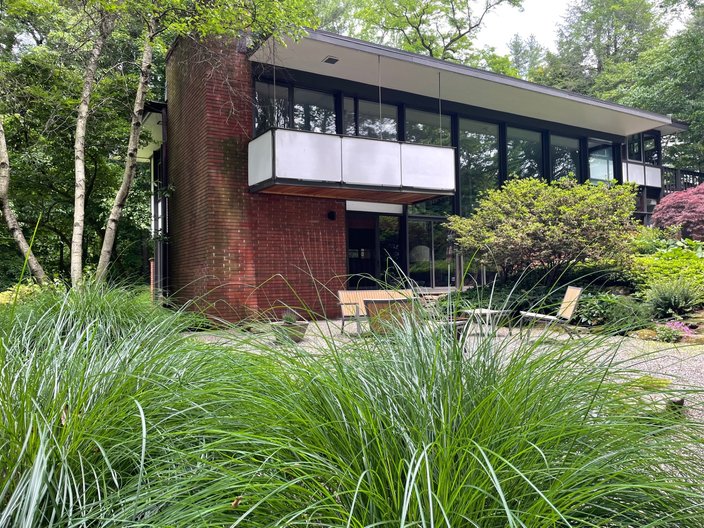
The Frantz Residence, located in Chestnut Hill at 725 Davidson Road, was designed by modernist architect Oskar Stonorov and built in 1956-57.
Real estate agent Marion Dinofa, who sits on the board of Docomomo and specializes in selling mid-century modernist homes, said the properties usually appeal to a niche category of buyers. In her experience, the benefits and drawbacks of owning these homes have kept their values roughly on pace with appreciation across the broader regional housing market.
"People love that indoor-outdoor connection, the light and natural materials these properties have. Those are all big selling advantages," Dinofa said. "But on the flip side, you need a buyer who has the ability and the interest to renovate."
Last year, Dinofa represented the sellers of a King of Prussia home designed by Neutra, whose California cedar wood ceilings were preserved despite other interior renovations. The home was listed for $2.5 million. Despite generating interest from enthusiasts of the style, it ultimately was taken off the market.
"It's a good example of a house that really — because it is a Richard Neutra house — deserved and required restoration," Dinofa said. "Whoever was going to buy it would have wanted to do that appropriately, and those things are expensive."
Dinofa hopes the modernist architecture map will inspire more people to join Docomomo's tours of properties in the Philly region, which isn't as deeply associated with the style as places like Southern California, the Midwest and New England. She also thinks the project will draw attention to lesser-known commercial buildings that represent the legacy and diversity of the modernist architecture, building greater appreciation and commitment to its preservation.
"Sometimes you see parallels between the residential and the commercial, and you really need to see these places to draw those connections," Dinofa said. "This brings visibility that can help put Philly on the map."